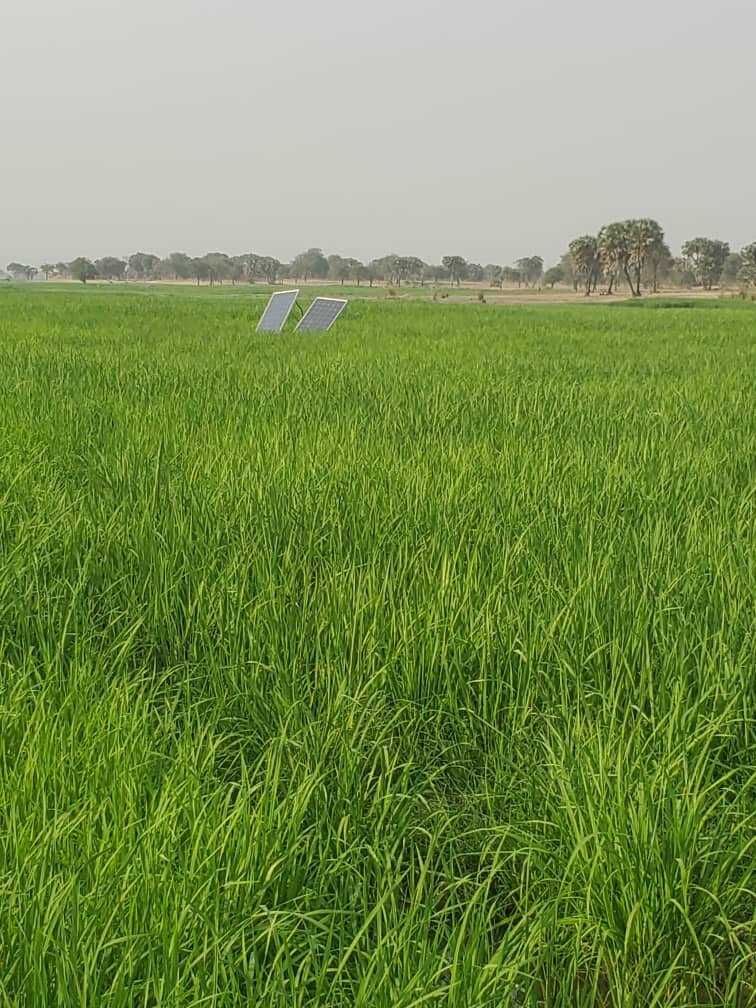

Solar energy is transforming crop farming by providing clean, reliable, and cost-effective power for a wide range of agricultural operations. Solar technologies are helping farmers save costs, conserve water, improve crop yields, and make better use of land. A major development is the integration of solar systems directly into crop farming operations, enabling energy generation without sacrificing agricultural land.
Agrivoltaics:
Agrivoltaics, also known as “dual-use solar farming” involves installing solar panels above crops so that land can be used simultaneously for food production and electricity generation. This innovative approach significantly improves land-use efficiency, especially in regions where arable land is limited.
The partial shade created by solar panels reduces excessive heat and lowers evaporation rates, helping the soil retain moisture for longer periods. This is particularly beneficial in hot and arid climates, where water scarcity is a major concern.
Also, shade-tolerant crops such as leafy greens, herbs, berries, and some vegetables often perform better under agrivoltaic systems. In some cases, yields increase and growing seasons are extended. Additionally, agrivoltaic sites can support pollinators, livestock grazing, or cover crops beneath the panels, enhancing biodiversity and ecosystem health while generating renewable energy.
Solar-Powered Irrigation Systems:
Irrigation is one of the most energy-intensive activities in crop farming. Solar-powered irrigation systems use photovoltaic panels to operate water pumps that draw water from borewells, rivers, or reservoirs. These systems provide a reliable source of water without relying on grid electricity or diesel fuel.
Solar irrigation is especially valuable in remote or off-grid areas, where access to electricity is limited or expensive. Farmers can irrigate crops during peak sunlight hours when water demand is highest, improving water-use efficiency. Over time, solar-powered pumps significantly reduce fuel and electricity costs while lowering greenhouse gas emissions.
Solar Crop Drying for Post-Harvest Management:
Post-harvest losses due to improper drying and storage are a major issue in crop farming. Solar crop dryers offer a clean and efficient solution by using solar energy to dry grains, fruits, vegetables, and spices more quickly and evenly than traditional open-air drying.
Unlike sun drying on the ground, solar dryers protect produce from pests, dust, rain, and spoilage. Controlled drying conditions improve product quality, extend shelf life, and allow farmers to access better markets. Faster drying also reduces losses and enables farmers to process crops soon after harvest, improving overall farm profitability.
Powering Farm Operations and Infrastructure:
Solar energy can power a wide range of farm operations, reducing dependence on the grid and fossil fuels. Solar panels installed on rooftops or nearby land can supply electricity for grain storage facilities, refrigeration units, cold rooms, lighting, and processing equipment.
Reliable solar power helps preserve harvested crops, dairy products, and seeds, minimizing spoilage and waste. For farmers facing rising energy costs or unreliable electricity supply, on-farm solar systems provide energy independence and long-term financial stability.
Solar Greenhouses for Controlled Crop Production:
Solar greenhouses integrate transparent or semi-transparent solar panels into greenhouse roofs. These panels generate electricity while allowing sufficient light for plant growth. At the same time, they help regulate temperature by reducing excessive heat during the day and retaining warmth at night.
Solar greenhouses extend growing seasons, protect crops from extreme weather, and enable year-round production. The electricity generated can power ventilation, heating, cooling, and irrigation systems, making greenhouses more energy-efficient and sustainable.
Water Collection and Conservation Systems:
Solar panel installations can be designed to collect and channel rainwater runoff into storage tanks or basins. This harvested rainwater can then be used for irrigation, cleaning, or livestock, further improving water efficiency on farms.