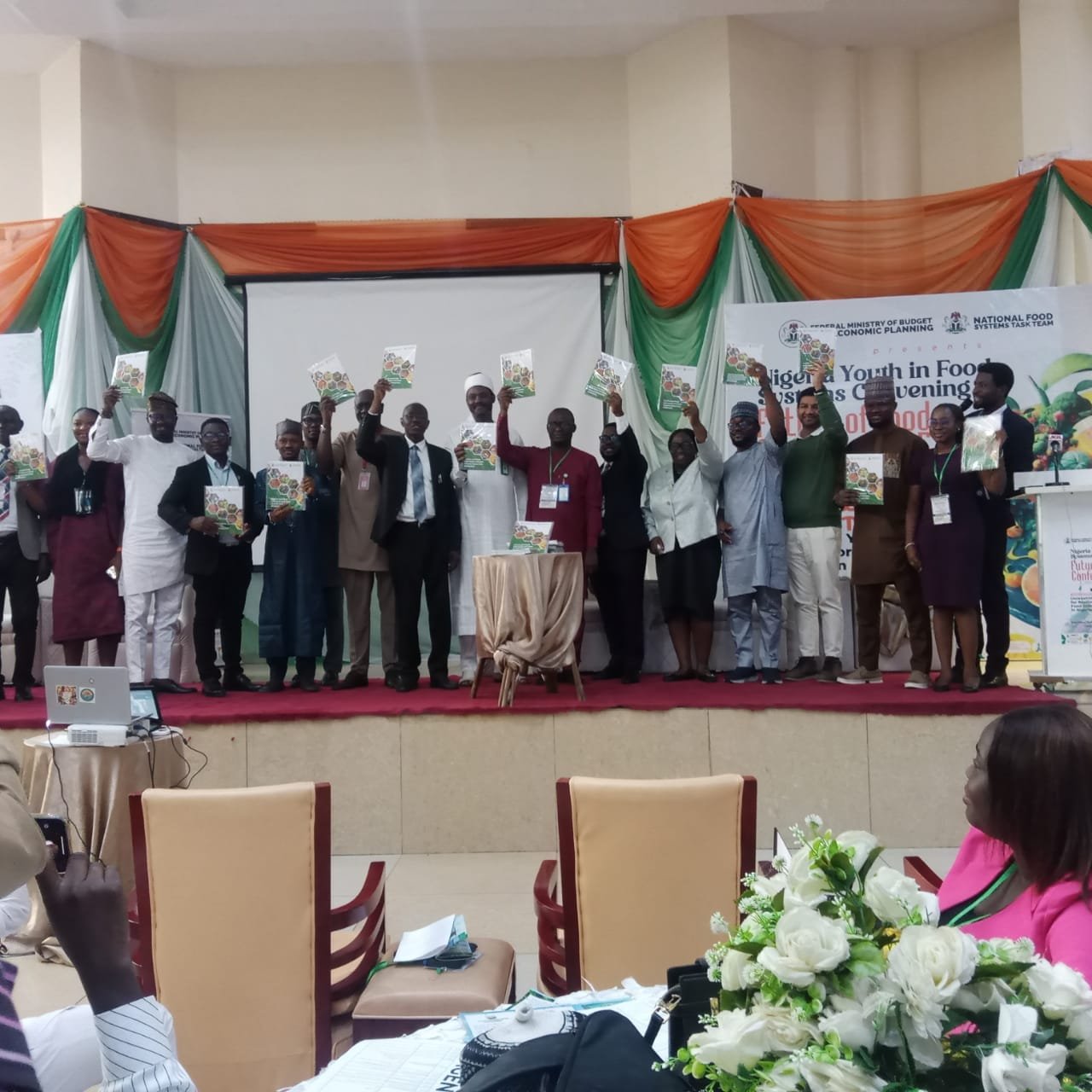

Nigeria has unveiled its first-ever comprehensive Youth Mapping Report, documenting the roles, challenges, and contributions of over 6,000 young people actively shaping the country’s food systems.
The landmark report was officially launched on Wednesday during the inaugural Youth in Food Systems Convening held in Abuja, themed “Empowering the Future: Unleashing Youth Potential for Resilient and Sustainable Food Systems Transformation in Nigeria.”
Developed by the National Food Systems Task Team in collaboration with key stakeholders, the report highlights youth involvement across the agricultural value chain, from production and policy engagement to innovation, climate-smart agriculture, and agribusiness investment.
Azeez Salawu, the National Youth Lead for the UN Food Systems Summit (UNFSS) Nigeria, described the report as a pivotal tool for guiding youth-inclusive policy and investment. “This report is a blueprint for action, a compass for investment, and a call for systems-level reform,” he said. “It convenes voices, spotlights success, rewards excellence, and ignites bold partnerships.”
Salawu noted that more than 50 percent of respondents surveyed are actively running agribusiness ventures. However, he acknowledged persistent barriers such as poor access to land, finance, storage, and markets.
He emphasized that young Nigerians are also increasingly adopting digital platforms, innovating within food supply chains, and leading climate-smart agriculture initiatives.
“This report is not just for the shelves,” Salawu added. “It will be showcased next week at the UNFSS Stocktaking Moment in Ethiopia, underscoring Nigeria’s commitment to youth empowerment through evidence-based policies and programming.”
Dr. Sanjo Faniran, National Convenor of UNFSS Nigeria, stressed that the future of Nigeria’s food security is inseparable from its youth, who make up over 60 percent of the national population.
“Young people are not just participants, they are trailblazers in production, processing, marketing, research, and innovation,” he said.
“Unlocking their potential is a national imperative.”
Presenting the report’s findings, Adekunle Adeoye, Youth Representative on the National Task Team, explained that the study surveyed individuals between the ages of 15 and 45, analyzing their involvement across all segments of the food system.
He noted that although Nigeria has policies that promote youth participation in agriculture, empirical data on the extent of engagement had been lacking until now.
“This report fills a critical data gap,” Adeoye said. “It offers evidence to inform inclusive, actionable policies and support programmes tailored to the diversity and realities of youth-led agribusinesses.”
The findings are expected to significantly shape Nigeria’s engagement in the upcoming UNFSS+4 process and strengthen the country’s positioning as a continental leader in youth-led food systems transformation.