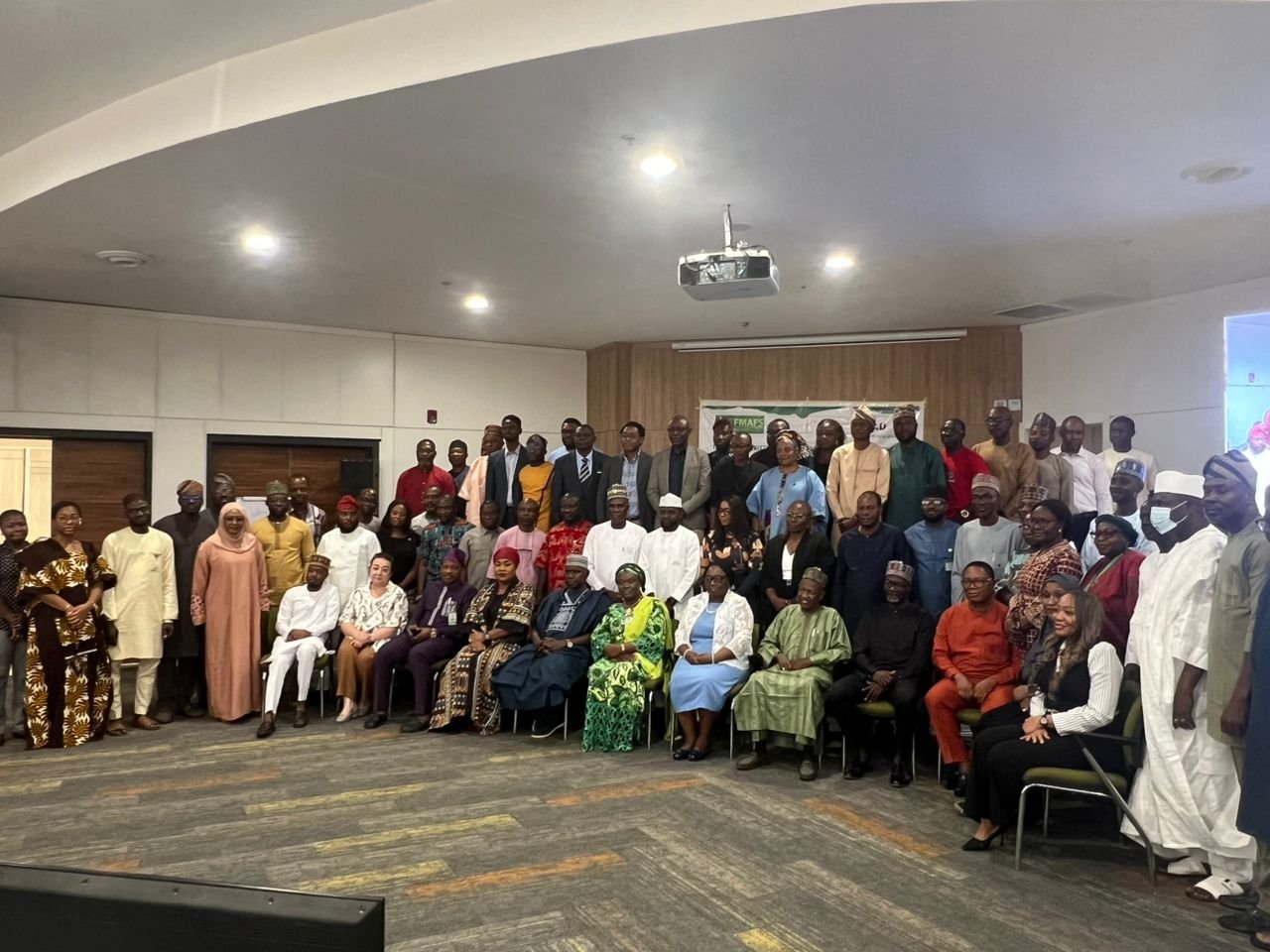

The Federal Government of Nigeria (FGN) and the International Fund for Agricultural Development (IFAD) have reaffirmed their commitment to accelerating the transformation of Nigeria’s agrifood system as key stakeholders converged in Abuja for the Second Annual Results Review of the Country Strategic Opportunities Programme (COSOP) 2024–2029.
Welcoming participants, IFAD Country Director, Mrs. Dede Ekoue, described the review as a strategic moment for Nigeria and its partners to take stock of two years of COSOP implementation and realign strategies toward achieving the programme’s 2029 targets. She explained that the COSOP, approved in 2024 following extensive consultations led by the Federal Ministry of Agriculture and Food Security in collaboration with the Ministry of Finance, is structured to drive inclusive, resilient, and market-led growth across Nigeria’s agrifood system.
According to Ekoue, the 2025 review provides an opportunity to assess relevance, measure progress, and introduce strategic adjustments where necessary. She noted that early implementation results have been encouraging, with overachievement recorded in areas such as the development of processing and storage facilities, strengthened rural producers’ organisations, and improved access to finance, financial literacy, and business development services for rural enterprises.
Despite these gains, she stressed that more investment is needed in water-related infrastructure, including irrigation and climate-resilient systems, which are critical to boosting productivity and strengthening adaptation to climate shocks. “We cannot assume everything is fine,” Ekoue cautioned, adding that the complexity of challenges in the agrifood sector requires coordinated action by government institutions, the private sector, development partners, and farmer organisations.
She further noted that the diversity of participants at the review reflects the inclusive design of the COSOP and aligns with Nigeria’s renewed push for digitalisation and youth engagement in agriculture. Ekoue cited progress on the National Digital Farmer Registry and ongoing policy dialogues on youth inclusion as key milestones. She reaffirmed IFAD’s appreciation of the Federal Government’s commitment to leveraging IFAD–Nigeria cooperation to deliver tangible improvements in productivity, incomes, and food security under the Renewed Hope Agenda. She also called for increased funding to fully unlock Nigeria’s vast agrifood potential, expressing optimism that the review would yield actionable recommendations to strengthen implementation through 2026 and ensure the programme reaches at least 450,000 rural households by 2029.
Speaking at the event, the Director of the Federal Department of Development Partners Projects (DPP) at the Federal Ministry of Agriculture and Food Security, Mrs. Adebola Iruromi, described the review as more than a technical exercise, but a critical moment to reflect on collective progress, identify gaps, and strengthen pathways that will shape Nigeria’s agrifood transformation agenda. She noted that the long-standing FGN–IFAD partnership has remained central to efforts to promote rural prosperity, resilience, and food and nutrition security.
“As we review the COSOP, it is important to identify and scale the proven models that have delivered impact across projects and states,” she said, adding that scaling successful interventions is essential to achieving national targets under the National Food Systems Transformation Pathways. While acknowledging progress made, Iruromi highlighted persistent challenges facing the sector, including rising inflation, insecurity, climate shocks, limited extension services, and uneven implementation across states. She stressed that addressing these issues requires stronger coordination, enhanced monitoring and evaluation, wider deployment of digital tools, and deeper sub-national accountability.
Also speaking, Mrs. Munet Sadiku, Assistant Director in the International Economic Relations (IER) Department of the Federal Ministry of Finance, reaffirmed the Federal Government’s strong commitment to its long-standing partnership with IFAD. She noted that the COSOP has continued to serve as a vital framework for driving rural transformation, strengthening food security, and improving the livelihoods of smallholder farmers nationwide.
Sadiku disclosed that the Ministry of Finance has made deliberate efforts over the past year to improve the predictability and timeliness of federal counterpart funding for IFAD-supported projects. While acknowledging the existence of some operational bottlenecks, she expressed encouragement over ongoing reforms aimed at better aligning budget releases with project implementation cycles. She added that the Ministry is keen to see greater integration of digital tools in financial reporting, monitoring, and project administration to enhance efficiency and support data-driven decision-making.
On the sidelines of the review, the Development Exchange Centre (DEC) highlighted its role in expanding financial access for rural farmers through digital innovation. Speaking to AgroNigeria, DEC representative, Emily Stephen, said the organisation’s partnership with the IFAD-assisted Value Chain Development Programme (VCDP) has enabled thousands of farmers to access timely financial support. She explained that DEC is currently undertaking a full digital upgrade to simplify credit access and improve service delivery across participating states, noting that many rural farmers who were initially unfamiliar with digital tools are now increasingly adopting them.
However, Stephen identified limited access to mobile phones as a major constraint to full digital inclusion. To address this gap, she said DEC has introduced a phone-loan product specifically designed to help farmers acquire mobile devices and remain connected to financial services. According to her, the initiative will enhance inclusion, reduce operational costs, and improve transparency in agricultural financing.
Also lending their voice at the review, the National Coordinator of the National Committee for Family Farming in Nigeria, Mr. Raymond Enoch, reaffirmed the committee’s support for the COSOP framework. He described the programme as critical to strengthening the capacity of smallholder and family farmers, enabling them to increase productivity while contributing meaningfully to national food systems.
Enoch commended the recent launch of the National Digital Farmers Registry by IFAD and the Federal Ministry of Agriculture and Food Security, describing it as a major step toward modernising agriculture through improved data accuracy, technology integration, and access to information such as weather forecasts and early warning systems. Emphasising that Nigerian farmers must not be left behind in the global shift toward digital solutions, he expressed confidence that the evolving technological and policy landscape would help farmers respond more effectively to emerging challenges.
With stakeholder commitments reinforced and deliberations ongoing, the 2025 COSOP Annual Results Review is expected to generate forward-looking recommendations that will further strengthen implementation and drive Nigeria’s agrifood system transformation agenda in the coming years.