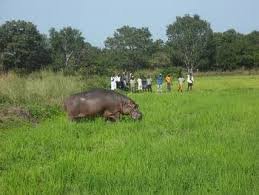

Farmers in Hinna Community, Yamaltu-Deba Local Government Area of Gombe State, are grappling with severe losses as increasing hippopotamus attacks continue to destroy farmlands, threaten livelihoods and endanger lives.
The Head of Farmers in the community, Mr Zakari Ladan, told the newsmen on Monday that persistent incursions by hippopotamuses had crippled agricultural activities and left residents living in fear.
Ladan said the population of the animals in the area had risen to more than 40, with the hippos roaming freely across farmlands, destroying crops and attacking residents.
He disclosed that from September 2025 to date, no fewer than 100 hectares of farmland had been destroyed, resulting in losses estimated at over ₦180 million.
According to him, affected crops include rice, beans, maize, cabbage, carrots, okro, onions, watermelon, sweet melon and other vegetables, while fishermen have also been impacted as the animals disrupt fishing activities along nearby water bodies.
He further revealed that the situation had turned deadly, with three persons killed and three others sustaining serious injuries and currently receiving treatment in hospitals in Gombe.
Ladan noted that a single hippopotamus could destroy up to two hectares of farmland in a day, stressing that the scale of destruction had overwhelmed farmers and left many unable to continue cultivation.
Another farmer, Malam Haruna Hinna, said hippos destroyed his carrot and okro farm, explaining that one hectare of carrot alone was valued at about ₦1.7 million. He lamented that despite reporting the situation repeatedly to the state government, non-governmental organisations and other relevant authorities, farmers had continued to suffer losses without relief.
Hinna described the farmers as financially exhausted and appealed for urgent intervention from both the Federal and Gombe State governments to prevent further devastation.
Other farmers who spoke with the media echoed similar concerns and called for immediate support, including the provision of farm inputs to enable them return to farming.
They also urged relevant stakeholders to assist fishermen in the community to adopt fish farming as an alternative means of livelihood amid the worsening human-wildlife conflict.