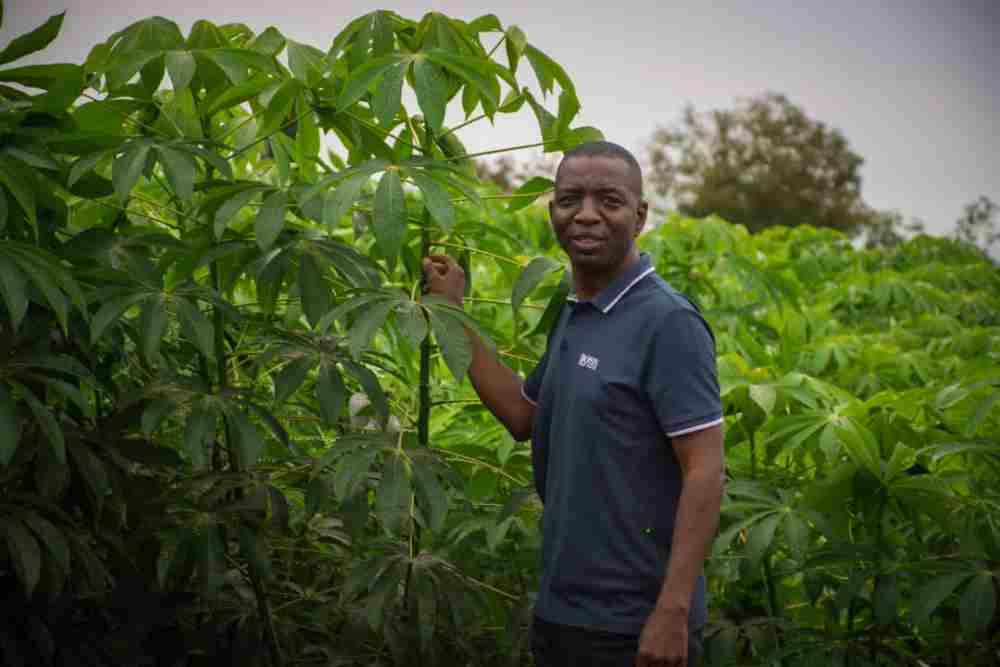

The Chief Executive Officer of Niji Foods, Mr. Kolawole Adeniji, has called on the Federal Government to urgently implement targeted, farmer-centred reforms to safeguard Nigeria’s food production system, warning that recent improvements in food price stability could undermine long-term agricultural sustainability if farmers are left unsupported.
Adeniji spoke in reaction to comments made by the Minister of Finance and Coordinating Minister of the Economy, Mr. Wale Edun, during the launch of the Nigerian Economic Summit Group (NESG) 2026 Macroeconomic Outlook Report in Lagos.
At the event, Edun acknowledged that while easing food prices have brought relief to consumers, prices in some cases have fallen below farmers’ production costs, raising concerns about continued investment in agriculture.
Responding to the minister’s remarks, Adeniji said the development confirmed long-standing concerns within the agricultural sector, noting that farmers are facing mounting pressure from high input costs, limited access to affordable finance and weak supporting infrastructure.
He stressed that agriculture requires deliberate, sector-specific policy responses rather than broad macroeconomic measures that do not reflect on-the-ground realities.
According to Adeniji, access to affordable credit remains one of the biggest constraints to increased food production. He called for the restructuring of agricultural financing institutions and a sharp reduction in lending rates to single-digit levels, arguing that interest rates of up to 30 per cent make it impossible for smallholder and family farmers to invest in machinery, irrigation and modern technologies needed to improve productivity and resilience.
He also urged the government to overhaul agricultural policies to make them more farmer-friendly, with stronger support for biotechnology, certified seeds and irrigation infrastructure. Adeniji described improved seed quality as critical to boosting yields and enhancing farmers’ ability to withstand climate-related shocks.
Beyond financing and inputs, the Niji Foods chief advocated the creation of dedicated seaports for agricultural trade to improve efficiency across the value chain.
He said specialised ports would allow agribusinesses to fully benefit from duty-free concessions on agricultural machinery, while reducing delays, congestion and bureaucratic hurdles associated with conventional seaports, which often raise costs and discourage investment.
Meanwhile, the Federal Government has reiterated its commitment to supporting farmers amid evidence that food prices have, in some instances, dropped below production costs.
Edun said agriculture remains central to the government’s 2026 policy agenda, with a focus on improving competitiveness, strengthening governance, boosting agricultural productivity and ensuring food security, alongside accelerated investment in infrastructure, energy and human capital development.
The intervention comes as food inflation continues to ease following months of tight monetary policy and supply-side reforms. Official data show that food inflation declined sharply to 10.84 per cent year-on-year in December 2025 from 39.84 per cent in December 2024, driven by improved domestic supply, easing foreign exchange pressures and lower import costs.
While the moderation has eased pressure on households, Edun warned that sustained price declines below farmers’ costs could discourage production if not urgently addressed, potentially reversing recent gains in food availability and price stability. He said the government is working to strike a balance between affordability for consumers and incentives for producers, particularly smallholder farmers.
Looking ahead, the minister said the 2026 budget, described as one of consolidation, renewed resilience and shared prosperity, will prioritise food security, improved electricity supply, expanded mortgage access, road infrastructure and stronger social protection for vulnerable Nigerians. For Adeniji, however, the effectiveness of these commitments will be judged by how quickly they translate into tangible relief at the farm level, noting that getting agriculture right remains critical to stabilising Nigeria’s broader economy.