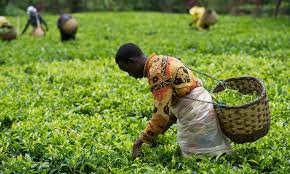

Taraba State Governor, Dr. Agbu Kefas, has highlighted the state’s fertile land, favourable climate, and highland terrain as ideal for coffee and tea cultivation, reaffirming his administration’s commitment to supporting farmers in these crops.
Speaking through his Special Adviser on Agriculture and Food Security, Zanau Maikasuwa, at a two-day roundtable discussion organised by the National Coffee and Tea Association of Nigeria (NACOFTAN) at the ASUU Secretariat, Taraba State University (TSU) in Jalingo, the Governor noted that Sardauna Local Government Area offers one of Nigeria’s best environments for tea and high-quality coffee production.
He added that Gashaka, Kurmi, and parts of Bali Local Government Areas also possess suitable ecological conditions for expanding coffee and tea farming.
These areas, he said, are home to hardworking farming communities that, with the right support, can drive a robust coffee and tea economy.
Governor Kefas emphasised that his administration has placed agriculture at the centre of economic diversification efforts.
Developing coffee and tea farming in these local governments will shift the state from subsistence to commercial agriculture, create jobs for youths and women, and boost household incomes.
The state government is providing improved seedlings, modern farming practices, and encouraging public-private partnerships to establish plantations, processing, and packaging facilities in Sardauna, Gashaka, Kurmi, Bali, Donga, Takum, Ussa Local Governments, as well as Yangtu and Ngada Development Areas.
The Governor committed to promoting value addition through local processing of coffee and tea, which will strengthen the rural economy, generate employment, and increase internally generated revenue.
“Coffee and tea are not just crops, but pathways to rural development, industrial growth, and global market access,” he stated. “With coordinated efforts, Taraba can become a recognised hub for premium coffee and tea production in Nigeria and West Africa.”
He urged farmers in suitable local governments to seize the opportunity and invited investors and development partners to collaborate in unlocking these potentials.
In his remarks, the Minister of Agriculture and Food Security, Senator Abubakar Kyari—represented by Adamolakun Ebenezer—reaffirmed the Federal Government’s pledge to boost coffee and tea production.
He promised imminent distribution of improved seedlings and inputs, highlighting Taraba, Cross River, and Plateau as key states with prime land for these crops.
The Minister announced plans for coffee nurseries in suitable geopolitical zones and called for stakeholder consultations to enhance production.
NACOFTAN’s Call to Action
National President of NACOFTAN, Dr. Hassan Usman Kakara, in his welcome address, underscored the immense potential of coffee and tea production in Nigeria’s highlands and agro-ecological zones.
He identified challenges such as low productivity, outdated practices, limited processing, weak market linkages, and inadequate finance.
The roundtable, he said, provides a platform for meaningful dialogue to develop actionable strategies across the value chain, from seedling production to export.
NACOFTAN aims to allocate one hectare of land to registered coffee and tea farmers in each of the four geopolitical zones, noting that the crops mature in three years and require patience.
Dr. Kakara urged stakeholders to register with the association to benefit from interventions, commended TSU Vice-Chancellor Prof. Sunday Paul Bako for his role in the sector, and called for collaborative roadmaps including intercropping to ease farmers’ capital burdens.
Stakeholder Contributions
TSU Vice-Chancellor Prof. Sunday Paul Bako, represented by Deputy Vice-Chancellor (Administration) Prof. Reuben Jonathan, described coffee and tea as a neglected but critical economic base needing urgent revitalisation for job creation and growth.
He called for collective action on production and value addition.
Dr. Patrick K. Kefas, Director of CRI-TSU Institute of Tree Crop Research and Local Organising Committee Chair, hailed participants’ commitment.
He noted the sector’s historical contributions to output and exports, now hampered by policy inconsistency, finance gaps, ageing plantations, weak value chains, poor research-market links, and low private investment. “No single stakeholder can revitalise this sector alone,” he stressed.