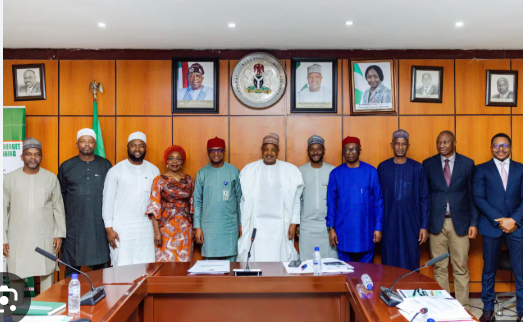

Minister of Budget and Economic Planning, Senator Abubakar Atiku Bagudu, has said President Bola Ahmed Tinubu considers livestock development a major driver of food production, job creation and economic growth, rather than a minor activity within agriculture.
Bagudu made the statement in Abuja during the first meeting of the newly established Technical Sub Committee on Livestock Development under the National Economic Council, which was set up to accelerate reforms in the sector and translate existing policies into concrete action.
According to the minister, the President’s strong interest in livestock development reflects a broader shift in how the government approaches agriculture and national economic planning.
He noted that the decision to create a separate Ministry of Livestock Development and to personally chair the Presidential Committee on Livestock Development underscores the strategic importance attached to the sector.
He explained that the National Economic Council had earlier constituted a high level committee on livestock development, chaired by Kebbi State Governor Nasir Idris, with membership drawn from governors across the six geopolitical zones, relevant ministers and key stakeholders.
However, he said the council agreed to form a smaller technical team to handle detailed work and speed up implementation due to time constraints and the urgency of the task.
Bagudu said the mandate of the technical sub-committee is to harmonise the wide range of studies, reports and policy proposals already available and distil them into a clear and practical implementation roadmap for approval by the National Economic Council.
He stressed that the focus is on execution rather than developing new ideas.
The minister noted that livestock development cuts across all levels of government, making collaboration between federal, state and local authorities essential.
He said his ministry, as the coordinator of national development planning, would ensure that policies, budgets and programmes are aligned and implemented in a complementary manner.
He also highlighted several funding and support initiatives available to states and communities, including the World Bank supported Livestock Productivity and Resilience Support project, NG CARES, the Nigeria for Women Programme and the Renewed Hope Ward Based Development Plan.
He explained that the ward-based plan is designed to identify and support economic opportunities in all 8809 wards across the country.
Bagudu urged state commissioners to take full responsibility for the process, noting that once the National Economic Council approves the committee’s recommendations, it would encourage stronger commitment of resources by states and local governments.
He added that consistent policies would help attract investors and development partners by reducing uncertainty in the sector.
The minister also addressed the tensions that sometimes surround livestock production in parts of the country, saying the work of the sub-committee should help reposition the sector as a source of shared prosperity and national cohesion.
In his remarks, the director overseeing the Office of the Permanent Secretary at the ministry, Dr Sampson Ebimaro, described the meeting as a significant step toward advancing the Renewed Hope Agenda of the Tinubu administration.
He said food security remains central to economic growth and national development.
The meeting was attended by senior government officials and experts in agriculture, planning and livestock development, including representatives of the presidency, state commissioners for budget and planning, project coordinators, policy advisers and the Minister of Livestock, Alhaji Idi Maiha.
With the technical team now in place, the government says the next phase will focus on turning years of research and policy work into a clear action plan to modernise livestock production, improve livelihoods and support Nigeria’s wider economic and social stability goals.