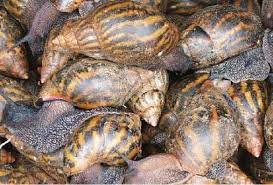

Chairman of the Board of Trustees of the Federation of Agricultural Commodity Associations of Nigeria (FACAN), Dr. Victor Iyama, has called on Nigerian farmers and investors to embrace snail farming as a viable pathway to wealth creation, citing the rapid expansion of the global edible snail market.
Iyama described heliculture as a largely untapped opportunity, noting that the global snail market, currently valued at $2.46 billion, is projected to rise to $4.55 billion by 2033, growing at an average rate of eight per cent annually.
He stressed that snail farming stands out as one of the most accessible agribusiness ventures, requiring minimal capital and space, making it suitable for retirees, small-scale entrepreneurs, and urban dwellers.
Speaking on the ease of entry into the sector, Iyama explained that snail farming does not demand heavy financial investment or large tracts of land, as production can be carried out within residential compounds under suitable cool and moist conditions.
He added that snails reproduce rapidly and thrive in environments shielded from excessive heat, giving the enterprise a strong advantage over more demanding livestock ventures.
According to him, snail farming offers a practical alternative for Nigerians who may not wish to engage in arable or cash crop production, or the complexities associated with rearing cattle, sheep, and goats. He noted that compared to conventional livestock, snails are easier to manage and come with fewer operational challenges.
Nigeria already occupies a strategic position in the global snail value chain, producing over 45,000 metric tons annually, largely through wild harvesting, which makes the country Africa’s largest supplier. However, Iyama observed that the dominance of unstructured and undocumented harvesting limits the country’s ability to fully harness the economic potential of the sector.
Export figures underline the growing demand for Nigerian snails. Available data show that exports rose sharply in 2020, with shipments reaching 164 tons in 2023, reflecting an annual growth rate of over 20 per cent since 2020. Major destinations include the United Kingdom and the United States, although experts believe actual export volumes are significantly higher due to informal trade channels.
Globally, Europe remains the largest consumer of edible snails, with France leading imports valued at about $21 million annually, followed by Spain, Italy, Romania, and Portugal. Market research firms have, however, identified the Asia-Pacific region as the fastest-growing market, driven by rising disposable incomes and increasing interest in exotic and gourmet foods. The United States accounts for over 20 per cent of the global market, while China, Germany, and the United Kingdom also command significant shares.
Analysts attribute the sustained growth of the snail industry to rising demand for alternative protein sources, increased awareness of the nutritional value of snails, and technological improvements in snail farming. Snails are rich in protein, iron, and essential fatty acids, while being low in fat, positioning them as a healthy option for health-conscious consumers.
Globally, Morocco currently leads production with about 18,000 tons annually, accounting for 35 per cent of world output and over 80 per cent of Africa’s organized production. Africa as a whole contributes more than 65,000 metric tons, with Nigeria and Ghana accounting for the bulk, though Nigeria’s output remains predominantly wild-harvested.
Experts have advised Nigerian producers to transition toward organized commercial farming to maximize export earnings. Recommended strategies include building partnerships with European Union buyers, investing in processing and packaging facilities that meet international standards, adopting Good Agricultural Practices and food safety protocols, pursuing sustainable certification, and developing cold-chain infrastructure in major snail-producing states.
With global demand accelerating and barriers to entry remaining low, stakeholders believe structured investment in snail farming could position Nigeria as a dominant force in the international edible snail market.