
The Federal Government has announced fresh measures to address price distortions and inefficiencies in Nigeria’s livestock sector, with a focus on reducing the influence of middlemen and improving value chain transparency.
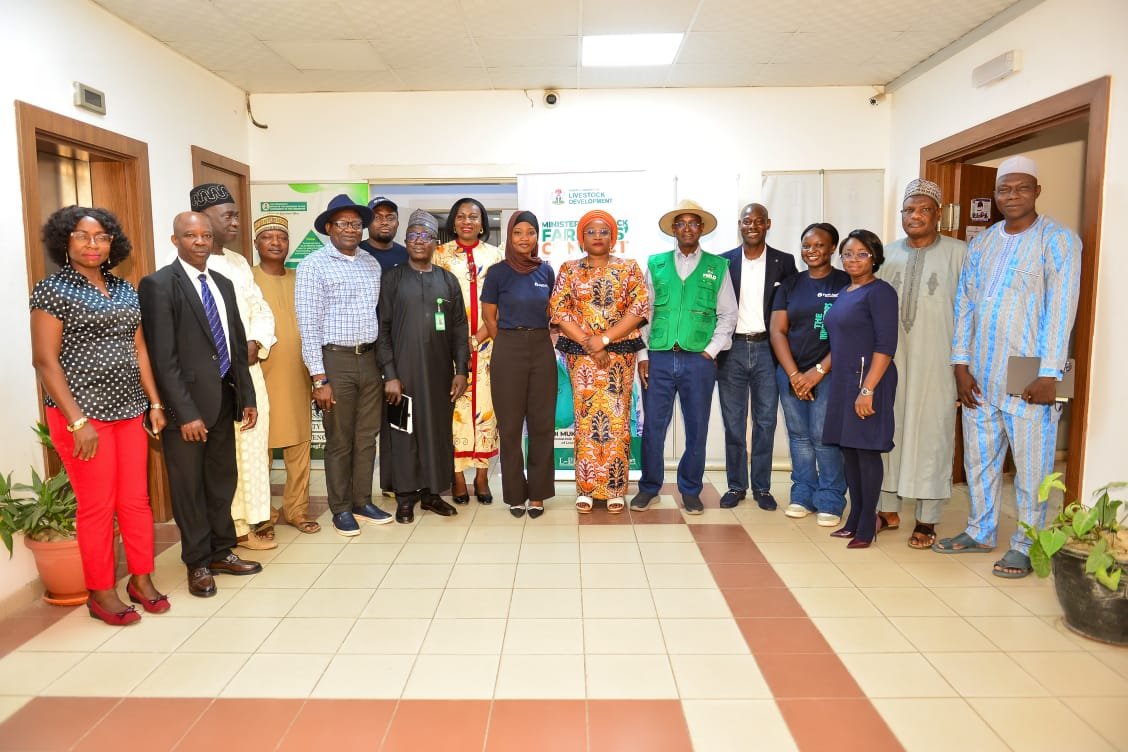
This was made known in a statement signed by the Ogochukwu Igboamalu Assistant Chief Executive Officer (Information) and made available to Agronigeria following the maiden edition of the Minister–Livestock Farmers’ Connect held on Tuesday, March 24, 2026.
Speaking at the event, the Minister of Livestock Development, Idi Mukhtar Maiha, described the dominance of intermediaries as a major bottleneck in the sector, noting that it often leads to reduced earnings for producers and inflated prices for consumers.
He explained that in many cases, livestock producers who bear the cost of production receive minimal returns, while middlemen capture a significant share of the value before products reach processors and final markets.
To address this imbalance, the Minister said the government is promoting end-to-end business models that will enable direct linkages between producers, processors, abattoirs, and large-scale buyers.
According to him, this approach is expected to improve farmer incomes, stabilise prices, and enhance overall efficiency within the value chain.
As part of the reforms, the Ministry also disclosed plans to introduce a live-weight pricing system for livestock, a model aligned with global best practices. The system is expected to ensure fair pricing based on measurable standards, reducing exploitation and market inefficiencies.
The Minister further highlighted investment opportunities across key segments of the livestock sector, including pasture seed production, fodder supply, dairy aggregation, leather processing, and livestock by-products, noting that these areas remain largely untapped.
He also reaffirmed the government’s commitment to transitioning from open grazing to more structured livestock production systems aimed at improving productivity, reducing conflicts, and strengthening animal health management.
His words: “In many cases, the producer does the hard work but earns the least, while intermediaries take the highest margins. This creates artificial scarcity and drives up prices in the market.
“Our focus is to build a system where producers are better connected to markets, where pricing is transparent, and where the entire value chain works efficiently for both farmers and consumers.”
On financing, the Minister outlined several funding options available to investors, including facilities from the Bank of Agriculture, NIRSAL, the Development Bank of Nigeria, and World Bank-supported programmes.
He, however, stressed the need for structured business models and clear off-take arrangements to attract sustainable investment.
Addressing security concerns, particularly cattle rustling, he revealed plans to deploy digital livestock tagging and traceability systems to enable tracking, proof of ownership, and recovery of stolen animals, with pilot phases expected to commence in selected states within six months.
In addition, the Minister announced plans to launch a Livestock Public Digital Infrastructure aimed at improving access to data, facilitating investments, and enabling stakeholder engagement across the sector.
Permanent Secretary of the Ministry, Dr. Chinyere Ijeoma Akujobi, in her remarks, said the engagement reflects the Ministry’s commitment to inclusive dialogue and stakeholder-driven reforms.
She noted that the platform provides an opportunity for farmers, veterinarians, producers, and other stakeholders to contribute directly to policy development and sector growth.
The Minister–Livestock Farmers’ Connect, organised in partnership with Farm Alert and the Livestock Productivity and Resilience Support (L-PRES) Project, is expected to serve as a recurring platform to strengthen collaboration and accelerate transformation within Nigeria’s livestock industry.