
Northern Nigerian farmers and agricultural stakeholders have proposed adopting Brazil’s agribusiness model to strengthen food security, drive economic growth, and promote sustainable development in the region.
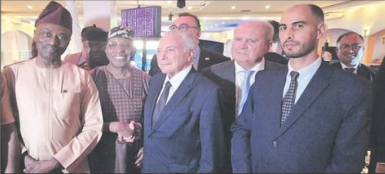
This proposal was presented by Dr. Faruk Umar, Chairman of Belradoos Limited, on behalf of the All Farmers Association of Nigeria (AFAN) and other stakeholders at the 26th International Engagement Platform, Expodireto Cotrijal 2026 in Brazil.
At the event, Dr. Umar highlighted the critical role agriculture plays in Nigeria’s economy, especially in the North, where it serves as the primary source of livelihood for many households and a major contributor to the nation’s food supply.
He raised concerns over the country’s growing food demand, noting that about 31 million Nigerians are currently affected by food insecurity, a situation worsened by rapid population growth.
Using Brazil as a case study, he explained how the country successfully transitioned from being a net food importer in the 1970s to becoming a global leader in agricultural exports.
He suggested that Nigeria could achieve similar progress by modernizing its agricultural system through increased mechanization, wider irrigation coverage, improved research systems, better rural infrastructure, reduced post-harvest losses, and the adoption of climate-smart practices.
He pointed out that Northern Nigeria is well-positioned for agricultural expansion, given its over 30 million hectares of arable land, varied ecological zones, experienced farming population, and access to regional markets across West and North Africa.
The region also has strong potential in livestock and staple crop production.
Despite these advantages, Dr. Umar noted that productivity levels remain low due to structural challenges such as poor access to modern farming equipment, vulnerability to climate conditions, and weak agro-industrial support systems.
He added that most farmers operate on a small scale with limited access to improved inputs, which affects overall output.
He further emphasized the investment potential within Nigeria’s agricultural sector, driven by a population exceeding 220 million and a food demand expected to double by 2050.
Key export commodities such as sesame, hibiscus, cashew, and cocoa were identified as areas where Northern Nigeria holds a competitive edge.
Dr. Umar also drew attention to the country’s underutilized irrigation capacity, revealing that less than 10 percent of farmland is currently irrigated. He acknowledged ongoing collaboration between Nigeria and Brazil, including over $1 billion in agreements focused on agricultural mechanization and capacity building.
In his recommendations, he called on investors, both local and international, to take advantage of opportunities in areas such as farm mechanization services, agro-processing, storage systems, logistics, and agricultural technology.
He also proposed the establishment of a Nigerian agribusiness exhibition platform similar to Brazil’s Expodireto Cotrijal, aimed at attracting global partnerships, promoting innovation, and improving access to international markets.
Dr. Umar concluded by stressing that transforming agriculture in Northern Nigeria is essential not only for economic growth but also for ensuring long-term food security and sustainable national development.