

Nigeria has resumed large-scale importation of U.S. soybeans after a six-year break, with 62,000 tonnes shipped into the country in early 2025 as rising demand for protein continues to outpace local production.
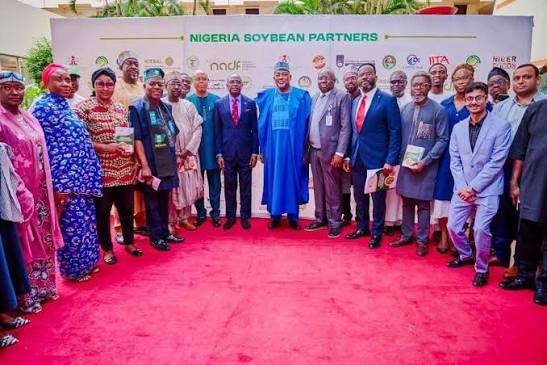
The development was disclosed by Brent Babb, Executive Director of the Soy Excellence Center and Sub-Saharan Africa Lead for the U.S. Soybean Export Council (USSEC), during the USSEC & U.S. Soy Nigeria: Now Conference 2026 held in Lagos.
Babb said Nigeria remains the leading market for U.S. Soy in Sub-Saharan Africa, noting that increasing population growth and expanding demand for animal protein are creating new opportunities for collaboration rather than competition with local producers.
“Over 60 per cent of the U.S. soybean crop is exported worldwide. We’ve worked extensively in Asia and North Africa, and we see strong opportunities in Sub-Saharan Africa, with Nigeria as the regional leader,” he said.
He explained that although Nigeria produces soybeans locally, rising consumption means domestic output alone will not be sufficient to meet future demand.
According to him, USSEC intends to work closely with poultry, aquaculture, livestock and soy food processors to expand soy utilisation while supporting improvements in Nigeria’s soybean value chain.
“This isn’t a competition with local soy production. Local production and imports can grow together. We’re here for the long term,” Babb stated.
He noted that U.S. soybeans offer advantages beyond crude protein, citing their high digestible amino acid content, consistent quality and higher energy value, which help livestock producers lower feed formulation costs while maintaining productivity.
Babb also announced plans for U.S. soybean industry leaders to collaborate with Nigerian farmers by introducing improved technologies and strengthening capacity development to boost local soybean production.
Despite expressing confidence in the sector’s prospects, he identified access to finance and value chain consistency as major constraints to industry growth.
He stressed the need for reliable supplies of quality day-old chicks, steady soybean availability for processors, and sustained consumer demand capable of withstanding inflationary pressures.
While acknowledging that growth may not always be steady, Babb said ongoing investments and stronger linkages across the agricultural value chain position Nigeria to benefit significantly from expanding soybean demand.
Also speaking, Director of the U.S. Soybean Export Council and United Soybean Board, Cindy Pulskamp, described the relationship with Nigeria as a partnership focused on strengthening food security through knowledge exchange and collaboration with agribusiness stakeholders.
Pulskamp said her family’s 114-year-old farm in North Dakota had achieved one of the world’s lowest carbon footprints in soybean production by adopting soil health practices, precision agriculture, cover cropping, GPS-guided equipment and drone technology.
She encouraged Nigerian producers to embrace practical solutions for reducing post-harvest losses, noting that improved storage systems and appropriate technologies could help address challenges associated with the country’s humid climate.
Chair of the Soy Excellence Centre Global Advisory Panel, Anne Meis, highlighted the growing impact of the centre’s training programmes on Nigeria’s livestock and feed industries.
She disclosed that more than 1,200 Nigerians completed Soy Excellence Centre courses this year, bringing total participation since the programme’s launch to over 5,000.
According to Meis, graduates have recorded measurable improvements in productivity, with Dunn-Maid Farms reporting stronger biosecurity measures and lower bird mortality, while a feed mill increased pellet production by between 15 and 20 per cent and reduced production costs by 10 per cent after adopting full-fat soy processing techniques.
She added that programme surveys showed 94 per cent of graduates reported improved professional skills, while 93 per cent said their organisations recorded higher profitability following implementation of the training.
Meis urged Nigerian protein producers to continue investing in innovation, technology and sustainable resource management to unlock greater opportunities across the country’s agricultural value chain.

3 comments
I’m really surprised
Excellent
And it’s a welcome development
We are into Soybeans production for both EGS, CS and grains in Nigeria