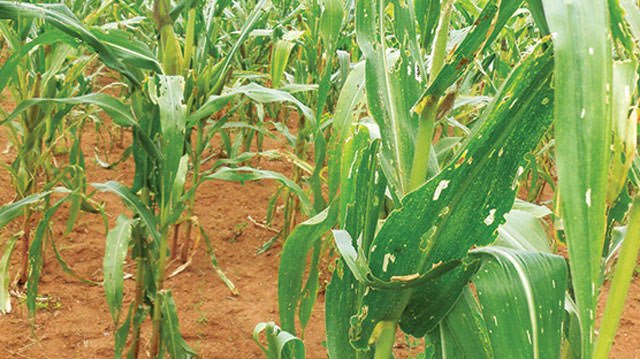

Armyworm infestation has destroyed about 790 hectares of farmland in Birniwa Local Government Area of Jigawa State, leaving farmers with heavy losses and raising concerns over food security and household livelihoods.
The pest, locally known as “Maremare”, has ravaged mainly bean and sesame farms, with affected farmers reporting losses running into several bags of expected produce.
One of the affected farmers, Abdullahi, said the infestation destroyed more than 90 per cent of his bean farm, after he had invested in land preparation, seeds, labour and other inputs.
He said he planted about six mudus of beans and expected more than 20 bags from the farm, but the outbreak had left him with little to harvest.
Another farmer, Abba Ibrahim, said he lost more than 25 bags of beans and 12 bags of sesame, while other farmers reported losses ranging from six to 20 bags of beans.
The farmers said the losses threatened not only their incomes but also household food supplies, as many depend on farm produce for both consumption and income to meet expenses such as school fees, medical bills and other family needs.
Iliyasu Abdullahi Gomari, who expected about 20 bags of beans, said he had planned to use proceeds from the harvest to support preparations for his children’s weddings.
The affected farmers appealed for government assistance, including agricultural inputs and pesticides, to help them recover and return to production.
The Jigawa State Agricultural Transformation Agency (JATA) said it responded after receiving reports from field extension agents and the district head.
The Director-General of JATA, Dr Saifullahi Umar, said the agency deployed a technical team to assess the affected farms and profile farmers who suffered losses.
He said government had also supplied agrochemicals and provided technical guidance to help farmers control the pest and prevent further damage.
Umar linked the increasing risk of pest outbreaks to changing weather patterns, noting that high temperatures followed by prolonged interruptions in rainfall could create favourable conditions for pests and diseases.
He stressed the need for early detection and rapid intervention to prevent pest outbreaks from spreading across larger farming communities.
An agricultural expert at the Federal University Dutse, Prof. Ado Garba Jangargari, described armyworms as highly destructive pests capable of rapidly defoliating crops and causing severe yield losses when infestations occur during critical stages of crop development.
Jangargari advised farmers to regularly monitor their farms, plant early and control weeds, particularly wild grasses that can provide breeding grounds for pests.
He also recommended integrated pest management measures, including intercropping, biological control and approved biological pesticides such as neem-based products and Bacillus thuringiensis (Bt).
The expert cautioned against indiscriminate pesticide use, advising farmers to use approved chemicals and rotate chemical classes to reduce the risk of pest resistance.