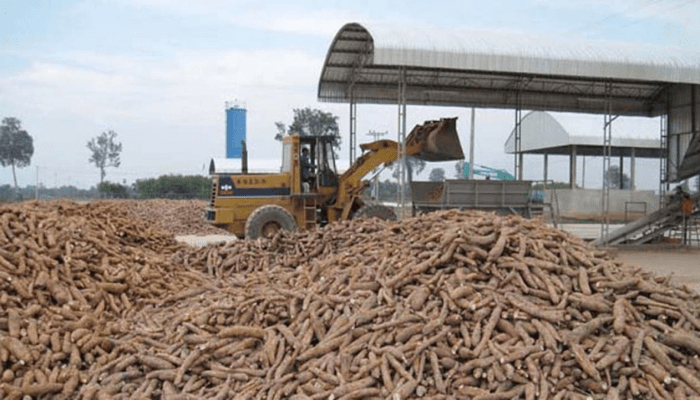

Pure Bio-Tech Company Limited has called on the Benue State Government to strengthen the business environment to encourage more private investment in agricultural processing and expand industrial activities in the state.
The company’s Manager, Abdulkadir Mohammed, said the growing demand for cassava from its ethanol-processing plant had created a ready market for farmers while generating business opportunities for aggregators, transporters and other players in the value chain.
Speaking over the weekend on the company’s operations and economic impact, Mohammed said Pure Bio-Tech sources cassava from Benue, Nasarawa, Kogi, Kwara, Niger, Taraba, Bauchi and Cross River states.
He said Benue accounts for about 40 per cent of the company’s allocated supply arrangements but contributes up to 65 per cent of the cassava actually supplied to the factory.
According to him, the industrial demand has helped change the fortunes of cassava farmers who previously faced difficulties selling their produce, particularly dried cassava, known locally as kpor.
Mohammed said kpor had at times attracted such poor prices that some farmers resorted to using it as firewood, manure for tree crops and powdered material for marking football fields.
He said the company’s operations had consequently opened up a market for the produce, while its introduction of standard weighing scales had also helped establish a uniform basis for determining the quantity of cassava supplied by farmers and processors.
The manager said the factory had also provided employment for Benue indigenes in safety management, human resources, accounting, legal services and cassava supervision.
He listed some of the company’s interventions in its host community to include seven boreholes, electricity facilities and a transformer purchased at N11.5 million.
The company, he added, supplied armoured cable valued at N1.5 million, commenced construction of a school and provided annual festive support to residents.
Mohammed also linked the factory’s operations to improved security in the area, saying the company’s frontage is guarded by soldiers while naval personnel provide security around the river end.
He said the economic activities generated around the factory had contributed to changing the character of the area, which he said had previously been affected by violent conflict.
On environmental concerns, Mohammed said the company encountered regulatory difficulties during its test-running phase in 2022 following a water overflow incident.
He said the National Environmental Standards and Regulations Enforcement Agency (NESREA) shut the facility temporarily in 2023, but added that the company had since fulfilled the required conditions and obtained an Environmental Impact Assessment certificate.
He said environmental consultants now conduct monthly tests on the company’s waste, with the results submitted to NESREA.
Mohammed also addressed the restriction of some small-truck cassava deliveries, attributing the decision to repeated cases of improperly dried cassava, congestion around the factory and protests.
He said the company had to regulate the volume of cassava it purchased based on its processing and storage capacity.
He further dismissed allegations that suppliers pay bribes to secure supply slots, saying the company operates a transparent allocation system.
“We ensure transparency and fairness in supply allocation, maintain quality standards in our operations and try to meet up with our corporate social responsibilities to our host,” he said.