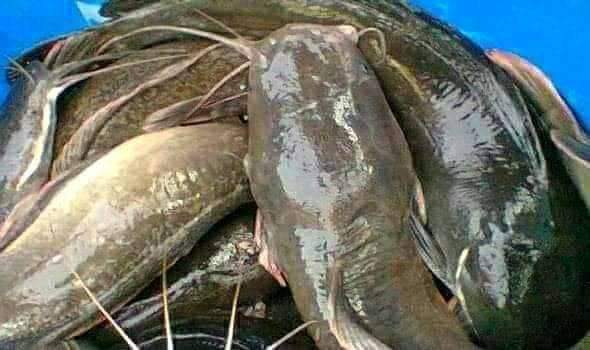

The National Fish Association of Nigeria (NFAN) has said Nigeria’s domestic fish production remains below a quarter of the estimated 300,000 metric tonnes required to meet the country’s consumption needs, calling for stronger government support and collaboration among fish farmers to close the gap.
The association’s President, Ladan Aliyu, disclosed this in Abuja on Wednesday during the inauguration of NFAN’s newly elected executive committee, where stakeholders also raised concerns over rising fish prices and the cost of imported frozen fish.
He urged farmers to form sustainable cooperative societies that would improve access to inputs, training and government support, while strengthening local production.
“As fish farmers, we are currently producing less of the fish needed for consumption. Nigeria consumes about 300,000 metric tonnes of fish. Yes, that’s what we require. But for now, we are not producing even one quarter of it. And the importation brings in half of that quarter,” Aliyu said.
He said locally farmed fish could be cheaper than imported varieties, but the depreciation of the naira had pushed up import costs because importers needed foreign exchange to source fish overseas.
However, the NFAN Deputy President, Adewale Adewu, also linked rising prices to global market conditions and dependence on imported supplies.
Meanwhile, the Federal Ministry of Industry, Trade and Investment urged the new NFAN leadership to promote unity, transparency and accountability.
Speaking on behalf of the Director of the Commodities and Export Department, Usman Bokani, Mrs Felicia Udeh congratulated the executives on their July 29, 2026 election and urged them to keep members’ interests central to their activities.
Udeh said the ministry was willing to work with the association through policies and other support within its mandate, while cautioning against internal divisions. The association’s leadership also called for “one fish, one voice”, saying stronger collaboration among farmers, government agencies and other stakeholders would help expand production and strengthen the fisheries and aquaculture sector.