
As part of efforts to improve access to climate finance for small scale farmers, Nigeria is developing a framework to guide investments in agricultural adaptation, strengthen financial accountability and protect rural livelihoods from the growing impact of climate change.
The initiative is expected to provide financial institutions with clear guidelines for identifying and supporting farming activities that can withstand climate related challenges, including drought, flooding and changing weather patterns.
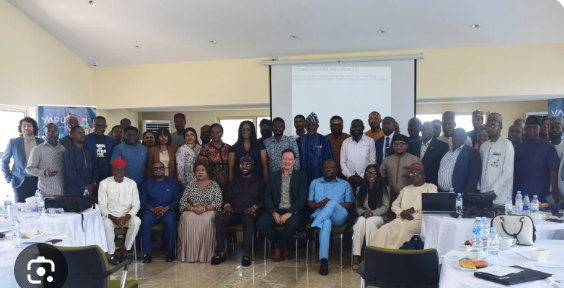
The proposed framework was discussed at a validation workshop on adaptation and resilience solutions organised by the Presidential Implementation Committee on Technology Transfer (PICTT) in partnership with YAPU Solutions in Abuja.
Chairman of PICTT, Dahiru Muhammed, said the exercise was aimed at translating Nigeria’s national climate taxonomy into a practical system that farmers, financial institutions and other stakeholders could use to access and channel funding.
He explained that although the Federal Ministry of Finance and the United Nations Development Programme were involved in developing the national taxonomy, PICTT and its partners were working to establish the mechanisms needed to implement it, particularly in rural communities.
According to him, clearly defining eligible climate adaptation activities is essential to ensuring that farmers and agricultural enterprises can benefit from available financing opportunities.
Muhammed noted that the funding requirements and potential financing partners were still being determined, adding that the process had not reached the stage of assessing the total investment needed.
He also called for coordinated action by the federal, state and local governments to tackle climate related risks, particularly flooding, through better infrastructure and effective preventive measures.
Country Representative of WorldFish in Nigeria, Charles Nyangbe, said the country needed financing solutions that reflected the varying environmental conditions affecting agricultural production across different regions.
He explained that farmers in northern Nigeria faced increasing risks from drought, while many communities in the south struggled with flooding and waterlogged farmland. Such differences, he said, made it necessary to develop region specific adaptation strategies rather than rely on a single financing model.
Nyangbe added that the taxonomy could help banks and other financial institutions design lending products that support sustainable farming practices. He stressed that climate finance required a dedicated funding approach rather than depending solely on conventional government expenditure.
He proposed that the government establish a specific pool of funds for climate related investments and channel the resources through financial institutions and commercial banks to enable farmers to obtain loans.
Managing Director of YAPU Solutions, Christoph Junghleisch, described climate adaptation as a significant investment opportunity, estimating that smallholder farmers could require up to $30 billion annually to respond effectively to climate risks.
He said his organisation was collaborating with PICTT to build a system that links practical adaptation measures with suitable sources of finance, allowing resources to reach farmers who need them most.
Junghleisch disclosed that the initial phase could involve a pilot investment of between $100 million and $200 million, with plans to increase the financing to $1 billion during the first expansion stage.
He emphasised the importance of digital technology in tracking funds and ensuring that investments reach their intended beneficiaries. According to him, improved documentation and monitoring would make it possible to account for every naira committed to supporting smallholder farmers.
Participants at the workshop included representatives of financial institutions, agricultural specialists and other stakeholders who examined potential financing options, assessed the proposed taxonomy and discussed the steps required for implementation.
The organisers said the initiative was intended to improve the flow of climate finance to vulnerable farming communities, support more resilient agricultural production and reduce the economic consequences of climate change.
However, the proposed funding figures remain targets under consideration, with the framework and its implementation arrangements still being developed.