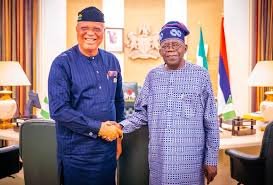

Governor Umo Eno of Akwa Ibom State has engaged in high-level consultations with President Bola Ahmed Tinubu in Abuja and undertaken an agricultural study visit to Nasarawa State in order to strengthen governance, food security, and economic diversification in the state.
The Governor met with President Tinubu on 25 February at the Presidential Villa, Abuja, where he provided an update on political, economic, and developmental activities in Akwa Ibom State.
The meeting, he explained, was part of the regular interface between state governors and the President to review progress, discuss emerging issues, and seek federal collaboration where necessary.
Speaking on arrival at the Victor Attah International Airport, Uyo, Governor Eno clarified that the visit was not extraordinary but consistent with constitutional responsibilities that require sub-national leaders to keep the federal government informed about developments within their states.
Beyond the Presidential engagement, the Governor extended his working tour to Nasarawa State on 27 February, where he visited the integrated and mechanised CSS Farms in Gora.
The purpose of the visit was to understudy its operational structure and assess areas of possible adaptation for the Ibom Model Farm project.
During the inspection, the Akwa Ibom delegation examined production units and engaged the farm’s management in discussions centered on mechanised agriculture, livestock integration, agribusiness expansion, and sustainable value chain development.
The exercise was designed to expose the state’s agricultural team to successful models that could be replicated to improve productivity and strengthen food security back home.
Governor Eno was accompanied by senior government officials, including the Secretary to the State Government, commissioners overseeing agriculture, works, finance, and information, as well as other top functionaries in the agricultural investment sector.
The twin engagements in Abuja and Nasarawa reflect the administration’s broader strategy to deepen federal-state cooperation, reduce dependence on oil revenue, expand internally generated revenue, and promote long-term economic stability in Akwa Ibom State.