
In an era where agriculture must compete with fast-paced digital careers for the attention of young people, a growing number of visionary leaders are redefining what farming represents — not as a last resort, but as a frontier of innovation, opportunity, and economic transformation. Among these voices is Dr. Ikechi Agbugba, an agricultural economist, scholar, and pioneer of the Brain Re-engineering Initiative, whose life journey reflects a deep-rooted commitment to reshaping how Africa’s younger generation perceives agriculture.
Raised within the intellectually vibrant environment of the University of Nigeria, Nsukka, Dr. Agbugba’s early exposure to discipline, education, culture, and hands-on farming laid the foundation for a career dedicated to bridging tradition with technology. From managing a home garden under his mother’s guidance to representing Africa in global agricultural conversations, his experiences have shaped a powerful philosophy: agriculture is not merely survival — it is strategy, science, and sustainable prosperity.
In this exclusive conversation with AgroNigeria, Dr. Agbugba reflects on his formative years, academic journey, international exposure, and the inspiration behind his mission to rebrand agriculture for Nigerian and African youth. He shares insights on the transformative role of innovation, the urgency of food security, and why a generational mindset shift — what he calls “Brain Re-engineering” — is essential to unlocking Africa’s agricultural future.
This interview offers more than a personal story; it presents a blueprint for engaging young people in a sector that holds the key to economic resilience, job creation, and continental growth.
- Can you start by telling us a bit about your background and what inspired you to focus on rebranding agriculture for the younger generation in Africa especially your home country, Nigeria
I was raised at the University of Nigeria Nsukka Campus where my parents worked. My dad was a very good man to the core. He was disciplined and demonstrated integrity, respect, and responsibility to his immediate family and outsiders. Growing up in that environment offered me a unique, vibrant, and intellectually stimulating environment, as well as unparalleled access to educational, cultural, and recreational resources such as the UNN Zoological Garden, where, for the very first time in my life, I witnessed a life lion moving withing a seclusion. I also saw crocodiles, monkeys, chimpanzees, to mention a few. I also visited the swimming pool, where I also encountered the Surinam cherry (Eugenia uniflora) fruit, also widely known as the pitanga or Brazilian cherry. This distinctive, vibrant red, ribbed fruit is an edible tropical berry. I could remember that excitement welling up in me whenever we trespassed the swimming pool area through the Health and Physical Science Facility where the Basketball and Lawn Tennis Court were situated. Aside the church campus choir, (where I was exposed to good negro spiritual music, classicals, hymns, chants, lullabies and native songs), I was also a member of the University of Nigeria Chorus, as well as Achinivu-Harcourt Whyte Chorale. I was amongst the choristers who sang for the Late Dr Nnamdi Azikiwe during his 90th birthday and during his final obsequies in 1996. Through the choir, I became exposed to public ministrations, speaking and performances even in government houses, birthdays and funerals. I am beginning to appreciate those good old days when we were exposed in the right manner.
As the last child of the family, my mum was particular about having and seeing me manage our home garden which comprises of the crop section and livestock (mainly the poultry farm). My biological mother was my first agricultural science teacher and always ensured that I weed the farm and kept the environment clean as much as I could. She taught me how to plant cuttings of cassava stem, and sow seeds of maize, okra, and fluted pumpkin (ugu). On my own, I started experimenting on how to plant stems of waterleaf, bitter leaf, scent and curry leaves, and of course that was one of the exciting times in my life sleeping and waking up to engage with my friends, especially during holidays. At any time, my interest began to dwindle, my mum would come up with a reward plan and strategy to make the activity more attractive. Taking a trip down the memory lane, I could recall that I was the only student in my graduating set at the University of Nigeria Secondary School that applied to study agriculture at the tertiary level. In fact, I applied for agricultural economics in JAMB (a university entrance examinations) and did so well that my name appeared on the first list and that was the official commencement of my journey in this space. Wait please! Another part of this testimonial was that due to massive examinational malpractice, 19 out of about 21 centers where JAMB exams took place were seized. This implies that only 2 centers had the results of candidates who sat for the exam released. I remembered how my dad prayed for me that very faithful Saturday morning in 1997 at our University of Nigeria Nsukka Campus residence.
In those days, I could tell that my sojourn in this space sounded uncanny or weird and I still have a vivid memory about this and how youngsters and youths of Nigeria and Africa nurse a negative feeling or express a disinterested attitude about pursuing a career in that space probably due to the deep-seated cultural issues. Truly, agriculture is often perceived as ‘not cool’ or a low-status, dirty job with a stigma passed down through generations, with parents often discouraging their children from pursuing farming, preferring they seek respectable urban, white-collar jobs. A dominant view amongst youngsters and agriculture is that it is for the older, and less-educated population, making it unappealing to the youth looking for modern, technology-driven careers.
Interrogating my mum recently what was prompting her to send me to the farm and all those moves she exhibited surprised me, as response was that she felt I should be more engaged in the farm than engage in excessive play arounds campus. She felt agriculture would make me responsible. Truly, my mum’s approach was a major influence on my decision to chart my career course in the agriculture domain. I later trained as agricultural economist at the University of Nigeria Nsukka same institution. Interestingly, I proceeded to MSc and PhD in the same department with special interest in Agribusiness and Marketing. I later on proceeded to South Africa for my Postdoctoral Research Fellowship which was stimulated by their Agricultural Research Council collaborative project with the University of Fort Hare, as well as a NUFFIC Project which 3 traditional universities in South Africa benefitted from and those institutions are University of Limpopo, Venda and Fort Hare. I was also funded by NRF to the USA for the first time to represent South Africa at the IFAMA World Congress which held at St Paul’s Minneapolis in Minnesota. I later on joined Rivers State University and I have risen to the level of Associate Professor of Agricultural Marketing. In addition, I am a Co-founder, Africa Organisation of Technology in Agriculture and the Chairperson, Scientific Committee of the International Conference on Business Models in Agriculture.
See link on my 10 years as a PhD in February 2014, https://aclasses.org/webinars/ikechi/
Regarding my passion and focused work on rebranding agriculture for the younger generation in Africa especially in Nigeria was as a result of my observations from friends and agemates in their negative feeling and perception about agriculture and my research and travel experiences to Asia, other African nations and he potential, as well as the progress agriculture is making (as a primary, traditional and real sector) in contributing to driving economy wide growth. My trip to Malaysia was an incredible one seeing disease and pest free oil palm trees everywhere along Kuala Lumpur Road through Johor Bahru to Singapore and that simply amazed me. Can you believe that Malaysia’s economic growth was clearly and significantly supported by her agriculture sector, specifically through the strategic development of their palm oil industry, with historical ties to Nigeria playing a fundamental role in driving development through their agriculture sector. While the economies of Malaysia and other South-East Asian countries (such as Singapore, Vietnam, Thailand, and Indonesia) are currently experiencing diversification by their services and manufacturing sector, agriculture remains a vital, high-growth sector. Today, Indonesia is leading on a global front in palm oil and other oil palm products. As we all know that food is basic, and primary life need and a fundamental human right, with the agriculture sector serving as the essential engine for ensuring global food and nutritional security, and, in many cases, rural livelihoods. Truly, agriculture is responsible for producing the diverse range of crops, livestock, and raw materials necessary to sustain a growing global population, with demand expected to rise significantly by 2050.
During our assignment with the United Nations, colleagues and high-level expert panel concluded that the younger generation are key to revamping the food and agricultural systems of Africa. In this advent of technology and industry 4.0, the pace and progress agriculture in majority of African countries is making from a developmental viewpoint is still slow. Owing to the fact that agriculture is a bedrock of Nigeria’s economy, as well as other African economies, providing livelihoods for roughly 65-70% of their population and contributing between 30-40% to their GDP, the time for her government and development stakeholders should arise and invest in agriculture. Since the younger generation are attracted by scientific and technologically driven agriculture, it is high time attention must be given to unlocking opportunities for them in both agricultural supply and value chains. Agriculture and the business of it is the primary economic activity for many, supporting rural communities, driving food security, and contributing about 30% export value. Despite high employment, the sector remains under-invested and vulnerable to climate change but musters great potential for economic development.
Adapting the Brain Re-engineering Initiative to agriculture is focused on building capacity with the younger generation, governments and stakeholders of development on the potential of agriculture as a green gold that provides financial independence, far surpassing the lure of scarce white-collar jobs. It is clear to rebrand the minds of young Nigerians and young Africans that farming in the 21st century has advanced to the employment of drones, AI, blockchain and digital marketplaces, promoting it as a tech-forward modern industry. The younger generation are drawn to sectors that utilize modern technology that integrate AI, drones, precision agriculture, and IoT sensors to alleviate labour, optimize yields, and make farming easy and convenient. I have this deep-seated commitment within my resources that helping eliminate hunger and alleviating poverty is my life-long passion and I have always believed that if we all can empower one youth to start some farming, they wouldn’t just feed themselves but feed their community and further create jobs for others. My personal belief that while many things in life can fail, the demand for food is a certainty. Farming is not a gamble; it is a game of certaintyandfulfilment. As Africa’s giant, Nigeria must arise and position herself again especially in unlocking her agricultural potentials through the younger generation. Government must protect and promote the interest of the younger generation.
The Brain Re-engineering Concept and Reimaginationis a multi-dimensional, and technology-driven approach which can be split into knowledge and skill acquisition embedded in change of perception, entrepreneurship, technology, sustainability and circular economy, as well as social equity in public policy. Truly, the youngsters and youths should be re-informed, re-taught and re-educated to re-engineertheir minds towards agriculture and these form the pillar of brain re-engineering.
May I state that the Brain Re-engineering is a system strategy that can be adapted in actualising the 17 sustainable development goals agenda of the United Nations. However, permit me to read out a comment from an analyst on Brain Re-engineering. I believe that summarises my agenda for driving the Great iger initiative.
‘Dr Agbugba’s focus on rebranding agriculture is driven by the need to shift the perception of agriculture from a survivalist activity to a dynamic, technology-driven business.
- Brain Re-Engineering: Agbugba advocates for a paradigm shift he calls “Brain Re-Engineering,” which targets the negative or outdated ideologies young people often have about farming associating it with poverty or manual labour.
- Youth as Drivers of Innovation: He believes the “fourth industrial revolution (4IR)” offers a unique window for African youth to lead through AI, IoT, and blockchain. By integrating these technologies, he aims to make agriculture an attractive, profitable, and prestigious career choice for Nigeria’s growing youth population.
- Addressing the Food Crisis: His work is deeply rooted in the reality of Nigeria’s food security challenges. He views youth engagement not just as a job creation strategy, but as a critical necessity for achieving sustainable food systems and economic growth.’
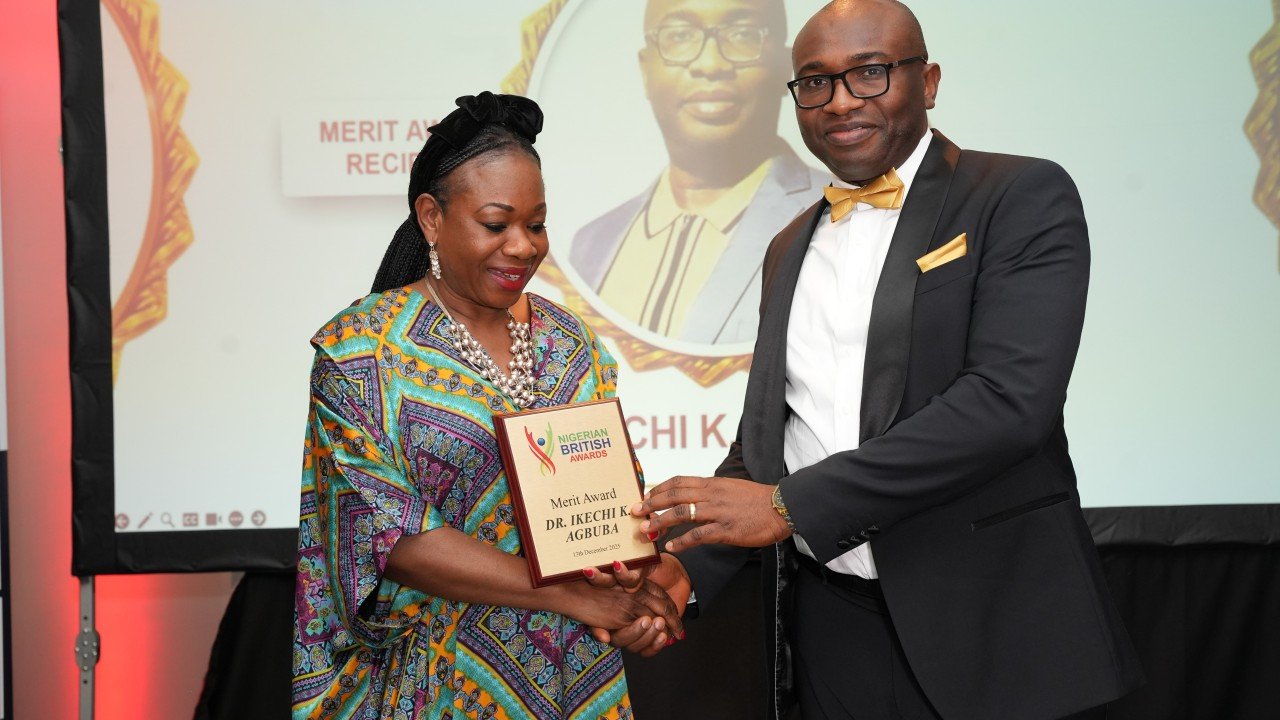
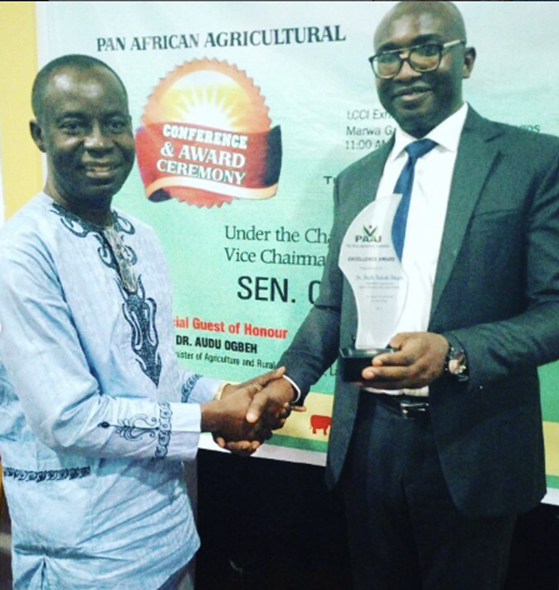
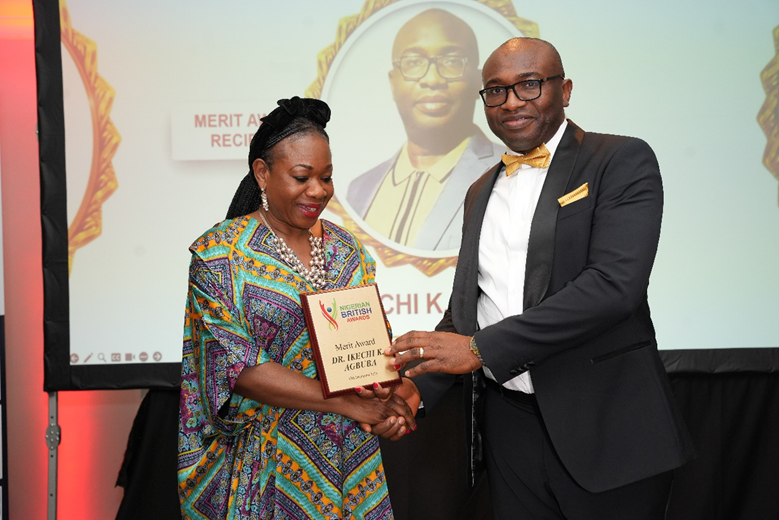
Interestingly, this initiative is registered in the Library of Congress in Washington DC. On their 25th Anniversary, the Nigerian British Awards (NBA) recognised me as the Pioneer of the Brain Re-engineering Initiative. OtherI have also received numerous awardssuch as the Agro-Economist of the Year by the Pan African Agricultural Journalists (PAAJ); Global Mentor of Change and Global Emerging Leader Awards by the Global Council for the Promotion of International Trade (GCPIT); Award of Excellence from the Pan African Organisation for Peace and Conflict Resolution (OPPRC) owing to his transitional works on ‘Pioneering the Re-engineering Agenda for Agricultural Development and Productive Networking for Diaspora Engagement.
2. Your framework, the Brain Re-engineering Initiative, takes a unique approach to attracting youth to agriculture. Can you walk us through the core principles behind this initiative?
Yes, it is quite unique. It is originally created from my transformative, emotionally intense experience, as well as lasting, and profound memories on my sojourn in the agriculture domain.
From my distinctive approach on Brain Re-Engineering it is a framework designed to rebrand agriculture and attract youth by shifting deep-seated perceptions, a last resort, labor-intensive, and poverty-stricken endeavor to a high-tech, profitable, and purpose-driven business. It operates on the core belief that agriculture is not a poor man’s struggle but a primary sector foundational to industrial growth. This conceptual ideology resonates and can be viewed from the lenses of the works of classical economists and thinkers like Adam Smith, David Ricardo, and Thomas Malthus whose concepts focusses on exceeding the mercantilism to production, labour, and capital accumulation as the primary engines of economic prosperity. I also facilitate a Masters (MSc) degree class at the Rivers State University on ‘Concept and Theory of Economic Development’ and I wish to underscore that while classical economics focused on the early stages of industrialization, it set the stage for modern thought from hoarding gold to producing and expanding national output (mercantilists). Classical principles of free trade, deregulation, and private property were revived in the 20th century to form the basis of modern globalization (neoliberalism). While modern, endogenous growth theories focus more on technological innovation from within the system, they still build upon the classical emphasis on investment and capital accumulation (from complementary to modern theory).
Adapting the Brain Re-engineering initiative to agriculture hinges on 5 key pillars which are:
Pillar 1: Change of Perceptions – Addresses the perception problem by intentionally changing negative mindsets that view agriculture as manual, unfulfilling, or low-status. It uses education and media to show agriculture as a sophisticated, high-status business.
Pillar 2: Ideation & Entrepreneurship – Focuses on building agripreneurial capacity. It encourages young people to be original and creative, developing new business ideas that span the entire value chain, not just cultivation.
Pillar 3: Technological Integration – Leverages on industry 4.0 or fourth industrial revolution (4IR) tools such as AI, drones, blockchain, and precision farming with the aim of making agriculture attractive for the younger generation by shifting the focus from manual labour to digital and technical expertise.
Pillar 4: Sustainability and circular economy – Ensure long-term viability by integrating climate-resilient and environmentally conscious practices, aligning the framework with United Nations Sustainable Development Goals (SDGs). Also, ensures a shift from the ‘take-make-waste” approach to a model of design, repair, recycle and reuse to foster a sustainable and restorative economy.
Pillar 5: Social Equity in Public Policy – Advocates for fairness and justice in policy, ensuring individuals especially the youths and then women to have equal access to resources such as funding, land, and subsidies.