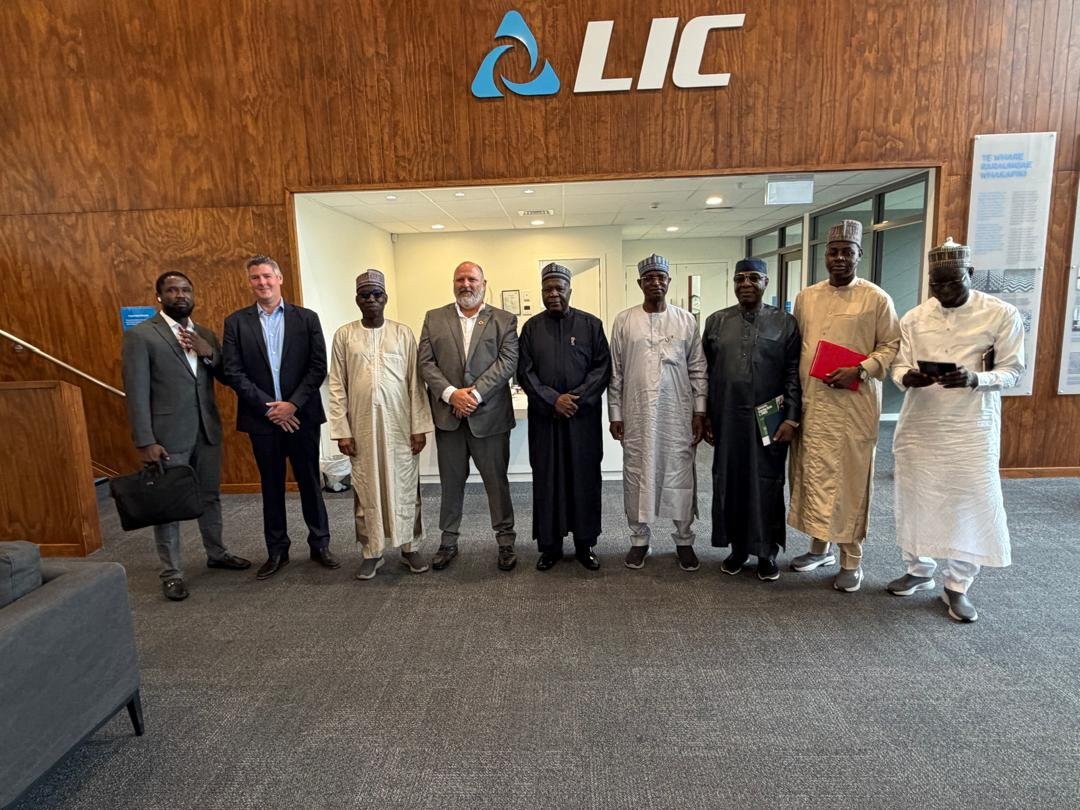

The Minister of Livestock Development, Idi Mukhtar Maiha, alongside the Executive Governor of Gombe State, Muhammadu Inuwa Yahaya, has engaged the Livestock Improvement Corporation (LIC) of New Zealand in high-level consultations aimed at advancing Nigeria’s livestock transformation agenda.
The consultative session, which was held on Monday in Hamilton, New Zealand,focused on strengthening breeding systems, improving dairy productivity, and ensuring the inclusion of sub-national governments in Nigeria’s livestock development drive.
Officials of the Livestock Improvement Corporation briefed the Nigerian delegation on the organisation’s operations as a cooperative-owned breeding institution established in 1900, with a core focus on dairy cattle improvement.
However, they disclosed that LIC-developed breeds account for about 75 per cent of New Zealand’s national herd, citing the Kiwi Cross as one of their most successful breeds, with an average productive lifespan of up to 10 years and annual milk yields of approximately 4,000 litres per cow.
The LIC team further revealed that the company exports over one million doses of semen annually to several countries, including Zambia and South Africa. Speaking during the engagement, the Head of International Dairy Development at LIC described the organisation as a global leader in artificial insemination services and expressed readiness to collaborate with Nigeria in developing a robust dairy cattle industry.
In his remarks, the Minister of Livestock Development outlined the Federal Government’s ongoing efforts under the administration of President Bola Ahmed Tinubu to reposition the livestock sector through targeted breeding programmes, strengthened animal health systems, feed and fodder development, as well as animal identification and traceability initiatives. He commended the Gombe State Government for proactively identifying LIC as a credible technical partner in livestock breeding.
Governor Inuwa Yahaya, in his presentation, highlighted Gombe State’s vast potential, citing availability of land and water resources, existing livestock populations, designated grazing reserves, ongoing breeding initiatives, and access to regional markets. He assured the hosts of the state’s readiness to move swiftly, pledging immediate execution of a Memorandum of Understanding and prompt commencement of field activities.
The meeting concluded with a mutual commitment to formalise collaboration through the signing of a Memorandum of Understanding between the Livestock Improvement Corporation and the Gombe State Government. The proposed areas of cooperation include cattle breeding, data and technology infrastructure, sustainable and climate-resilient livestock production, and capacity building.