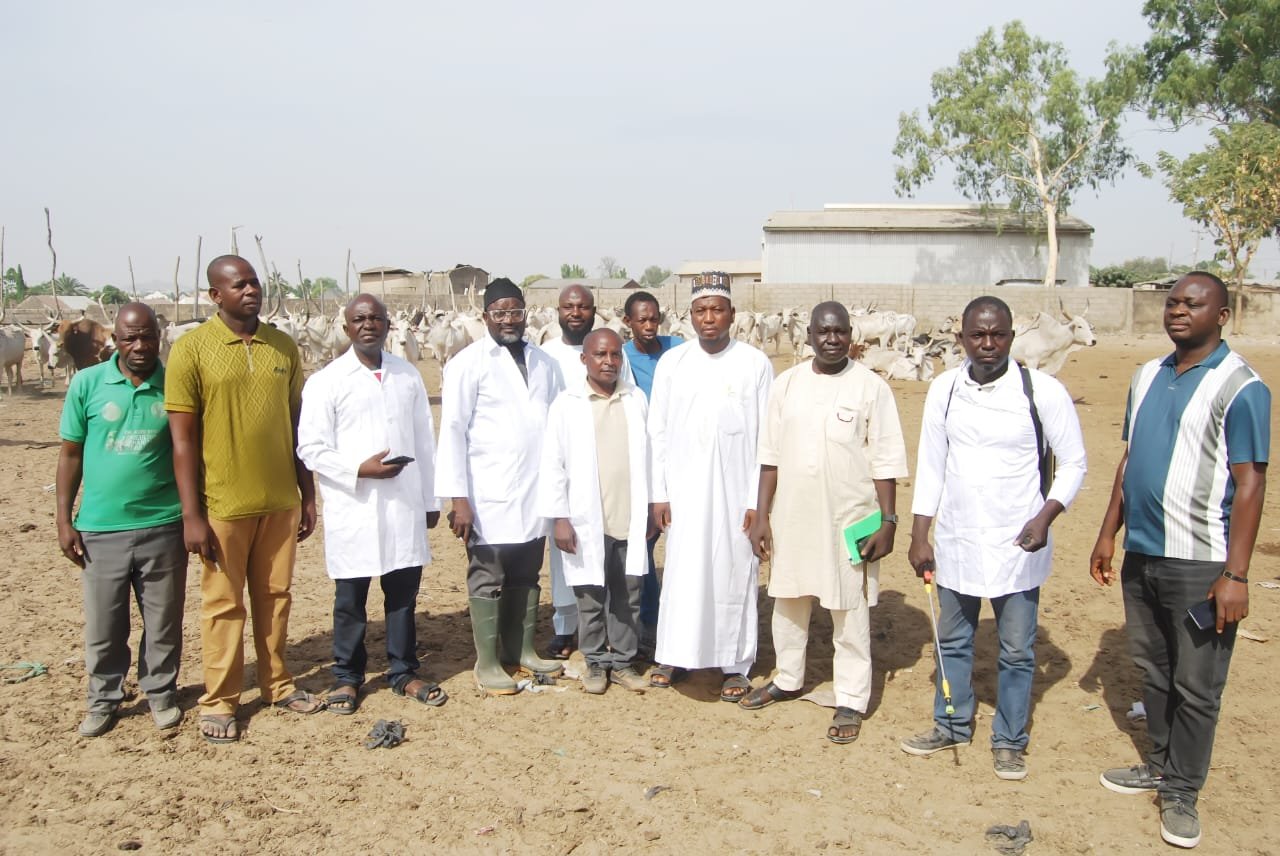

The Federal Government has rolled out a targeted livestock health intervention in Taraba and Sokoto States to curb the spread of tsetse fly and other ectoparasites responsible for major cattle diseases and economic losses among pastoralists.
The exercise, coordinated by the Federal Ministry of Livestock Development, involves insecticide spraying on cattle farms, grazing routes and high-risk locations, alongside the deployment of vector control traps to limit disease transmission.
In Taraba State, the intervention commenced in Jalingo, Ardo-Kola, Lau and Wukari Local Government Areas, with plans to extend coverage to the remaining LGAs. The State Coordinator and Federal Epidemiology Officer, Dr. Emmanuel Yarai, said the programme targets tsetse fly–borne trypanosomiasis, a disease endemic in Africa that significantly reduces livestock productivity.
According to Yarai, the disease attacks the blood and lymphatic systems of infected animals, leading to anaemia, weight loss, paralysis and, in severe cases, death. He noted that while most cattle breeds are vulnerable, West African N’dama cattle show relative tolerance, underscoring the need for sustained control measures across all production systems.
He added that biconical traps have been installed in strategic locations to complement the spraying exercise and ensure longer-term reduction in infection rates.
In Sokoto State, the Ministry’s Coordinator, Dr. Umar Tukur Argungu, said farmers were actively involved in identifying grazing areas with high tsetse fly prevalence, enabling targeted deployment of control measures.
He disclosed that the intervention also covered major livestock markets, including Kasuwan Kara in Sokoto North and Bodinga Local Government Areas, where consultations were held with farmers and traders.
Argungu said concerns raised during the engagements would be documented and considered in future livestock health programmes.
The Director of Veterinary Services at the Sokoto State Ministry of Animal Health and Fisheries, Alhaji Abubakar Maidabo, urged livestock owners to promptly report disease outbreaks, warning that some animal diseases are zoonotic and pose risks to public health.
Also speaking, Chairman of the Cattle Traders Association in Sokoto State, Alhaji Bashir Bello, said traders suffered heavy losses during the last rainy season due to skin diseases linked to tsetse fly infestation.
He noted that the challenge affects all 23 local government areas of the state, particularly fadama and hurumi zones around Sokoto South and Wamakko.
Bello identified foot-and-mouth disease and peste des petits ruminants as other major threats to livestock production and pledged improved collaboration with authorities to ensure early reporting and rapid response to future outbreaks.