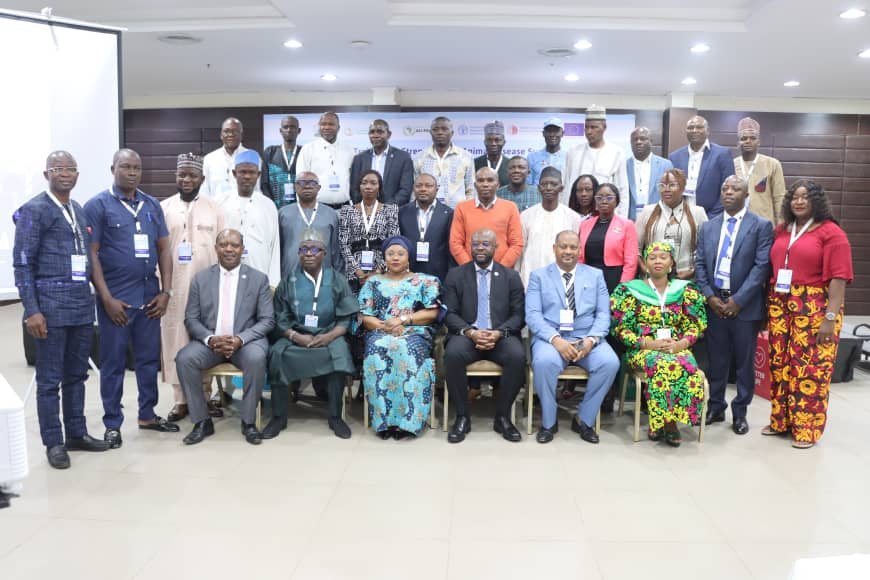

In efforts to strengthen food security and accelerate livestock transformation across the sub-region, the Federal Government has reaffirmed Nigeria’s leadership in the regional fight against transboundary animal diseases, declaring that West Africa must intensify its collective defences to protect livelihoods.
Speaking in Abuja during the opening of the Regional Training on Strengthening Capacities for PPR and Other Transboundary Animal Diseases, the Permanent Secretary of the Federal Ministry of Livestock Development, Dr. Chinyere Ijeoma Akujobi, said Nigeria remains firmly committed to driving continental progress on the Pan-African PPR Eradication Programme.
Dr. Akujobi explained that the Federal Government is deepening surveillance structures nationwide by upgrading the National Animal Disease Information System, enhancing laboratory–field integration under the One Health approach, and expanding collaboration with ECOWAS-RAHC, AU-IBAR, FAO, and WOAH to align national actions with regional and continental strategies.
She noted that Nigeria’s hosting of the regional training underscores the country’s readiness to support capacity development for neighbouring countries, strengthen technical cooperation, and promote harmonised disease control systems across West Africa.
According to her, every disease outbreak in rural communities erodes resilience, destabilises local economies, and slows down regional agricultural development. She emphasised that Africa must transition from reactive emergency responses to predictive, analytics-driven surveillance if the continent aims to achieve global PPR eradication by 2030.
Dr. Akujobi added that the sub-region continues to battle multiple transboundary and zoonotic threats including Foot and Mouth Disease, African Swine Fever, Anthrax, and Highly Pathogenic Avian Influenza which collectively threaten food systems, livestock productivity, and household incomes. She urged veterinarians, laboratory scientists, epidemiologists, wildlife authorities, border security agencies, and pastoral communities to work more collaboratively, noting that each group plays a vital role in prevention and control.
In his remarks, the FAO Representative in Nigeria, Dr. Tofeek Braimah, described PPR as one of the most devastating viral diseases affecting sheep and goats, with severe economic and livelihood implications for rural and peri-urban households.
He stated that while the global eradication target for 2030 is ambitious, it remains attainable through strong partnerships, sustained political commitment, and coordinated regional action. Dr. Braimah reaffirmed FAO’s continued support to member states and regional bodies in their animal health interventions.