
The Federal Government has set aside 33,000 hectares of land under the Abuja Master Plan for the development of livestock settlements.
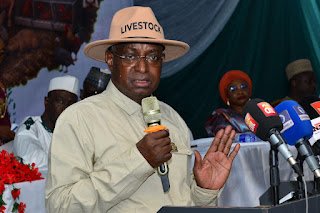
The Minister of Livestock Development, Idi Maiha, announced in Abuja at a ministerial news conference focused on Federal-State-Private Sector Partnerships for the transformation of Nigeria’s livestock sector.
Mr Maiha said the plan formed part of the government’s efforts to phase out the movement of cattle and other livestock within the Federal Capital Territory and encourage a more settled system of animal production.
He said the proposed framework would support the establishment of livestock development centres tailored to different animal species, with the aim of strengthening food security, rural development and lasting peace.
According to the minister, achieving the desired transformation in the livestock sector would require close collaboration among the Federal Government, state governments and private investors.
Mr Maiha said the settlement model was designed to keep livestock production away from heavily populated urban areas while creating more suitable conditions for improved animal productivity.
He identified improved genetics, modern livestock management practices, dedicated settlements and livestock development centres across the country as key pillars of the Federal Government’s strategy.
“The 33,000 hectares reserved for livestock settlement are located outside the Abuja metropolis.
“The city is not designed to co-mingle livestock with people. Livestock owners will be able to come into the city while their animals remain in designated production areas.
“Government is working with the FCT Administration to rehabilitate existing livestock facilities, including Kawu Grazing Reserve, Karshi and Paiko-Kore.
“Kawu Grazing Reserve has recorded improvements, with three boreholes provided alongside a digital weather station to support livestock production and management,” he said.
The minister said consultations were continuing with the FCT Administration on the rehabilitation of additional livestock facilities and their incorporation into the proposed settled production system.
He explained that the framework clearly defined the roles of the Federal Government, state governments and private-sector participants.
According to him, the Ministry of Livestock Development would be responsible for policy guidance, technical standards, animal health protocols, traceability systems, data management and regulatory coordination.
State governments, he said, would provide appropriate land, local infrastructure, community engagement, security support and producer mobilisation.
“Private investors and producer organisations will finance and operate commercial components of the value chain,” he said.
Mr Maiha said the livestock development centre model would help transition the sector from scattered and low-productivity operations to commercially driven clusters capable of attracting greater private-sector investment.
He said individual states would determine the livestock value chains to prioritise based on factors including their agro-ecological conditions, availability of feed and water, producer base, market opportunities and investment prospects.
“The centres can accommodate investments in breeding, feed and fodder production, cattle finishing, dairy chilling, sheep and goat fattening, poultry production, pig breeding and feedlots.
“They can also support modern abattoirs, meat processing, cold-chain storage, logistics, biogas, organic fertiliser, hides and skins and leather,” he said.
Mr Maiha said the centres were expected to operate as regulated commercial clusters, with the government providing the necessary enabling environment while private operators run the revenue-generating components.
He added that the initiative could strengthen food and nutrition security, generate employment, stimulate rural economies and address some of the conflicts and inefficiencies associated with the existing livestock production system.
The minister said the policy also recognised the significant differences in livestock production conditions across Nigeria’s dry savanna, wet savanna, rainforest and coastal regions.
He noted that these variations made it impractical to adopt a uniform livestock production model across the country.
Mr Maiha highlighted investment opportunities in the cattle and dairy value chains, including irrigated fodder production, hay and silage, feedlots, breeding, artificial insemination, milk collection and chilling facilities, hygienic abattoirs, meat packaging, hides and skins processing, and biogas production.
He said the poultry sector also offered opportunities in hatcheries, breeder farms, feed mills, broiler and layer clusters, vaccination and laboratory services, egg grading and packaging, as well as slaughtering and cold-chain facilities.
The minister criticised the traditional extensive livestock production system, which requires animals to trek long distances in search of pasture.
According to him, the energy animals expend during prolonged movement reduces the energy available for meat and milk production.
Mr Maiha said shifting towards settled livestock production, alongside improved genetics, better access to feed and water, strengthened animal health services, processing infrastructure and increased private investment, would help build a more efficient, productive and competitive livestock sector.