
Clarion Olusegun
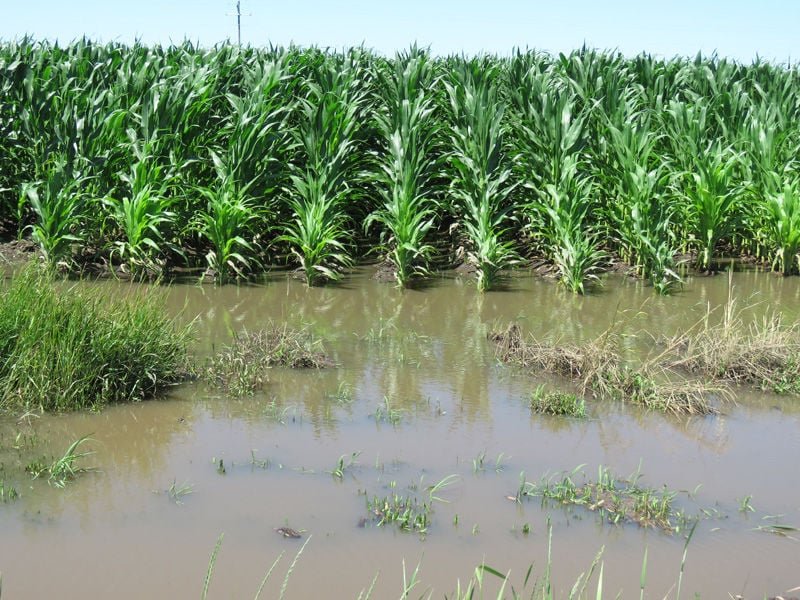
The Federal Ministry of Environment has issued a flood warning for several parts of the country following predictions of heavy rainfall from July 16 to July 20, 2025.
The alert released by the National Flood Early Warning Center (FEWS ), listed 11 states where flooding is likely to occur due to the anticipated downpour.
According to the statement signed by Usman Bokani, Director of the Erosion, Flood and Coastal Zone Management Department, communities in the following areas are advised to prepare for possible flooding :
– Adamawa State: Mubi
– Akwa Ibom State: Edor, Upenekang, Oron, Eket
– Borno State: Ngala, Maiduguri
– Bauchi State: Azare, Bauchi, Itas, Jama’are, Kafin-Madaki, Jama’a, Kari, Misau
– Plateau State: Jos, Bukuru, Mangu
– Yobe State: Jakusko, Machina, Dapchi
– Katsina State: Daura
– Kano State: Kunchi, Kano, Gezawa, Wudil, Bebeji, Sumaila, Tudun Wada
– Jigawa State: Miga, Gwaram, Diginsa, Ringim, Dutse
– Cross River State: Calabar, Akpap
– Zamfara State: Bungudu, Gusau
The Ministry therefore called on relevant stakeholders, including state governments, emergency services, and residents of the affected areas to take proactive measures to mitigate the risks.
“Feedback from the relevant stakeholders and State Government representatives on this platform will be highly appreciated”, the statement added .
For updates and further instructions, stakeholders and residents are encouraged to stay connected to official channels of the Federal Ministry of Environment and the National Flood Early Warning Center.
Kogi Launches Climate-Resilient Livestock Training for 2,500 Farmers, Extension Agents
The Kogi State government has inaugurated a training for 2,500 livestock farmers and extension agents on climate-resilient agricultural practices.
The managing director of Kogi ADP, George Ogirima, made this known at the official inauguration of the training on Thursday in Lokoja.
The training was organised by the Kogi State Agricultural Development Project (ADP) in partnership with the Livestock Productivity and Resilience Support Project (L-PRES).
According to Mr Ogirima, this initiative aims to equip farmers with the skills and knowledge required to adapt to changing weather conditions and environmental risks.
“The training programme, which has commenced in Lokoja, will cover 500 farmers initially, with similar sessions scheduled to take place in Ajaokuta, Okene, Kabba, Ankpaa, and Idah.
“Participants are expected to step down the training in their respective communities to ensure widespread impact,” he said.
Mr Ogirima stressed that the training was part of a broader movement toward climate-smart agriculture, empowering farmers to face future challenges with confidence and the right tools.
The state’s commissioner for agriculture and food security, Timothy Ojomah, commended Governor Ahmed Ododo for his sustained support for the agricultural sector.
Mr Ojomah particularly praised the governor for creating an enabling environment for innovation and growth.
He noted that Mr Ododo’s administration was also sponsoring hundreds of youths for advanced training in smart agriculture.
“Climate resilience is now a necessity rather than an option,” Mr Ojomah said. “This is more than a training; it is a movement towards smart, more responsive agricultural practice in the face of climate uncertainty.”
The state project coordinator of L-PRES, Abdulkabir Otaru, stated that the training would focus on three major livestock value chains: poultry, small ruminants, and cattle.
Mr Otaru emphasised that the goal was to empower extension agents and farmers with practical solutions for sustainable productivity.
He stressed that monitoring and evaluation frameworks had been set up in line with the World Bank’s implementation standards.
“The project also includes a new e-extension studio provided under the Ododo administration, which will support weather forecasting.
“It will allow for real-time information dissemination to farmers using radio, social media, and other platforms.
“This initiative is expected to strengthen Kogi’s agricultural sector and ensure long-term resilience against climate threats,” the project coordinator said.