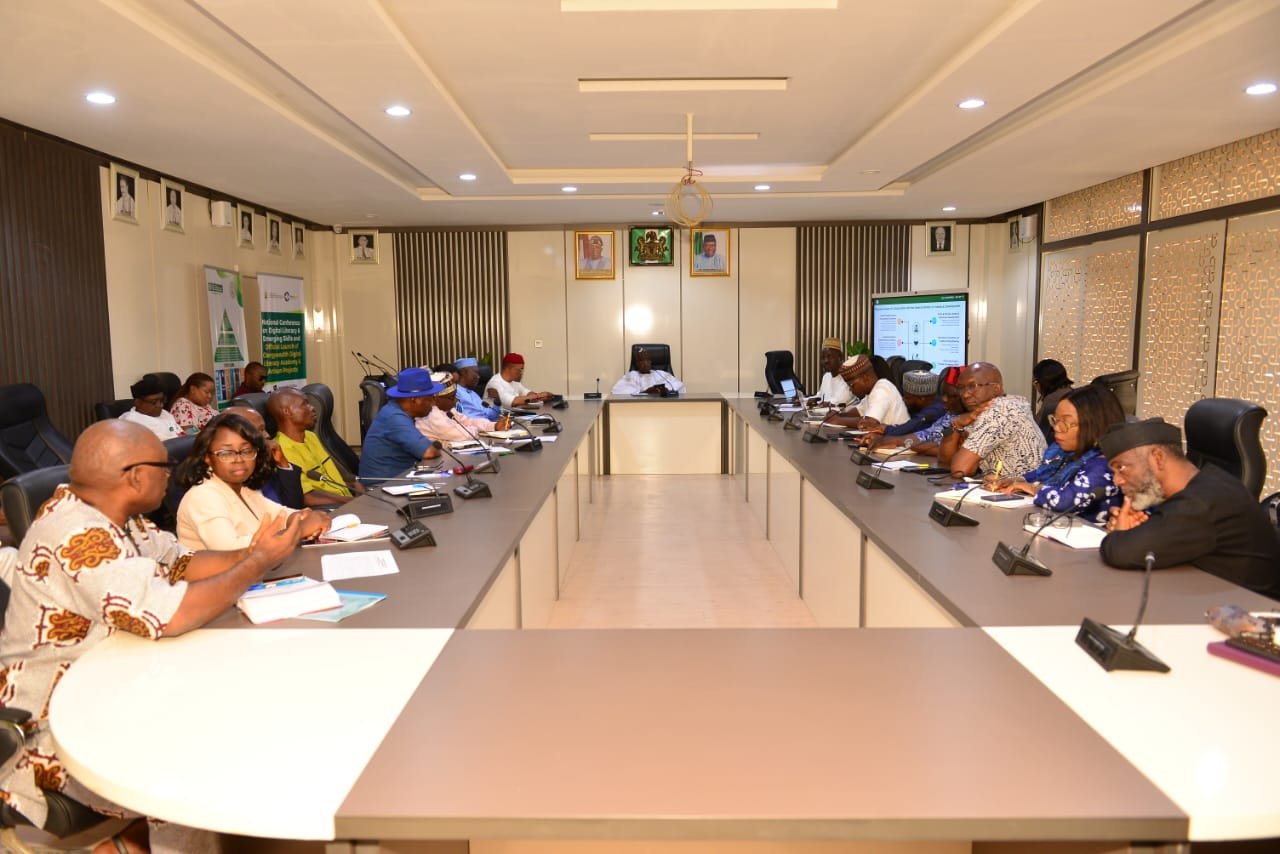

The Federal Ministry of Livestock Development has intensified engagement with private sector operators and stakeholder organisations as part of efforts to accelerate the transformation of Nigeria’s livestock industry through stronger partnerships, improved animal health systems and expanded opportunities across livestock value chains.
The renewed collaboration drive came into focus during separate courtesy visits to the ministry by delegations from Ambuvet Konsult Nigeria Limited, Hybrid Feeds Limited, and Women and Youth in Livestock Development and Food Network Nigeria (WYLAF), all of which signalled interest in supporting the Federal Government’s livestock development agenda.
Leading the first delegation, the Team Lead of Ambuvet Konsult Nigeria Limited, Dr. Shehu Shamsudeen, said Nigeria’s livestock sector possesses vast potential but continues to struggle with gaps in veterinary coverage, inconsistent access to vaccines and the prevalence of preventable livestock diseases.
He explained that the absence of accessible veterinary services in many rural communities often results in avoidable livestock deaths, weakening productivity and limiting the income potential of smallholder farmers.
According to him, the organisation has developed a nationwide network of community-based animal health workers, veterinary paraprofessionals and agro-vet service providers aimed at bridging the last-mile delivery gap in animal healthcare.
Through this approach, the organisation has supported more than 100,000 smallholder livestock-farming households across Nigeria with veterinary advisory services, vaccination campaigns and access to animal health products. Public-private partnership initiatives implemented with development partners and state governments have also enabled vaccination campaigns reaching over 14,000 livestock-producing households, covering more than 60,000 small ruminants and about 5,000 indigenous chickens.
Responding, the Minister of Livestock Development, Idi Mukhtar Maiha, emphasised that sustainable growth of the livestock industry requires strong collaboration between government institutions and private sector actors.
He noted that disease surveillance, vaccination campaigns, data collection and veterinary service delivery cannot be handled by the government alone, stressing that coordinated partnerships remain critical to strengthening livestock health systems nationwide.
The minister also highlighted the Federal Government’s plan to expand veterinary infrastructure across the country, including the development of modern veterinary clinics and model veterinary hospitals supported by well-trained veterinary paraprofessionals and community animal health workers.
In another engagement, the Managing Director and Chief Executive Officer of Hybrid Feeds Limited, Dr. Leye Alayande, briefed the ministry on the company’s role in strengthening livestock productivity through the supply of high-quality animal feeds.
He disclosed that the company operates modern feed production facilities in Kano, Kaduna, Asaba, and Ibadan, producing more than 300,000 metric tonnes of livestock feed annually for farmers across Nigeria.
The company currently supplies feed to over 5,000 farmers nationwide and produces specialised feed formulations for poultry, cattle, sheep, goats, fish, rabbits, pigs, snails and quails, while also generating more than 500 jobs through its operations.
Beyond Nigeria, the firm is partnering with the government of Niger Republic to supply 33,000 metric tonnes of ruminant feed between 2024 and 2026, a programme that has already supported the growth of over 50,000 livestock and strengthened pastoral livelihoods in the Sahel region.
Maiha commended the company’s contribution to improving livestock nutrition and feed availability, noting that better animal nutrition remains a critical pillar of the Federal Government’s strategy to enhance livestock productivity and competitiveness.
The ministry also hosted a delegation from Women and Youth in Livestock Development and Food Network Nigeria (WYLAF) led by its president, Hajiya Amina Kabiru, who outlined the organisation’s plans to mobilise women and young people to participate more actively in livestock production and agribusiness.
The minister encouraged the group to strengthen its framework by expanding membership and developing credible data across livestock value chains, assuring them of the ministry’s support, particularly in facilitating access to land for pasture cultivation and livestock production.
He noted that empowering women and youth in livestock agribusiness would play a vital role in strengthening feed resources, creating jobs and unlocking new economic opportunities within Nigeria’s livestock sector.