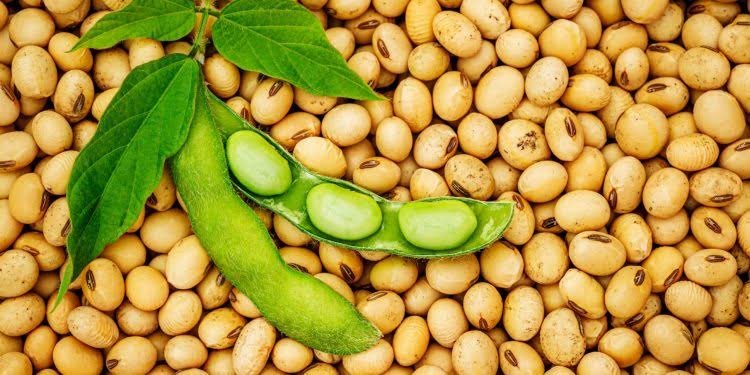

Soybean production in Nigeria developed gradually over time, as a result of movement, adaptation, and changing human needs. Unlike many traditional staples, soybean did not originate from Nigerian fields.
Soybean arrived in Nigeria in 1908, introduced during the colonial period when agricultural experimentation aimed to identify crops with commercial promise. Early attempts focused on the southern rainforest, where expectations quickly met resistance due to climatic and soil factors.
Excessive rainfall and unsuitable ecological conditions limited success, and soybean struggled to establish itself as a viable crop in that zone. Attention soon shifted northward, where the Guinea savanna offered a more forgiving environment.
In 1937, soybean production took a major step forward when the Malayan variety was successfully cultivated in Benue Province. Farmers observed steady growth and dependable yields, and soybean began to move from trial plots into regular cultivation. Seed multiplication followed, and by the mid-1940s soybean had entered export markets. Produce from Benue, Zaria, and Katsina found buyers abroad, and production volumes increased steadily. Benue emerged as the main center of activity, supported by favorable soils and a farming population willing to experiment with the new crop.
However, the Malayan variety had several limitations, as it matured late, was prone to pod shattering, and was highly susceptible to disease. These weaknesses reduced productivity and exposed the need for crop improvement. Research institutions responded by focusing on breeding efforts tailored to local conditions, with particular attention to yield stability, maturity period, and compatibility with indigenous soil bacteria.
From the 1970s onward, soybean production entered a new phase shaped by scientific refinement. Breeding programs led by the International Institute of Tropical Agriculture produced varieties adapted to Nigerian agroecologies. These cultivars matured earlier, yielded more reliably, and fixed nitrogen efficiently. Adoption spread through the Middle Belt, where smallholder farmers integrated soybean into existing cereal-based systems under rainfed conditions. National production rose steadily, reflecting both improved genetics and expanding demand.
Geographically, soybean cultivation broadened across northern and central Nigeria. States such as Kaduna, Niger, Nasarawa, Kwara, Plateau, and Kogi joined Benue as prominent producers. The Guinea savanna became the anchor of national output, offering rainfall patterns suited to grain filling. In drier savanna zones, farmers favored early maturing varieties to align with shorter growing seasons, even when longer duration types promised heavier yields under ideal conditions.
Consumption patterns reinforced soybean’s place in Nigerian agriculture. The crop gained acceptance as an affordable protein source, incorporated into foods such as soy garri, dadawa, and soymilk.
Livestock production added another layer of demand, particularly from the poultry sector, where soybean meal became a central feed ingredient. Farmers valued soybean not only for its grain but for its contribution to soil fertility, especially in systems dominated by maize and sorghum.
Today, Nigeria stands among Africa’s leading soybean producers, with output driven largely by smallholder farmers cultivating modest plots. There are still some constraints to soybean production, ranging from limited access to inputs to uneven adoption of improved varieties. Even so, soybean has secured a lasting role in Nigerian farming and food systems.