
By Ify Mgbemena
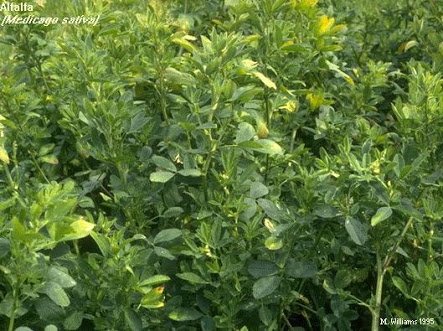
Alfalfa, commonly known as lucerne, is a perennial leguminous forage crop cultivated mainly for livestock feeding. Although widely grown in temperate regions, the crop has proven suitable for certain parts of Nigeria, especially the Jos–Bokkos axis of Plateau State, where cooler temperatures, moderate rainfall and well-drained soils support its growth. When properly managed, alfalfa provides a reliable source of high-quality forage for dairy cattle, beef cattle, sheep and goats.
Alfalfa is valued mainly for its high protein content and digestibility, which support milk production, weight gain and overall animal health. Beyond feeding value, the crop improves soil fertility by fixing atmospheric nitrogen and helps farmers reduce dependence on costly concentrate feeds. It can be used fresh, conserved as hay, or processed into silage, making it suitable for different livestock production systems.
Step-by-step Guide for Successful Farming
For alfalfa to perform well, the field must be properly selected. The crop thrives on fertile, well-drained loamy or sandy loam soils with good organic matter content. Slightly acidic to neutral soils with a pH of 6.5–7.5 are most suitable, while waterlogged or saline soils should be avoided.
Alfalfa requires annual rainfall of about 600–1,200 mm and grows best within a temperature range of 15°C–30°C. Highland areas such as Plateau State provide favourable conditions due to their cool nights and moderate daytime temperatures.
Preparing the Land
Land preparation should begin with clearing and deep ploughing to allow proper root development. The soil should then be harrowed to produce a fine, firm seedbed, which is important because alfalfa seeds are small and require good soil contact for germination.
Seed Selection and Planting
Only certified alfalfa seeds with a minimum germination rate of 85 percent should be planted. Depending on the planting method, seed rate varies. Drilled planting requires 15–20 kg of seed per hectare, while broadcast planting requires 20–25 kg per hectare.
Where possible, seeds should be inoculated with the appropriate Rhizobium bacteria before planting to enhance nitrogen fixation and improve early plant growth.
Planting can be done by drilling seeds in rows spaced 30–40 cm apart at a depth of 1–1.5 cm, or by broadcasting seeds evenly on the soil surface, lightly covering them and applying mulch to conserve moisture. The best time to plant is early in the rainy season, between April and May.
Nutrient and Water Management
Alfalfa responds well to organic nutrient sources. Before planting, 5–10 tonnes per hectare of well-decomposed farmyard manure or compost should be applied. At planting, phosphorus should be supplied at a rate of 20–40 kg P₂O₅ per hectare to support root development. Where soil pH is below 6.5, agricultural lime should be applied to correct acidity.
Although alfalfa is moderately drought-tolerant, supplementary irrigation during dry periods improves growth and yield. Mulching is recommended to retain soil moisture, suppress weeds and improve soil structure.
Managing Weeds, Pests and Diseases
Weeds pose the greatest threat during the early growth stage. Weed control within the first four to six weeks after emergence is critical. Where chemical control is appropriate, pre-emergence herbicides such as pendimethalin at 3 litres per hectare may be applied. Manual weeding remains effective, especially for small-scale farms.
Common pests include alfalfa weevil and aphids. These can be managed using neem extract, approved biological agents, insecticidal soap or neem oil. Fungal diseases such as anthracnose and root rot can be controlled using recommended fungicides like Mancozeb, while bacterial wilt is managed through the use of resistant varieties and proper field sanitation.
Harvesting and Yield
The first harvest of alfalfa is carried out 50–60 days after planting, usually at the early bloom stage. Subsequent harvests can be made every 30–35 days under favourable conditions. Plants should be cut at a height of 5–7 cm above ground to encourage regrowth.
Under good management, alfalfa can produce 25–40 tonnes of fresh forage per hectare annually, while dry matter yield ranges from 5–10 tonnes per hectare, depending on variety, environment and management practices.
Post-Harvest Handling
For hay production, alfalfa should be harvested at early bloom, dried to about 15 percent moisture content and stored in bales. For silage, fresh alfalfa should be chopped, compacted tightly and fermented under airtight conditions for three to six weeks.
Feeding Value and Economic Benefits
On a dry matter basis, alfalfa contains high crude protein and digestible nutrients, making it ideal for dairy cattle and other high-producing animals. It can be fed alone or mixed with grasses and is especially useful as a protein supplement during the dry season. However, feeding wet alfalfa alone should be avoided to prevent bloat.
Economically, alfalfa reduces feed costs, improves livestock performance and has a ready market among dairy farms, commercial ranches and feed manufacturers. There is also strong export potential for high-quality alfalfa hay.
When properly established and managed, alfalfa offers Nigerian livestock farmers a dependable source of nutritious forage. Its adaptability to Plateau State conditions, combined with its feeding and soil-improving benefits, makes it a valuable crop for sustainable dairy and livestock production.