

The Honourable Minister of Livestock Development, Idi Mukhtar Maiha, has revealed that the Federal Government is intensifying efforts to drive large-scale dairy production in Nigeria through a strategic partnership with the Nigerian Sovereign Investment Authority (NSIA).
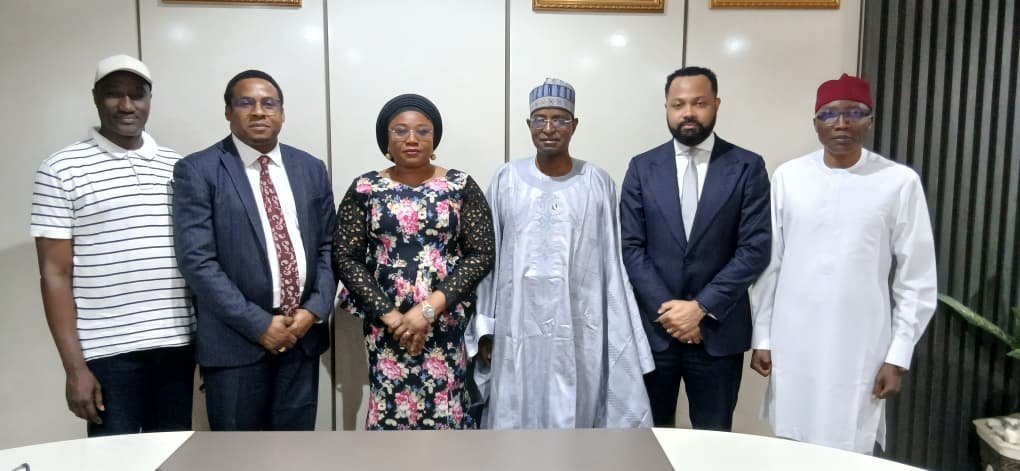
Speaking in Abuja during a courtesy visit by an NSIA delegation, the Minister disclosed that the Ministry would provide full technical backing to the initiative, including the establishment of a Technical Working Committee to coordinate engagement and ensure seamless implementation.
He explained that the Committee, comprising relevant departments within the Ministry, would work closely with the NSIA to develop clear operational frameworks, generate innovative dairy product concepts, and design a robust monitoring structure to guarantee efficiency and sustainability.
Maiha noted that the collaboration aligns with the Federal Government’s broader livestock transformation agenda under the National Livestock Growth Acceleration Strategy (NL-GAS), which seeks to boost local milk production, strengthen rural economies, and reduce dependence on imported dairy products.
He further assured that the Ministry would facilitate access to critical infrastructure, particularly power and energy, to enable the project meet global best practices and deliver long-term value across the dairy value chain.
In her remarks, the Permanent Secretary of the Ministry, Dr. Chinyere Ijeoma Akujobi, commended the NSIA for its proactive approach and reaffirmed the Ministry’s commitment to supporting initiatives that promote sustainable dairy development in Nigeria.
Earlier, the Senior Vice President of NSIA, Iruansi Itoandon, stated that the visit was aimed at deepening collaboration and advancing discussions on the implementation of the UK Dairy Project, which focuses on strengthening Nigeria’s dairy value chain through strategic investments and improved production systems.
He highlighted ongoing dairy development efforts in Nasarawa State, noting that the projects are designed to modernise farming practices, enhance local milk production capacity, and improve cattle genetics, feed systems, and pasture management.
Itoandon added that the initiative also prioritises investment partnerships, infrastructure development, and capacity building, with training programmes for farmers and extension officers forming a key component of the strategy.
However, the Technical Working Committee is expected to conduct a comprehensive review of the project and provide actionable recommendations to support the sustained growth and competitiveness of Nigeria’s dairy industry.

1 comment
How can I access affordable loan facility for my farming operation.