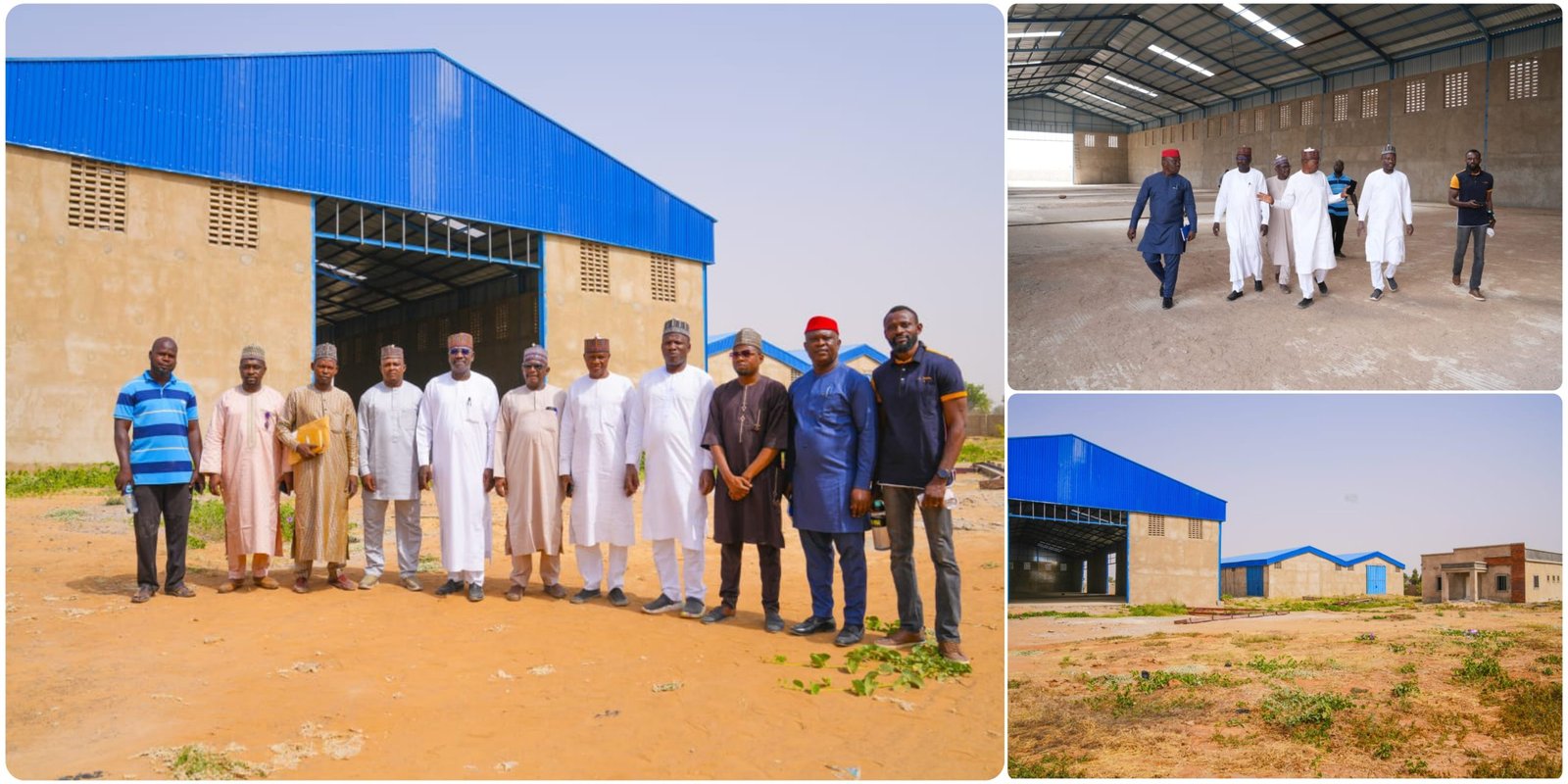

The National Agency for Science and Engineering Infrastructure (NASENI) is rolling out two innovative fertilizer production facilities in Kano State to combat soil degradation, cut import reliance, and shore up Nigeria’s food sovereignty amid rising costs and low yields.
The projects target smallholder farmers battered by unaffordable imported urea and NPK fertilizers, which fail to fully restore nutrient-stripped soils ravaged by continuous farming, climate variability, and poor management practices.
At the forefront is Africa’s first coal-based fertilizer plant in Zogarawa, harnessing Nigeria’s coal reserves and advanced international technology to produce a mineral-rich alternative for long-term soil health.
A companion liquid fertilizer facility, upgraded with automation in partnership with Whitefog Environmental Services Limited, now delivers fast-absorbing nutrients ideal for irrigation-based, year-round farming.
Engr. Dr. Agava Abdullahi Abdulrasheed, Acting Coordinating Director of NASENI’s Engineering Infrastructure Directorate, inspected the sites and hailed the initiatives.
“These will improve soil fertility, increase yields, and enhance farmers’ harvests,” he said.
Alhaji Hassan Inuwa Babura, Chairman of Whitefog, reported advanced construction on the permanent coal plant site along Wudil Road, with machinery clearing at the seaport. Full production starts by May or June 2026.
The duo promises balanced nutrition slashing exposure to global supply shocks and forex volatility.
Beyond farms, the projects will generate roughly 2,000 direct jobs and over 20 million indirect ones in the agricultural value chain, fueling economic growth and rural development.
Nigeria’s agriculture, powered by vast arable land and a large workforce, has long underperformed due to these input gaps. NASENI’s move marks a bold step toward self-reliance.