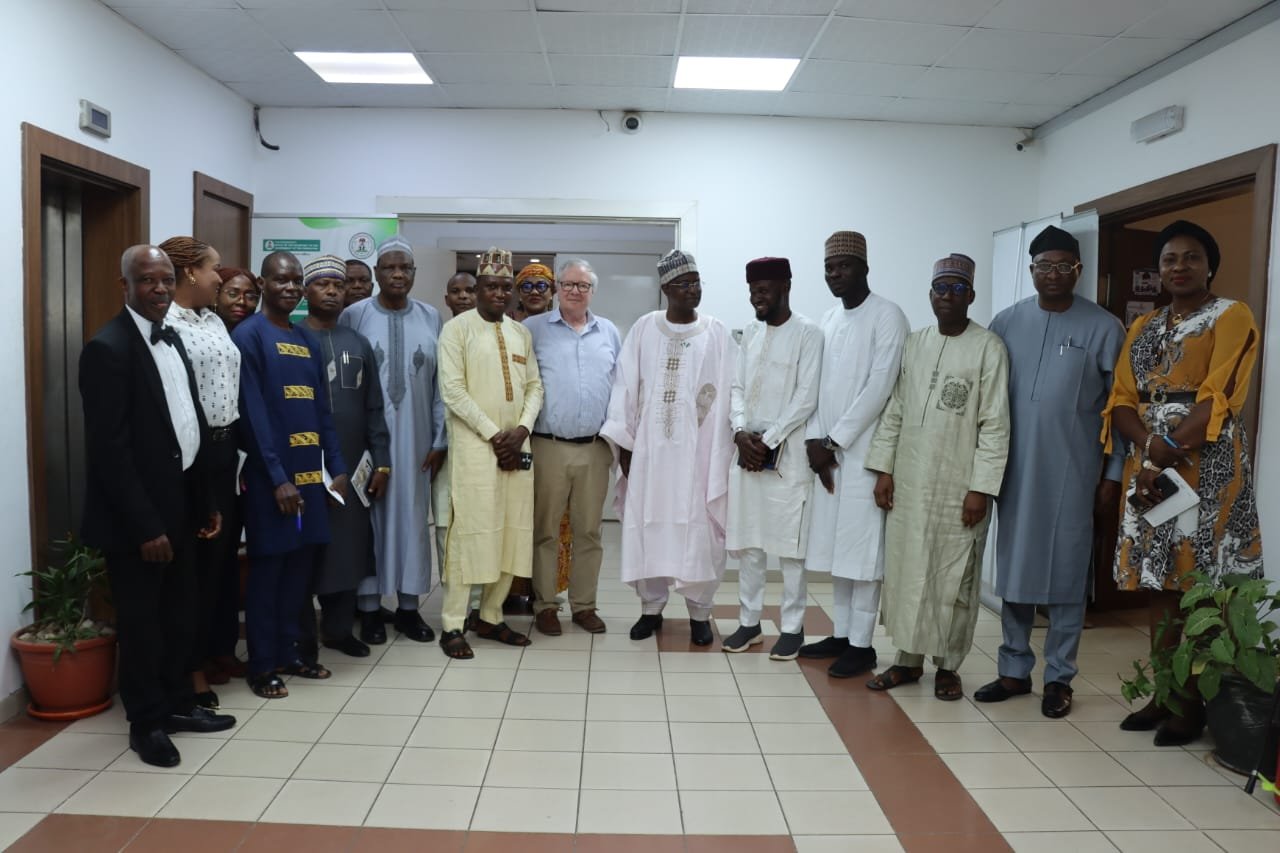

As part of efforts to promote livestock productivity through climate-smart systems and digital innovation, the Federal Government has unveiled a new trilateral partnership with Brazil and the United Kingdom .
The Honourable Minister of Livestock Development, Idi Mukhtar Maiha, disclosed this during a courtesy visit by representatives of the UK–Brazil–Nigeria Trilateral Initiative for Climate-Smart Cattle Systems, also known as Livestock 247, in Abuja.
He explained that the collaboration is designed to strengthen Nigeria’s livestock sector by enhancing animal welfare, improving climate resilience, and deploying emerging digital technologies to modernize production systems.
According to the Minister, the initiative will integrate advanced Artificial Intelligence (AI), data-driven decision support tools, and precision animal health systems to improve efficiency and output across the value chain.
Maiha noted that the project will assess near-market digital livestock innovations such as smart collars, sensor-based monitoring systems, environmental tracking devices, and digital testing records.
He added that the initiative will also reinforce surveillance mechanisms and promote precision livestock management powered by real-time data analytics.
He emphasized that Nigeria intends to adapt proven global best practices, particularly from Europe and Brazil, while tailoring them to local realities to transform domestic livestock production into a more competitive and sustainable sector.
Speaking on behalf of the delegation, epidemiologist Alex Cook said rapid advances in digital technology have created new opportunities to revolutionize agriculture and livestock management.
He explained that wearable monitoring devices, remote surveillance systems, and environmental sensors can now generate real-time data far beyond traditional observational methods.
According to Cook, integrating such data into shared digital platforms and applying machine learning and artificial intelligence would enable stakeholders to generate actionable insights to improve feeding systems, enhance productivity, boost profitability, strengthen resilience, and reduce greenhouse gas emissions from livestock activities.
He further highlighted Brazil’s transformation of its livestock sector over the past three decades, noting that similarities in climate and ecosystems between parts of Brazil and Nigeria present strong prospects for technical exchange and collaboration.
While acknowledging structural differences between the UK and Nigeria’s livestock systems, he said the UK brings significant expertise in data analytics and AI-driven agricultural solutions.
Officials at the meeting expressed optimism that the combined strengths of the three countries would support Nigeria’s ambition to achieve food sufficiency, stimulate job creation, and position the livestock industry as a key driver of economic growth.
Directors, Heads of Departments, and the Special Assistant to the Minister were also in attendance at the engagement.