
…NCAN to celebrate Nigeria Cashew Day from 22nd to 24th January in Abuja
The President of the National Cashew Association of Nigeria (NCAN), Dr. Ojo Joseph Ajanaku, has said the Nigeria cashew industry has the capacity to create jobs for over 50 million Nigerians if it is properly harnessed.
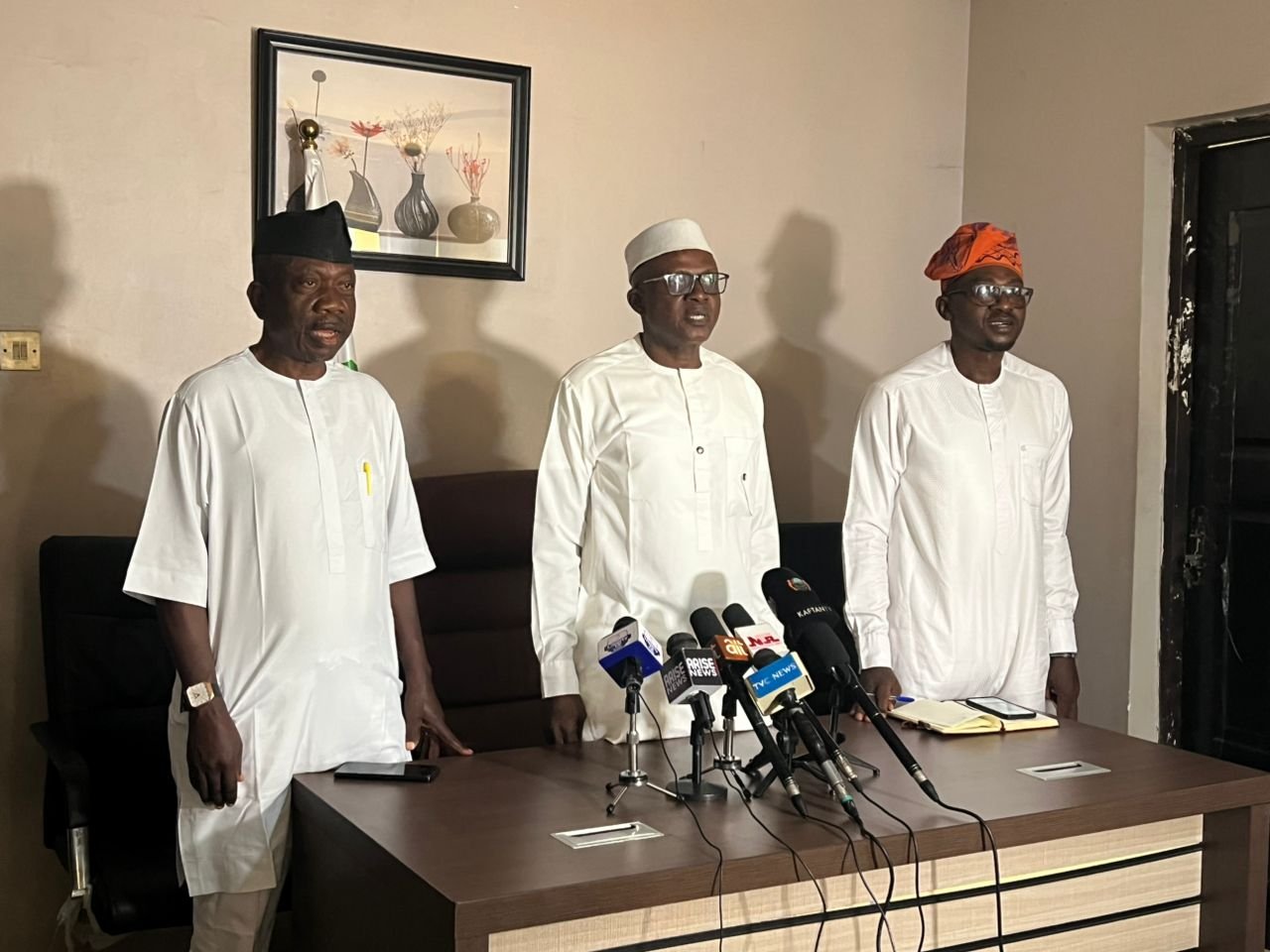
He said this on Wednesday during a press conference organized in preparation for the National Cashew Day, held at the National Secretariat of the association, where members of the press and key stakeholders were briefed on the objectives, vision and expectations of the forthcoming event.
Dr. Ajanaku explained that Nigeria Cashew Day was initiated by NCAN in 2023 in Benin City shortly after he assumed leadership of the association. According to him, the idea was conceived as a national platform to bring together all stakeholders in the cashew value chain, including producers, processors, marketers and service providers, with a view to drawing attention to the enormous potential of the sector and attracting both local and foreign investment.
He said the association deemed it necessary to institutionalize a national conference that would focus on the development of the cashew industry, noting that Nigeria possesses vast arable land and a large population that can drive production and industrial growth if properly coordinated.
Dr. Ajanaku stated that Nigeria has about 92 million hectares of land, with over 34 million hectares of usable farmland currently lying fallow. He compared this with Ivory Coast, which has about 32 million hectares of land but has overtaken Nigeria in cocoa and cashew production. He said this disparity underscored the need for Nigeria to deliberately harness its agricultural potential, particularly in cashew.
He explained that Nigeria Cashew Day is rotated across different states to spotlight production areas and encourage inclusive participation. He recalled that after the inaugural edition in Benin in 2023, the event was hosted in Enugu in 2024 and Lagos in 2025.
According to him, the 2026 edition will be hosted in Abuja, the seat of power, to enable direct engagement with the executive arm of government and key policy makers. He said the objective is to push for a national cashew policy that truly reflects the interests of Nigerians and stakeholders in the sector, rather than policies imposed from outside that could undermine the industry.
Dr. Ajanaku stressed the need for Nigeria to own its cashew industry, warning against becoming a slave to what the country produces. He emphasized that NCAN is promoting organic cashew production, which he said is where global demand and premium value lie, rather than inorganic production models being pushed by external interests.
He added that Nigeria has the land, population and financial capacity to become the number one cashew producer in the world and also a leading processing hub, provided the right policies are put in place. He cautioned that Nigeria must be mindful of international economic competition and strategic interests that could weaken the local industry if not properly managed.
He said the forthcoming conference is designed to signal to the global community that Nigeria is open for business and ready to take a leadership position in the global cashew industry.
He commended the media for their support in previous editions, particularly in Enugu and Lagos, noting that the event continues to grow in scale and visibility.
Dr. Ajanaku announced that Nigeria Cashew Day has been fixed for January every year, aligning with the cashew production season, as a way of sustaining attention and attracting investment that will generate employment for Nigeria’s growing population.
He also highlighted the plight of cashew producing states, stressing that they must be given priority in investment and industrial development. Using Kogi State as an example, he said that despite being one of the leading cashew producing states in Nigeria, it has no functional cashew processing factory.
He lamented that many youths from such states migrate to urban centers like Abuja, Lagos and Kano in search of opportunities, often ending up unemployed or involved in social vices.
According to him, “If these factories are set up in the producing areas, our children will be employed at home, live comfortably and crime will be reduced.”
He said this was one of the major reasons the 2026 Nigeria Cashew Day would be held at the Presidential Banquet Hall in Abuja, a venue he described as secure and suitable for engaging top government officials and investors. He invited Nigerians and stakeholders to attend and celebrate the event.
Addressing the issue of revenue and export earnings from cashew, Dr. Ajanaku said Nigeria lacks a proper statistical structure to accurately capture total production, noting that official figures are based mainly on recorded exports.
He alleged that a significant volume of Nigerian cashew is exported without proper documentation, as some exporters avoid filling export proceeds forms to evade repatriating foreign exchange into the country.
He disclosed that for the last season, Nigeria officially exported over 400,000 metric tons of cashew, valued at roughly 700 million dollars. He added that Nigeria has the potential to produce over four million tons annually.
According to him, if Nigeria produces just two million tons annually and sells at an average price of 1,500 dollars per ton, the country would earn about three billion dollars, excluding revenue from by-products.
He further revealed that cashew by products alone could significantly boost earnings. He cited an example from Vietnam, where cashew shell cake, often discarded in Nigeria, sells for about 0.95 dollars per kilogram after CNSL extraction.
Dr. Ajanaku said that if Nigeria processes what it produces locally and the federal government gives focused attention to the sector, the cashew industry could generate no less than 10 billion dollars annually.
He also spoke on NCAN’s relationship with government institutions, describing it as robust. He mentioned collaborations with the Nigeria Export Promotion Council, Bank of Industry, NEXIM Bank, the Federal Ministry of Industry, Trade and Investment, and the Federal Ministry of Agriculture and Food Security.
He disclosed that he recently traveled to Vietnam with officials from NEXIM Bank and relevant ministries, where he signed a memorandum of understanding on behalf of the Nigerian government to facilitate technology transfer and strengthen trade relations between Nigeria and Vietnam.
Speaking on cashew production across the country, the NCAN President disclosed that cashew is currently produced in about 22 states in Nigeria, adding that cashew produced in Kano State has particularly high quality, yielding about 170 nuts per kilogram, which is considered superior to yields from many other parts of the country.
He noted that many states with high potential are yet to fully embrace cashew production, stressing that expanding production nationwide is key. He added that processing capacity must grow alongside production, warning that Nigeria cannot meaningfully process cashew without first increasing output.
He also reiterated NCAN’s commitment to promoting organic cashew production rather than inorganic methods being pushed by vested interests.
Also speaking at the press conference, the National Secretary of NCAN, Engr. Augustine Unekwuojo Edieme, said the theme of the 2026 National Cashew Day is “Unlocking the True Potential of the Nigerian Cashew Industry through Investment, Innovation, and Global Trade.”
Engr. Edieme explained that achieving the goals outlined by the association requires significant investment, but emphasized that such investment must be the right kind. He warned that many so-called investments in Nigeria fail because they do not address the entire value chain.
He said Nigeria’s current strength lies largely in cashew production, while processing efforts often focus only on cracking the kernel.
He stressed that true value lies in fully integrating all components of the cashew value chain, including Cashew Nut Shell Liquid (CNSL), shell cake and testa, all of which have significant industrial and agricultural value.
According to him, cashew is not just a food crop but an industrial commodity. He explained that CNSL is used in products such as jet fuel components, hydraulic fluids, paints, enamels and industrial additives.
He said neglecting these components creates an incomplete and misleading picture of cashew processing potential.
He commended Kogi State for taking deliberate steps to attract investment into cashew, particularly through the establishment of special agro processing zones where cashew plays a major role.
He urged other cashew producing states to take a cue from Kogi by consciously attracting investors and supporting indigenous processors.
Engr. Edieme reiterated NCAN’s support for policy formulation but stressed that policies must be balanced and inclusive.
He said no segment of the cashew value chain should be favored at the expense of others, adding that all stakeholders must be carried along so that every aspect of the industry remains profitable.
Engr. Edieme added that the 2026 National Cashew Day is being organized in collaboration with the African Cashew Alliance, the continental umbrella body for cashew.
He explained that this partnership follows the signing of an MOU earlier in the year and is aimed at projecting Nigerian cashew as a global brand.
He said NCAN is determined to move beyond local engagement and position Nigeria prominently in the international cashew market through sustained collaboration with global partners.
He noted that past editions of the event enjoyed support from organizations such as GIZ and the United States Department of Agriculture.
In his remarks, an Ex official of NCAN and representative of the Federation of Agricultural Commodity Associations of Nigeria, FACAN, Mr. Isaac Sunday Ojonugwa, said the association is focused on positioning Nigerian cashew competitively in the international market through structured and transparent systems.
He explained that NCAN is working to organize smallholder farmers in a way that gives them access to both local and international off takers, ensuring fair pricing and a win-win situation for all actors in the value chain.
Mr. Ojonugwa said the association wants raw cashew to be processed in an organized manner where producers, processors and buyers are clearly identified, thereby preventing exploitation along the value chain.
He said NCAN is committed to ensuring that farmers, processors, banks and insurance firms all benefit from the industry.
He noted that many international communities, despite their technological advancement, cannot grow cashew, while Nigeria has favorable climate and soil conditions.
He urged Nigerians to take advantage of this natural endowment and develop the industry strategically.