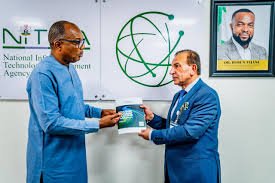

Nigeria’s technology sector is set to gain major traction as the National Information Technology Development Agency (NITDA) and Wigwe University commences talks on a game-changing alliance.
The high-level meeting in Abuja signals a united front to harness local talent for global impact through government-university collaboration.
Led by Vice-Chancellor Professor Marwan Al-Akaidi, Wigwe University’s team shared its bold vision, rooted in the late Herbert Wigwe’s dream.
The institution goes beyond degrees to cultivate problem-solvers, innovators, and entrepreneurs driving Africa’s transformation.
“Many brilliant Nigerians lack platforms to unlock their potential,” Al-Akaidi said. “Partnerships like this bridge that gap.”
The talks spotlighted AI innovation, with the university’s early AI-for-healthcare research targeting Nigeria-specific challenges.
Al-Akaidi envisioned a full AI Centre building local tools for indigenous languages, health issues like malaria, and economic needs, reducing reliance on foreign tech.
Located amid Rivers State’s farming communities, Wigwe University aims to deploy tech for livestock management and food production.
“Countries with fewer cattle outperform us using data-driven systems,” Al-Akaidi noted, highlighting AI’s role in boosting yields.
Emerging tech like robotics, blockchain, and drones also aligned perfectly with NITDA’s priorities.
Dr. Aristotle, representing the agency, positioned NITDA as Nigeria’s digital transformation engine, overseeing IT development, innovation, and standards.
“Universities are vital partners in national progress,” he said.
Dr. Kumo, Director of Research and Development, stressed elevating Nigeria’s global research ranking via virtual learning platforms for nationwide access.
From Digital Literacy and Capacity Building, Dr. Tambuwal emphasized the need for equipping workers with modern tools: “Universities must produce confident, job-ready graduates for a tech-driven world.”
Al-Akaidi hammered home relevance, stating that curricula in computing and engineering need constant updates, with research informing teaching to create opportunity-makers, not just job-seekers.
Both sides committed to action. Dedicated teams will now shape projects in AI, agricultural tech, digital literacy, and curriculum reform.
If effected, this partnership could spark practical breakthroughs, empowering Nigerian youth to solve local problems and compete globally.