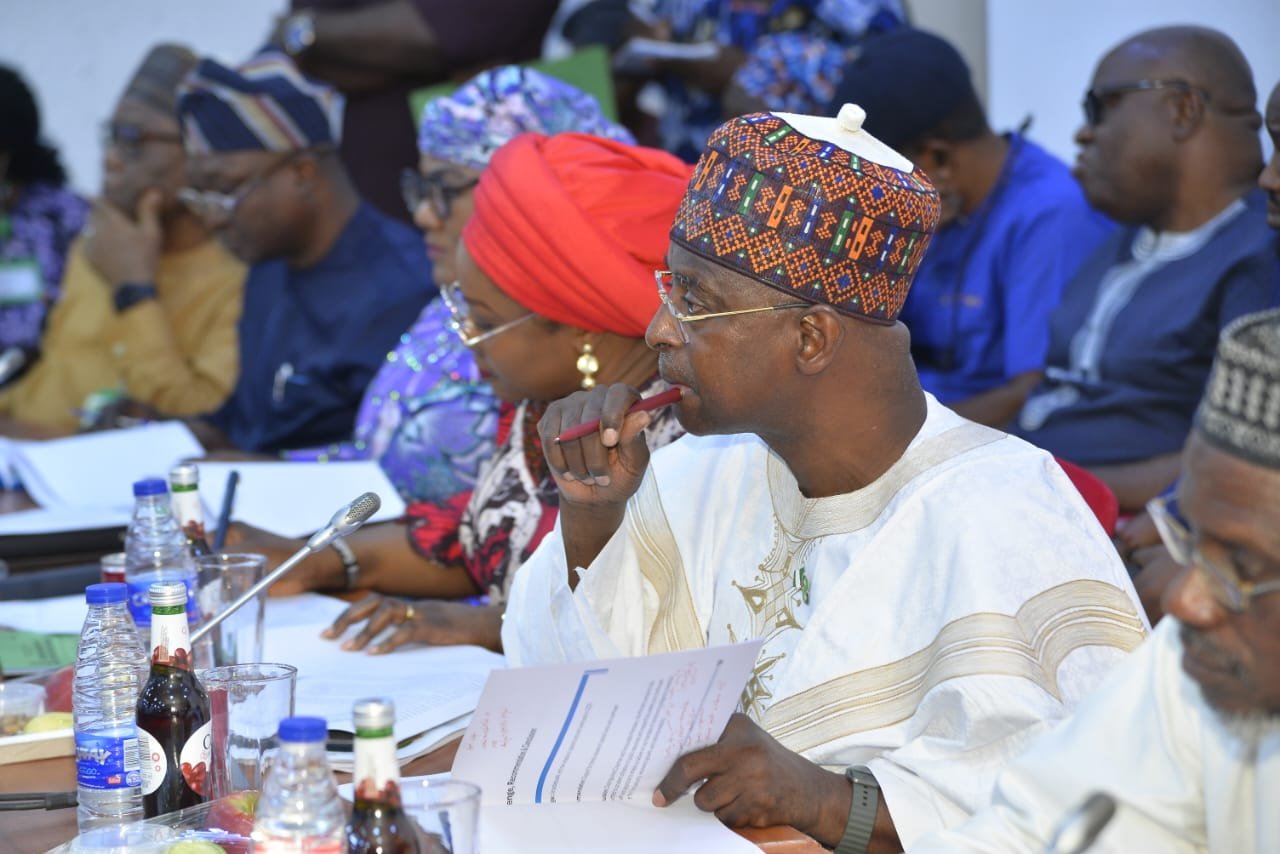

Minister of Livestock Development, Idi Mukhtar Maiha, has disclosed that the Ministry received only N20 billion from the N75 billion approved as a take off grant in 2024 and did not receive any budgetary release in 2025, a situation he said significantly slowed the implementation of critical programmes in the sector.
Maiha made the revelation on Friday, 20 February 2026, during the 2025 budget defence session before the Joint Committee of the National Assembly.
According to him, the shortfall in funding restricted the Ministry’s capacity to expand projects, stimulate internal revenue generation and unlock wider economic opportunities within the livestock industry.
He explained that despite the financial limitations faced as a newly created Ministry, available resources were carefully managed to maintain institutional coordination and sustain essential sector interventions.
However, he stressed that the lack of adequate releases affected plans to reposition livestock production as a strong contributor to national income and foreign exchange earnings.
The Minister said the Ministry is now intensifying efforts to transform the livestock value chain into a structured commercial system capable of competing in the global red meat market.
He noted that although Nigeria has a substantial livestock population, the country derives limited economic value from it due to subsistence practices and weak value addition.
He identified export oriented meat production as a priority area, pointing out that accessible international markets for red meat are valued at more than N3.2 trillion annually.
To tap into this opportunity, he said Nigeria must comply with international requirements, particularly in animal identification, traceability and disease management.
As part of ongoing reforms, the Ministry is rolling out a national livestock identification and traceability system designed to monitor animal movement, curb cattle rustling and satisfy export certification standards.
Plans are also underway to strengthen feed and fodder production through the revitalisation of grazing reserves and service centres to reduce seasonal migration, limit conflict and improve productivity.
Maiha added that genetic improvement initiatives and enhanced animal health services are being pursued to raise meat yield and boost dairy output.
He maintained that with proper investment and regulatory support, the sector could generate substantial revenue and create employment across the country.
Chairman of the Senate Committee on Livestock Development, Umar Shehu Buba, said the budget scrutiny was aimed at ensuring transparency, measurable outcomes and alignment with broader economic growth objectives.
He emphasised that modernising livestock production would reduce imports, conserve foreign exchange and support economic diversification.
Similarly, Chairman of the House Committee on Livestock Development, Olawole Tasir Raji, called for stronger funding commitments, closer collaboration among tiers of government and greater private sector involvement to realise the sector’s full potential.
The proposed 2026 budget shows that 70 percent of the 2025 capital allocation has been carried forward in line with federal directives, raising the capital provision for 2026 to N7.14 billion.
An additional N1.8 billion has been set aside to cover overhead and operational costs for the year.