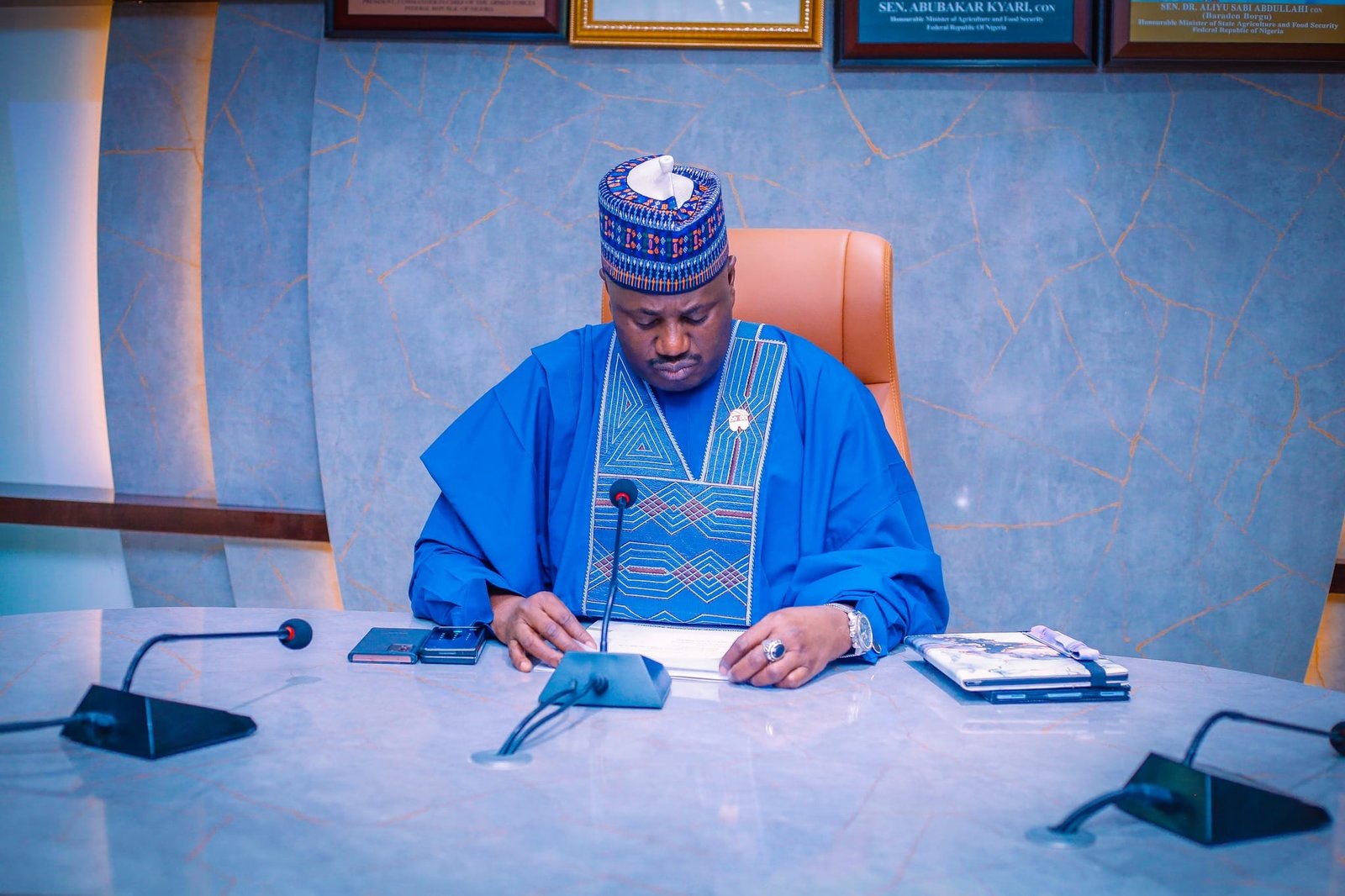

The Minister of State for Agriculture and Food Security, Sen. Aliyu Abdullahi Sabi has said that most of the security threats previously preventing farmers from cultivating land in parts of northern Nigeria have significantly reduced.
Sen. Sabi, who formerly represented Niger North in the Senate, noted that many farmers are now returning to their abandoned farmlands following improved security in areas that were once dangerous.
He cited Birnin Gwari in Kaduna State as one of the most affected areas where markets had remained closed for over a decade.
According to him, those markets are now open and dry season farming has resumed in several previously inaccessible locations.
The minister attributed the improvement to a change in security tactics following direct orders from President Bola Ahmed Tinubu to the service chiefs.
He commended the resilience of Nigerians in the face of adversity and insisted that the situation would have led to a national crisis in other countries.
However, many communities in Benue, Plateau, and Nasarawa continue to suffer from herder-farmer clashes, displacement, and loss of farmland. Farming communities in these areas have repeatedly raised concerns about their inability to access their lands due to rising insecurity.
On food production, Sen. Sabi said the government had focused on increasing output to address the rise in food prices that started in 2023.
He said that the best strategy was to expand production rather than resort to food importation. “We planted over 20 hectares across sixteen wheat-producing states in 2023. This year, we’ve increased it to 220 hectares,” he stated.
The ministry also adjusted to the seasonal nature of farming by maximizing both the rainy and dry seasons. The aim, he said, is to ensure that more food is produced year-round.
“When farming becomes profitable, farmers will naturally return the next season,” he said.
According to Sabi, a Federal Executive Council committee is currently reviewing logistics and food storage costs, which the minister said contribute significantly to the high cost of food.
He explained that the government’s long-term strategy is to stabilize prices through efficient supply and storage systems.
Sen. Sabi also confirmed that modern farming equipment has begun arriving in the country, as part of efforts to mechanize agriculture.
Rather than distributing the equipment directly to individuals, he said service centers will be established in each zone to allow farmers to rent machinery at affordable rates. This process, he noted, will be managed using digital platforms to track usage and maintenance.
The minister stressed that ownership is not the goal but access.
“Not every farmer needs to own a tractor, but every farmer should be able to hire one when needed,” he said.
He added that digital servicing alerts, similar to those found in vehicles, would be installed in the machines to help prolong their lifespan and ensure proper maintenance.
To address concerns that rural farmers may be left behind, he said cooperative leaders are undergoing training to ensure farmers in remote areas can also benefit from mechanization and government interventions.
On the cost of fertilizer, which remains high despite repeated commitments to support farmers, Sabi said the government is focusing on efficient application rather than subsidizing blanket distribution.
He said a national soil training program has been launched to teach farmers how to apply fertilizer based on soil type and crop requirements.
“We want to make sure that when farmers use fertilizer, they get the maximum benefit,” he said.
The minister acknowledged that for Nigeria to achieve full food sufficiency, a large portion of the population must return to farming and embrace modern techniques.
He added that cooperatives remain a key channel for delivering government support to grassroots farmers.
Speaking on the economic hardship faced by Nigerians following the removal of fuel subsidy, Sen. Sabi defended the decision and called it necessary.
“All the presidential candidates promised to remove the subsidy. President Tinubu was courageous enough to do it. The savings have been reinvested in infrastructure,” he said.
Still, for many Nigerians, especially in rural and conflict-affected regions, the improvements in road infrastructure or the promise of new equipment do little to resolve the more immediate issues of insecurity, hunger, and rising cost of living.
In many farming communities in Benue, Plateau, and Nasarawa, residents still cannot safely access their lands, and food prices continue to rise despite claims of increased production.