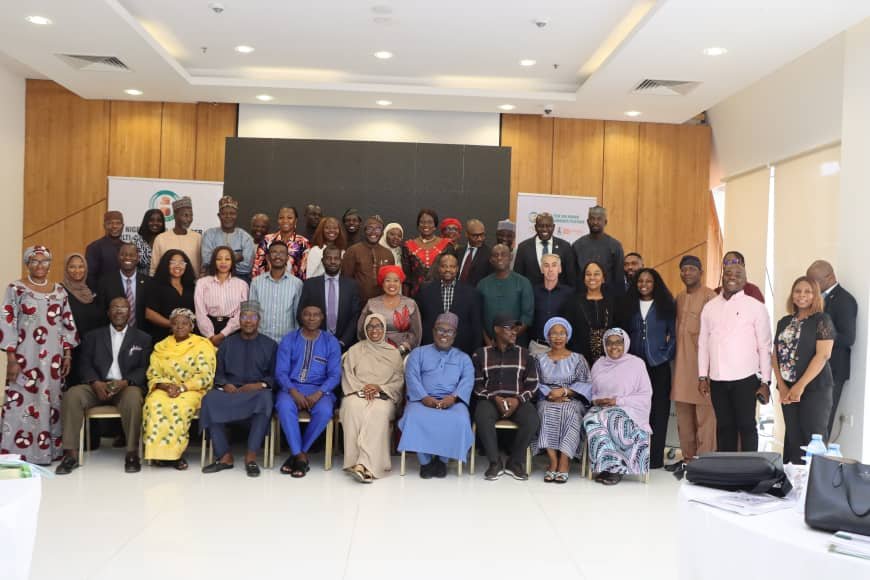

The Federal Government has declared that sustainable feed production will now serve as the backbone of Nigeria’s livestock transformation agenda, outlining new efforts to align producers, processors, investors, financiers, and research institutions toward a unified growth strategy.
Speaking at the Nigeria Feed & Fodder Partners’ Breakfast Roundtable held in Abuja on Wednesday, the Permanent Secretary of the Federal Ministry of Livestock Development, Dr. Chinyere Ijeoma Akujobi, represented by the Deputy Director, Ranch and Pastoral Resources Development, Mr. Akeem Ibilade said Nigeria possesses the land mass, livestock population, skilled manpower, and market size needed to emerge as West Africa’s Feed Production Capital. What is required, she noted, is deeper stakeholder alignment and consistent commitment.
She explained that the Ministry is advancing reforms under the National Livestock Growth Acceleration Strategy (NL-GAS), with a major focus on developing sustainable feed and fodder systems. The National Animal Feed and Fodder Policy, she added, is also being strengthened to bridge the country’s feed deficit and support year-round commercial forage production.
Dr. Akujobi stressed that Nigeria is gradually shifting toward more structured livestock systems, including ranches and commercial feedlots, citing the recently launched Wase Grazing Reserve livestock estate as a demonstration of the country’s new direction. “Feed accounts for 60–70 percent of livestock production costs,” she said. “Where feed fails, livestock cannot succeed.”
The President of the Nigeria Feed & Fodder Multi-Stakeholder Platform (NFF-MSP), Prof. Maikano Mohammed Ari, also affirmed that feed remains the central determinant of value-chain competitiveness and sector efficiency.
In a separate remark, the Technical Operations Officer of the Livestock Productivity and Resilience Support (L-PRES) Project, Jubabatu Ibrahim, highlighted the World Bank–supported initiative’s contribution to improving productivity, resilience, and commercialisation across the livestock industry.
Goodwill messages from AU-IBAR and Sahel Consulting further pledged continued support toward strengthening Nigeria’s feed and fodder ecosystem.
The roundtable, themed “Advancing Sustainable Feed and Fodder Synergy in Nigeria,” convened participants from academia, financial institutions, ABIS Group, development partners, and industry stakeholders.