
There is a particular kind of insult that numbers can deliver, and Nigeria’s 2026 budget delivers it with surgical precision. Buried inside a spending plan that carries a ₦31.45 trillion deficit, nearly half the entire budget, are dozens of line items in which the country’s agricultural and livestock research institutions, land development authorities, and river basin agencies have been quietly repurposed as cash conduits for building mosques, churches, emir palaces, and Islamic centres. Institutions created to feed a hungry nation have been turned into vehicles for feeding something else entirely: political patronage dressed up as piety.
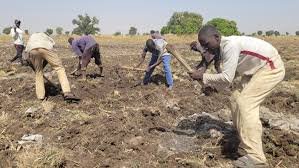
Read the list and weep for what agricultural development in Nigeria has become. The National Agricultural Land Development Authority (NALDA), an agency domiciled in the Presidency and mandated to open up farmland, boost food production, and support struggling farmers, has been handed ₦850 million not for irrigation, not for seedlings, not for tractors, but for the construction of churches and mosques and “financial support to religious leaders” in Gombe State. The Institute of Agricultural Research, Zaria, a body that should be breeding drought-resistant crops for a country staring down food insecurity, is instead listed as the vehicle for ₦210 million to build a mosque, an Islamiyya school, an administration block, a fence, and an Imam’s house in Tsafe. The Cocoa Research Institute of Ibadan, whose entire reason for existing is to rescue Nigeria’s collapsing cocoa export economy, has been converted into a ₦280 million contractor for a mosque and a palace in Oyo State. The Federal College of Veterinary and Medical Laboratory Technology, meant to safeguard livestock health and, by extension, the nation’s meat and dairy supply, is now a listed conduit for renovating an emir’s palace and a mosque in Kaduna. Two River Basin Development Authorities, in Sokoto and Upper Benue, agencies built to manage irrigation and water resources for farmers, have been repurposed to furnish a Jumu’at mosque and to drill solar boreholes beside mosques and, extraordinarily, a deputy governor’s residence. Even the Federal Co-operative Colleges in Kaduna and Oji River, training grounds for the cooperative movement that rural farmers depend on for credit and market access, turn up twice, funding mosque renovations in Zamfara and Sokoto, and a mosque at a cattle market in Enugu.
None of this is accidental. It is not a filing error or a rogue line item that slipped past an overworked budget office. It is a pattern, and patterns in public finance are confessions. When an Industrial Arbitration Panel is found buying musical instruments for churches, when an Energy Commission is found installing solar panels exclusively at mosques, when a chain of agricultural and veterinary institutes is found bankrolling palaces and prayer halls, what you are looking at is not clumsy governance, it is a deliberate architecture for laundering constituency patronage through agencies whose budgets attract far less scrutiny than a direct “Ministry of Religious Affairs” line ever would. As watchdogs have rightly noted, this is how Nigerian politicians have long smuggled personal and political projects past procurement oversight: not by naming them honestly, but by hiding them inside the budgets of bodies with no business funding them.
The cynicism here is layered. First, there is the theft of institutional purpose. Every naira diverted through NALDA or the Institute of Agricultural Research for a mosque or church is a naira not spent breeding better seed varieties, not spent controlling animal disease outbreaks, not spent helping a smallholder farmer survive the next flood or the next round of banditry. In a country where food inflation has driven millions into hunger, where farmers are being kidnapped and displaced from their land by armed groups, and where Nigeria still imports what it should be growing, the sabotage of agricultural capacity is not an abstract accounting complaint, it is a direct assault on food security and rural livelihoods.
Second, there is the theft of fiscal honesty. A government drowning in a ₦31.45 trillion deficit, financing nearly half its budget through fresh borrowing, is asking Nigerians, and international lenders, to accept that palace fences, mosque carpets, and church musical equipment are worth mortgaging the country’s future for. Debt taken today to build a Jumu’at mosque extension in Sokoto or refurbish an emir’s palace in Kaduna will still be serviced a decade from now, with interest, by citizens who may never see a functioning primary healthcare centre, a paved rural road, or a public school with enough desks. Every one of these allocations is a quiet admission that austerity is only for the poor.
Third, there is the theft of secularism itself. Nigeria’s constitution does not recognise a state religion, and for good reason in a country as religiously mixed and combustible as this one. Yet here is a budget in which the state, through its agricultural and land agencies, has become an active builder and furnisher of churches and mosques, not through any transparent, appropriately housed ministry, but scattered across institutions that have no constitutional or technical mandate to touch religious infrastructure at all. When the state starts picking which shrines to fund and which agencies will front the cash, it does not strengthen faith; it corrupts both faith and the state, and it hands ammunition to every voice that says Nigerian governance is not run for citizens but rationed among patrons.
This is bigger than a scandal about mosques and churches. It is a diagnosis of how badly Nigeria’s budgeting process has decayed, a system so porous that a veterinary college can be a religious contractor, a river basin authority can be a mosque furnisher, and a cocoa institute can be a palace builder, all without a single alarm sounding before publication. If oversight bodies, the National Assembly, and anti-corruption agencies do not now trace every one of these codes back to the individuals who inserted them, this will not be the last time farmers’ money finances someone else’s monument.
Nigeria does not need its tractors dressed as missionaries. It needs its agricultural institutions doing agriculture, nothing more, and certainly nothing hidden.