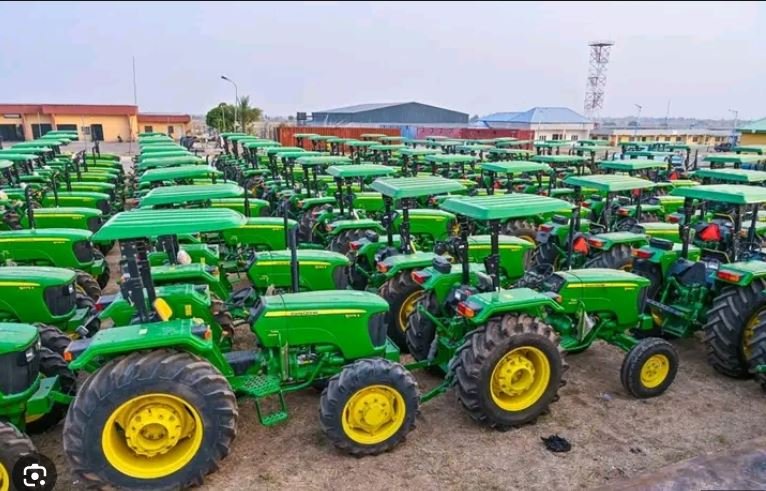

For decades, agricultural mechanization has been presented as Nigeria’s pathway out of subsistence farming into a future of productivity, efficiency, and food security. From the promise of tractors replacing hoes and cutlasses to ambitious government-backed programmes, the vision has always been clear: modernize agriculture and feed a growing nation.
Yet, despite billions of naira in investments and repeated policy interventions, the reality on the ground tells a different story—one of abandoned machinery, frustrated farmers, and missed opportunities.
The Promise of Mechanization
At its core, agricultural mechanization involves the use of machinery such as tractors, harvesters, and precision tools to replace manual labor and animal power. When effectively deployed, it can transform farming systems.
Mechanization has been shown to:
-Increase food production by over 60% to meet rising demand
-Improve yields by 20–30% through timely and precise operations
-Reduce labor requirements by up to 88% in some farming activities
-Enable multi-cropping and expand cultivated land
Beyond productivity, mechanization also carries social benefits. It reduces the physical burden of farming, particularly for women, who account for a significant share of manual agricultural labor in rural communities.
But in Nigeria, these benefits have largely remained unrealized.
A History of Big Plans and Broken Systems
Nigeria’s mechanization journey has followed a familiar cycle: heavy investment, initial optimism, and eventual decline.
- Early Beginnings (Pre-1970s)
Mechanization began modestly during the colonial era, with Tractor Hiring Units (THUs) introduced to support cash crop production. Access was limited and tightly controlled.
- Oil Boom Expansion (1970s–1980s)
Flush with oil revenues, the government imported large numbers of tractors and launched programmes like Operation Feed the Nation. This period marked the peak of mechanization investment—but the focus was largely on procurement, not sustainability.
- Decline and Stagnation (1990s–2010)
Economic reforms and reduced public spending led to the collapse of many mechanization schemes. Tractor costs soared, THUs deteriorated, and private ownership remained out of reach for most farmers.
- Modern Approaches (2010–Present)
Recent efforts have shifted toward public-private partnerships, leasing models, and agri-tech solutions. Yet, even with innovation, the structural challenges remain deeply rooted.
Why the System Keeps Breaking Down
Despite decades of experience, the same fundamental issues continue to undermine mechanization programmes in Nigeria.
1. Importing the Wrong Solutions
Many tractors brought into the country are too large and unsuitable for Nigeria’s small, fragmented farmlands. High fuel consumption and poor adaptability make them inefficient. Once they break down, the absence of spare parts and skilled technicians often leads to abandonment.
2. Maintenance is an Afterthought
Nigeria has consistently prioritized buying machinery over maintaining it. Without repair systems, supply chains for parts, and trained operators, equipment quickly becomes unusable.
3. Weak Institutions and Corruption
Mechanization programmes are often top-down, with limited stakeholder input. Subsidies and machinery frequently end up in the hands of politically connected individuals rather than smallholder farmers who need them most.
4. Infrastructure Gaps
Mechanization does not operate in isolation. Poor rural roads, unreliable power supply, and inadequate storage systems reduce the effectiveness of modern equipment.
5. Policy Inconsistency
Each administration tends to introduce new programmes without sustaining existing ones. This lack of continuity leads to abandoned projects and wasted investments.
6. Ignoring the Farmer
Perhaps the most critical flaw is the failure to involve farmers in decision-making. Policies are often designed without understanding local realities, resulting in solutions that do not match actual needs.
Delayed Promises, Missed Seasons
A recent example highlights these persistent challenges. Under the Renewed Hope Agricultural Mechanization Programme, the federal government partnered with Belarus to procure 2,000 tractors.
Launched in June 2025, the initiative was expected to support the cultivation of 1.5 million hectares. However, as of March 2026, many farmers are still waiting.
Delays in approving distribution frameworks and logistical bottlenecks during assembly have meant that critical planting windows were missed—once again undermining the programme’s impact.
The Real Cost of Failure
The consequences of failed mechanization programmes go far beyond broken tractors.
Falling Productivity
Farmers struggle to prepare land and harvest crops on time, leading to reduced yields and significant post-harvest losses—estimated at 30–40%.
Return to Manual Labor
Without reliable machinery, farmers revert to labor-intensive methods, limiting the scale of production and reinforcing cycles of poverty.
Rising Food Insecurity
Low domestic output has increased dependence on food imports, driving up costs and contributing to inflation and hunger.
What Actually Works
While large-scale government-led programmes have struggled, alternative models are showing promise.
Service-Based Mechanization
Instead of owning tractors, farmers can hire them when needed. This reduces costs and shifts maintenance responsibility to service providers.
Agri-Tech Innovation
Platforms like Hello Tractor are connecting farmers with equipment owners, creating an “Uber for tractors” model that improves access and efficiency.
Public-Private Partnerships
By combining government support with private sector efficiency, these partnerships offer more sustainable and better-managed mechanization systems.
Community-Based Solutions
Locally managed mechanization centers, run by cooperatives or entrepreneurs, provide faster and more tailored services to farmers.
The Way Forward
Mechanization remains essential to Nigeria’s agricultural transformation, but only if approached differently.
The focus must shift from simply importing tractors to building systems that work:
- Appropriate technology suited to local conditions
- Strong maintenance and support structures
- Inclusive policies that prioritize smallholder farmers
- Consistent, long-term implementation strategies
Until then, Nigeria risks continuing a costly cycle, where tractors arrive with fanfare, only to rust away in silence.