
The African Agricultural Technology Foundation (AATF) has intensified efforts to counter misinformation surrounding genetically modified organisms (GMOs), while sensitising the University of Abuja community on the safety, benefits and regulatory safeguards guiding biotechnology in Nigeria.
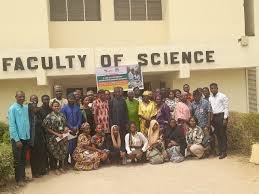
The engagement, organised by the Department of Botany, Faculty of Science, University of Abuja, brought together students, researchers, professors and institutional leaders for an interactive session focused on science-based dialogue and public awareness.
Speaking during the session, the Regional Representative for West Africa at AATF, Jean Baptiste, said biotechnology continues to face a growing wave of misinformation and disinformation, despite documented success stories and scientific validation.
He reiterated that genetically modified crops approved in Nigeria undergo strict, science-driven regulatory oversight before reaching the market, stressing that no GMO product is commercialised without clearance from relevant government agencies.
Baptiste highlighted Nigeria’s recent approval and release of TELA maize and PBRC cowpea, innovative crop varieties developed to address key production constraints such as insect pests, yield losses and climate stress.
According to him, agricultural biotechnology offers scientifically proven solutions capable of strengthening national food security, reducing pesticide use, boosting farmer incomes and promoting environmental sustainability.
He, however, expressed concern that these gains have been confronted with inaccurate narratives, fear-based messaging and misleading information that undermine public confidence and restrict farmer access to beneficial technologies.
“The objective of this engagement is to share accurate scientific information about biotechnology-based crops, clarify regulatory and safety processes, and address misconceptions through evidence-based communication,” he said.
Baptiste underscored the strategic role of universities as trusted centres of knowledge, noting that academic institutions are pivotal in shaping public understanding and influencing policy discourse.
“Through research, teaching, outreach and informed engagement, universities can help counter misinformation and promote science-driven agricultural transformation,” he added.
The foundation further called for sustained awareness creation, capacity building and strategic communication to ensure that technological breakthroughs in agriculture are properly understood and responsibly adopted.