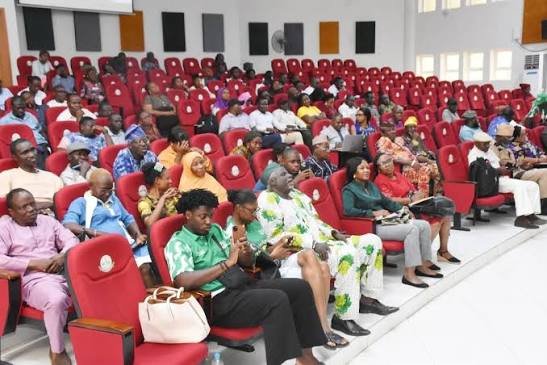

Innovators, researchers, policymakers, and technology enthusiasts converged at the Federal University of Agriculture, Abeokuta (FUNAAB) with a clear message for the continent’s youth: deploy AI for food security and other digital tools to power Africa’s agricultural future.
The call was made at the maiden edition of the G-SPARK Summit, organised by the Google Developer Group (GDG) On Campus, FUNAAB chapter, at the university’s Ceremonial Building. Held under the theme “Showcasing Talents, Scaling Impact,” the summit put a spotlight on how youth-led innovation can tackle the country’s mounting agricultural challenges.
Attendees explored how emerging technologies, particularly Artificial Intelligence and Machine Learning, could boost food production, support sustainability, and solve pressing societal problems. Many speakers stressed that AI for food security is no longer a futuristic concept but a practical tool already reshaping farming, supply chains, and food distribution elsewhere in the world.
According to a statement from the Acting Head of FUNAAB’s Directorate of Public Relations, the summit was designed to spark fresh ideas while opening young people’s eyes to opportunities within the global digital economy. The day’s programme featured workshops, innovation demonstrations, networking sessions, and hackathon-style challenges aimed at generating real solutions to problems in agriculture and technology.
Beyond the technical exposure, the event gave participants a chance to sharpen their skills and connect directly with industry experts. It also strengthened ties between Ogun State’s growing tech ecosystem, the FUNAAB community, and major players such as Google and NVIDIA, partnerships organisers say will give young innovators a stronger footing in a fast-digitising world.
To widen access, the organisers arranged transportation for students travelling from outside Ogun State and ensured high-speed internet and other digital infrastructure were available throughout the technical sessions. Plans are already underway for a second edition, with organisers exploring ways to make future summits even more accessible to students nationwide.
Speaking at the event, the Lead Organiser, Yusuff Ahmad, commended the university’s management for its support, describing the summit as a platform for FUNAAB to showcase its innovative capacity to the world among African institutions.