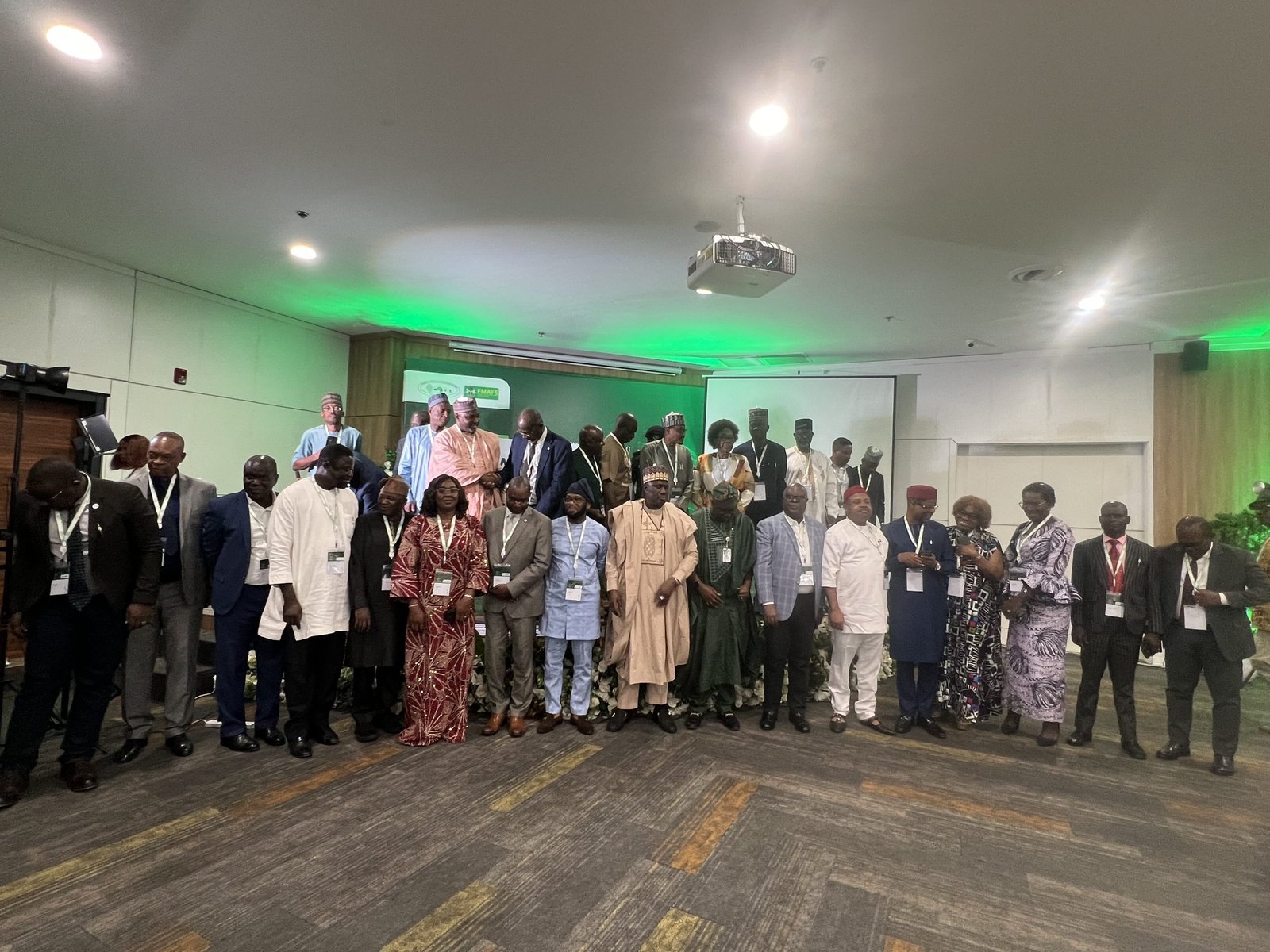

The Federal Government has renewed its call for stronger regional collaboration, digital innovation and coordinated surveillance to protect Africa’s crops from transboundary pests and diseases, warning that plant health is central to the continent’s food security and economic development.
The call was made at the opening of the two-day Plant Health Regional Convening in Abuja, themed “Securing Africa’s Harvest: Scaling Impact Through Plant Health Partnerships in Central and West Africa.” The event, organised by the Federal Ministry of Agriculture and Food Security (FMAFS) in partnership with the West African Virus Epidemiology (WAVE) programme, brought together ministers, heads of National Plant Protection Organisations, researchers, development partners, private sector representatives and farmer groups from West, Central and East Africa.
Rising Threats to Africa’s Food Systems
Speaking at the official opening, the Minister of State for Agriculture and Food Security, Senator Dr. Aliyu Sabi Abdullahi, described the gathering as a critical platform for developing collaborative solutions to the growing threats facing agriculture across the continent. He pointed to climate change, increased cross-border movement of planting materials, emerging plant diseases and weak surveillance systems as key drivers behind the spread of transboundary crop pests and diseases, all of which put food production and farmers’ livelihoods at risk. Conflict and population displacement across Africa, he added, have further accelerated the movement of infected planting materials across borders, making regional cooperation more urgent than ever.
“Plant health is food security,” Abdullahi said, stressing that no single country, however scientifically advanced or well-resourced, can tackle transboundary plant diseases alone. He argued that progress depends on collaboration, early warning systems, information sharing and strong partnerships among nations.
FMAFS Permanent Secretary Dr. Marcus Ogunbiyi echoed this concern, noting that agriculture remains the backbone of livelihoods across Africa but is increasingly under pressure from climate variability, declining soil fertility, emerging pests and transboundary pathogens. He said viral diseases affecting crops such as cassava, yam, maize and vegetables have steadily reduced yields, hurt household incomes, disrupted regional trade and deepened food insecurity. In his view, these challenges call for a science-driven regional response rather than isolated, country-by-country efforts.
Cassava at the Centre of Nigeria’s Vulnerability
Senator Abdullahi highlighted Nigeria’s position as the world’s largest producer of cassava, and therefore particularly exposed to viral diseases such as Cassava Mosaic Disease and Cassava Brown Streak Disease, which continue to depress yields, weaken seed systems and undermine investment across the cassava value chain. Protecting the crop, he said, goes beyond safeguarding a single commodity, it is central to poverty reduction, economic resilience and long-term food access.
Dr. Lava Kumar, Head of Virology at the International Institute of Tropical Agriculture (IITA), reinforced this point, recalling Nigeria’s long-running Presidential Initiative on Cassava Mosaic Disease, launched more than two decades ago through partnerships involving IITA, the National Root Crops Research Institute (NRCRI) and other institutions. He reaffirmed IITA’s continued commitment to supporting WAVE and its partners in strengthening virus surveillance, research and regional cooperation to safeguard Africa’s food systems.
Turning Science Into Action
Kumar cautioned that while scientific research has produced effective solutions to many plant disease challenges, implementation remains the biggest obstacle. He argued that innovation alone cannot change outcomes unless governments, institutions and farming communities actually adopt the technologies and recommendations already available, adding that Africa should stop “playing a chasing game” with plant diseases when solutions already exist.
A key highlight of the convening was the unveiling of the WAVE Rapid Response Decision Support Tool — a science-based innovation designed to integrate surveillance data, predictive modelling and scientific analysis to help governments respond more swiftly to emerging plant disease threats. Nigeria has been selected as the demonstration country for the tool, a development Abdullahi described as a reflection of the country’s commitment to digital agriculture, improved pest surveillance and data-driven policymaking.
The Minister also disclosed that FMAFS has established a Department of Plant Health and Pest Control Services to strengthen institutional capacity for disease surveillance, emergency response, research and integrated pest management, as part of efforts to build a resilient, technology-driven agricultural sector under President Bola Ahmed Tinubu’s Renewed Hope Agenda.
A Regional Framework in the Making
WAVE Deputy Executive Director Prof. Angela Eni said safeguarding Africa’s food security demands urgent collective action, noting that climate change and increased human movement continue to accelerate the spread of transboundary plant diseases across the continent. She said the convening is expected to produce an actionable regional framework aligning national and regional responses to emerging plant health threats.
According to Eni, the meeting drew participation from major regional and international bodies, including the African Union, CGIAR centres, IITA, NRCRI, seed sector organisations and representatives from several African countries, all working jointly toward practical solutions for containing the spread of plant diseases. She urged participants to use the forum to exchange knowledge, strengthen partnerships and commit to concrete actions that improve surveillance, preparedness and regional cooperation.
Ogunbiyi noted that over the past 12 years, WAVE has demonstrated the value of regional partnerships through scientific research, surveillance, technical support and capacity building, reaffirming the Federal Government’s commitment to strengthening Nigeria’s plant health systems and agricultural biosecurity through continued strategic partnerships.
Participants at the convening were tasked with developing practical strategies for improving disease surveillance, strengthening early warning systems, promoting scientific collaboration and enhancing regional partnerships, efforts organisers say are critical to protecting crops and securing food systems across West and Central Africa.