
The Abuja Chamber of Commerce and Industry (ACCI) has identified agriculture as a critical sector capable of lifting millions of Nigerians out of poverty while contributing to more inclusive economic growth.
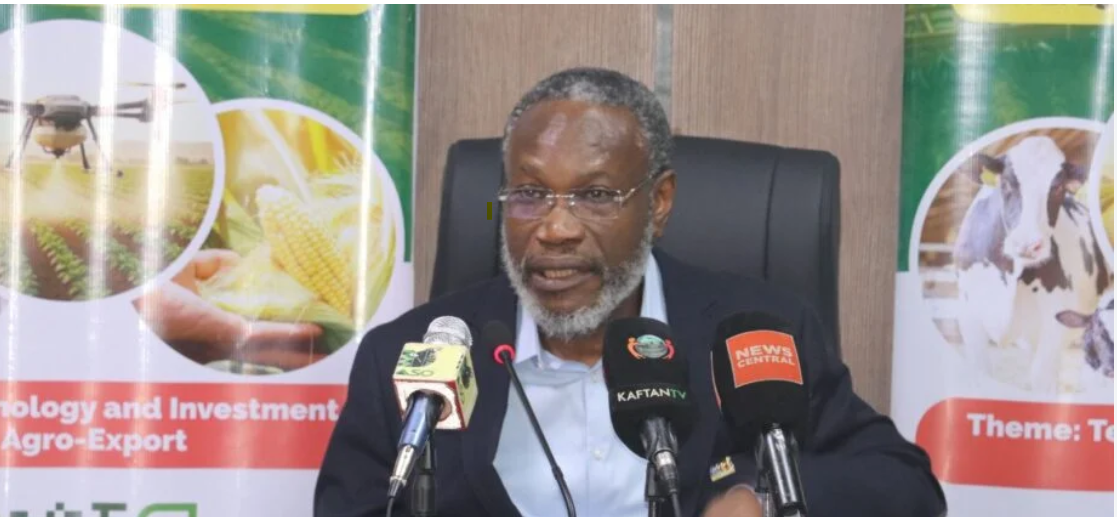
The First Deputy President of ACCI, Adesoji Adesugba, stated this on Tuesday in Abuja while briefing journalists ahead of the Agricultural Mechanisation and Export of Quality Products in Africa (AGROMEQA Expo 2026), scheduled for October 15 and 16.
Adesugba stressed the need for stronger government policies and increased investment to unlock the sector’s full potential.
He noted that agriculture contributed about 23.16 per cent of Nigeria’s real Gross Domestic Product (GDP), highlighting the sector’s significance to the country’s economy.
According to him, agricultural activities generated N11.87 trillion in real economic output in the first quarter of 2026, up from N11.51 trillion recorded during the same period in 2025.
He added that the sector recorded year-on-year growth of 3.15 per cent in the first quarter of 2026, compared with 0.07 per cent in the corresponding period of the previous year.
“This is a significant rebound and shows that agriculture can respond strongly when conditions improve and when we get our policies right.
“Crop production remained the dominant component of the sector, generating approximately N8.9 trillion during the first quarter of 2026.
“Agriculture has a great multiplier effect and can help us lift millions of people out of the poverty situation we currently find ourselves in,” he said.
Adesugba said the agricultural sector had also generated substantial wealth in the past five years, creating millionaires and billionaires through investments spanning different agricultural value chains.
He listed palm oil production among the areas with strong investment potential, stressing the need for policies that would raise domestic production and reduce Nigeria’s dependence on imported palm oil.
The ACCI official also called for an urgent expansion of agricultural production to keep pace with rising food demand, which he attributed largely to the country’s rapidly growing population.
“It is either we feed ourselves or go back to slavery. Nobody wants to go hungry; we must be able to feed our children,” he said.
He urged Nigeria to strengthen its capacity to produce food locally while expanding agricultural exports instead of depending heavily on imports to satisfy domestic consumption.
Adesugba said ACCI, alongside its partners, was supporting initiatives such as agricultural exhibitions to attract investment, raise productivity and promote sustainable development across the sector.
He described the forthcoming AGROMEQA Expo as part of a broader series of initiatives being undertaken by ACCI and its partners to advance agricultural development.
He, however, identified insecurity as one of the major factors undermining agricultural production and investment across the country.
“Insecurity affects agriculture and virtually everything that we do. It is an issue that we must continue working together to address,” he said.
Adesugba called for stronger and sustained cooperation between government, the private sector and other stakeholders to expand agricultural production, generate employment and reinforce Nigeria’s food security.