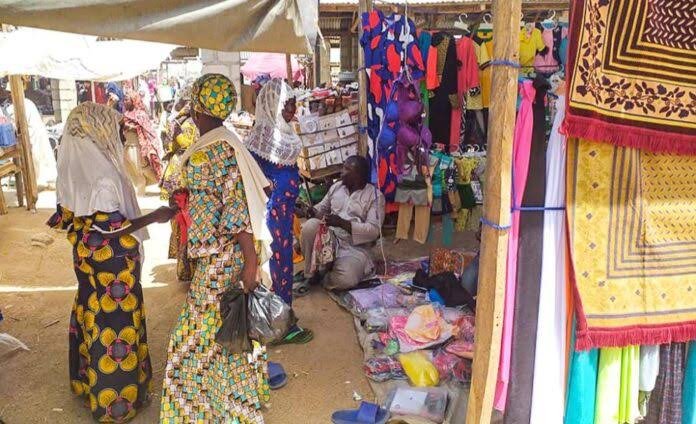

Traders and farmers in Kwaya Kusar, Borno State, have raised the alarm over the circulation of counterfeit N1,000 notes, saying the development is causing financial losses and eroding trust in the markets.
The affected traders, who spoke over the weekend, said the problem extends to markets in Biu and Bayo Local Government Areas, where they source grains and other farm produce.
A grain dealer from Gombe Main Market, Audu Musa, said he had received fake N1,000 notes on three occasions, including four notes he collected while buying maize at Biu market about three weeks ago.
“I did not realise until I was in transit. It was when I was about to pay the driver that I noticed one new N1,000 note was very light and felt unusual in my hand,” he said.
Musa said the counterfeit notes had eaten into his profit, noting that he makes between N3,000 and N4,000 per bag after transportation costs.
“Now I bought three bags, meaning I am expecting roughly N12,000, but I now have N4,000 in counterfeit notes,” he said.
He urged relevant authorities to move into markets across Biu, Kwaya Kusar and Shani to trace the source and mop up the fake currency, particularly as farmers begin bringing their harvests to market.
Another trader, Alhaji Hassan Mai-Dawa, said he received counterfeit notes from a POS operator in Kwaya Kusar, only for them to be detected when he attempted to deposit the money in a bank.
He said many rural traders do not accept transfers and therefore depend on POS operators for cash to purchase commodities.
A beans trader, Aishatu Dogo, said she had also noticed unusual N1,000 notes among her cash but initially paid little attention because others continued to accept them.
She said the situation later caused an argument with a customer who rejected some notes she gave him as a refund.
Dogo called for increased monitoring of rural markets and the arrest of those responsible for circulating the counterfeit currency.
The traders warned that without urgent intervention, the problem could worsen with increased trading activities during the harvest season.