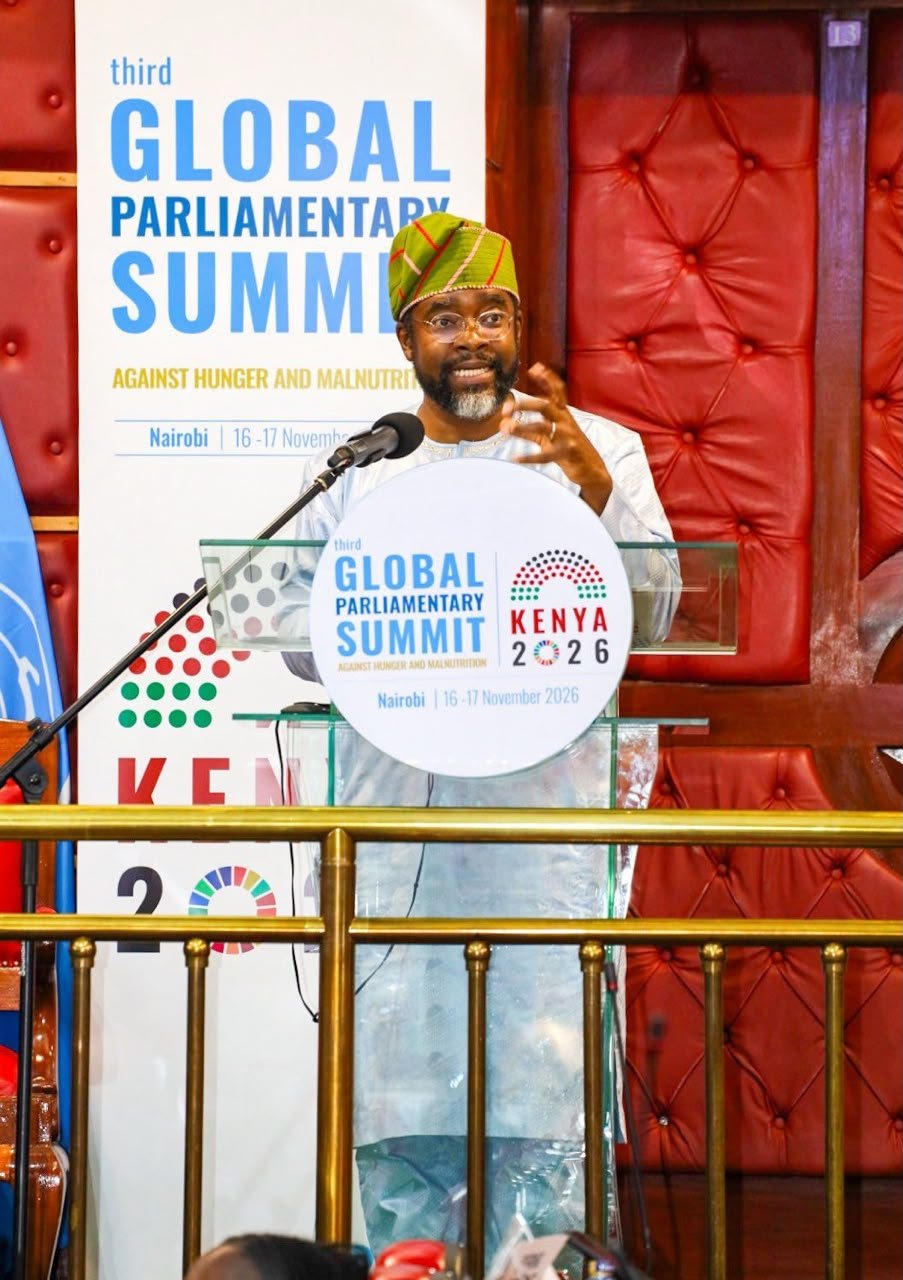

The Managing Director of AKADEMIYA2063, Dr. Debisi Araba, has called on African governments to strengthen institutional coordination and increase climate financing to address food insecurity and build climate-resilient agricultural systems across the continent.
Dr. Araba made the call on Monday while speaking at the 2026 Global Parliamentary Summit in Nairobi, where he identified fragmented government structures, inadequate funding and knowledge gaps as major obstacles to translating Africa’s food security and climate commitments into action.
He explained that climate change, agriculture and nutrition policies are often managed by separate ministries, resulting in disconnected planning and budgeting that weaken the impact of government interventions.
To address the challenge, Araba advocated what he described as “institutional nesting, not institutional multiplication,” urging governments to strengthen coordination among existing institutions rather than create additional structures.
He also called for more efficient data management systems, stressing the need to “collect data once and report it many times” to improve accountability and support evidence-based decisions.
He further urged governments to prioritise investments in resilience-building initiatives, including tracking land under sustainable management.
On financing, Araba highlighted the disparity between the resources required to transform Africa’s agrifood systems and the funding currently available, noting that only about 4.3 per cent of global climate finance reaches agrifood systems, while nearly a quarter of external financing for African food systems goes towards food assistance.
He maintained that improving agricultural productivity requires more than technical interventions, stressing that stronger governance, policy alignment and political commitment are equally necessary to achieve sustainable food systems and improved nutrition.
AKADEMIYA2063 is a pan-African non-profit research organisation established in 2020 to provide data, analytics and capacity-building support to African Union Member States in advancing the development goals of Agenda 2063.