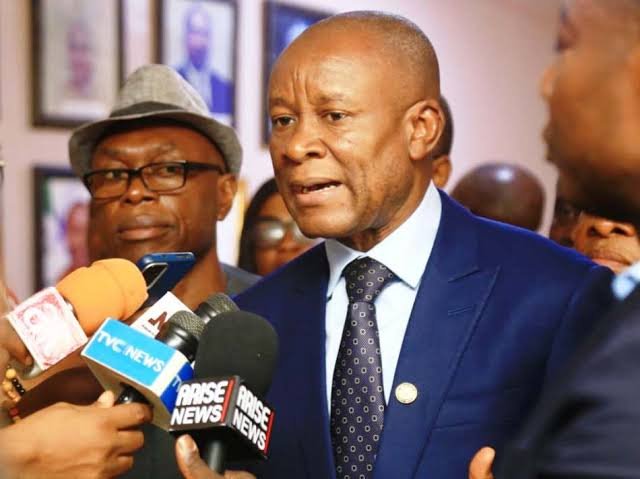

Nigeria’s Minister of State for Industry, John Owan Enoh, has expressed concern over Nigeria’s continued dependence on imported wheat despite the country’s capacity to cultivate the crop and its considerable investment in milling infrastructure.
He said the country has the potential to reduce its reliance on foreign wheat through improved local production, stronger partnerships across the agricultural value chain and targeted support for farmers and businesses.
Enoh made this known during the unveiling of Project WHEAT NESS, an initiative designed to tackle challenges affecting wheat production, processing, distribution and affordability in Nigeria.
According to the minister, the country’s milling facilities are operating at approximately half of their production capacity, while locally grown wheat is not reaching processors in sufficient quantities or meeting the required standards of quality and pricing.
He maintained that addressing the challenges requires a coordinated approach involving farmers, millers, manufacturers, bakers, financial institutions and relevant government agencies.
The minister explained that Project WHEAT NESS would focus on five major areas, including the supply of raw materials, industrial processing, businesses involved in downstream production, consumer markets, as well as the financial and policy framework supporting the industry.
He stressed that the programme was not designed as a subsidy scheme or a standalone intervention, but as a comprehensive strategy to improve efficiency throughout the wheat value chain.
Enoh argued that strengthening local industries and making essential food products affordable should be pursued together, noting that improved productivity would ultimately benefit both businesses and consumers.
He said the programme would support millers in accessing quality locally produced wheat, help bakers obtain financing for improved equipment and encourage more efficient distribution systems to reduce operational expenses.
The minister also disclosed that the initiative would complement existing government efforts rather than displace ongoing programmes aimed at improving agricultural production and food security.
He, however, cautioned that the success of the initiative would depend on effective implementation, measurable targets and sustained cooperation among stakeholders.
Enoh said the government would adopt an evidence based approach in identifying industry challenges, ensuring that decisions are guided by reliable information on production costs, available capacity and operational constraints.
He added that stakeholders across the industry would be actively involved in developing and implementing the programme, while a dedicated Programme Delivery Unit would coordinate activities and strengthen collaboration.
On accountability, the minister promised that clearly defined responsibilities, implementation schedules and measurable performance indicators would guide the initiative, with progress made available to the programme’s Steering Committee.
Nigeria’s wheat supply challenge remains significant, with domestic production estimated at approximately 420,000 tonnes annually against national consumption of about six million metric tonnes. This substantial gap has continued to expose the country to international market pressures and rising import costs.
The consequences are also being felt by businesses in the baking and confectionery industries, where rising production expenses, multiple taxes and other operating charges have made it increasingly difficult for operators to remain profitable.
National President of the Masters Bakers Association, Jude Okafor, said many members of the association were struggling to sustain their businesses because of the high cost of production and dependence on imported wheat.
He noted that bread, cakes and biscuits are important food products consumed across the country, making the challenges facing bakers a matter of wider economic concern.
Okafor appealed for government intervention to address the difficulties confronting operators, stressing that businesses would struggle to survive when production expenses exceed their earnings.
Meanwhile, the Special Assistant to the President on Industry, Trade and Investment, John Nwajumogu, said developing the wheat industry would create economic opportunities across several sectors, from farming and milling to transportation, baking and retail distribution.
He identified affordable financing, reliable electricity and access to quality agricultural inputs as critical requirements for expanding the industry and creating employment opportunities, particularly for young people and women.
Nwajumogu called for stronger coordination among the ministries responsible for trade, agriculture, industry and finance, alongside improved access to funding through development finance institutions.
He also emphasised the need to reduce expenses associated with energy, storage and transportation, noting that lower operating costs would contribute to more affordable food prices.
The presidential aide said the government would monitor progress through indicators such as domestic wheat production, the retail price of a standard loaf of bread and employment generated within the value chain.