
By Ify Mgbemena
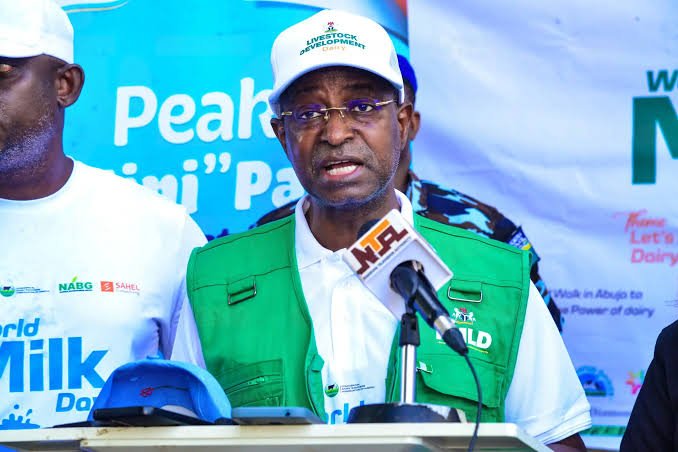
The Minister of Livestock Development, Idi Mukhtar Maiha, has called for a unified national livestock regulatory framework, warning that fragmented policies and standards across states could undermine efforts to build an integrated, productive and investment-driven livestock sector in Nigeria.
Maiha made the call at the Second National Council on Livestock Development in Lagos, where he urged governments to align their policies and regulatory systems to build an integrated livestock economy capable of attracting investment, improving productivity and opening access to domestic and international markets.
He disclosed that about 21 states had established dedicated ministries or agencies for livestock development, while 30 states had enrolled in the World Bank-assisted Livestock Productivity and Resilience Support Project (LPRES), describing the developments as evidence of growing recognition of the sector’s economic, food security and peace-building potential.
The Minister, however, cautioned against fragmented approaches, proposing common national standards for animal identification and traceability, veterinary public health, disease reporting, livestock movement, abattoir inspection, meat certification, breed improvement and feed quality.
He also called for a central data platform to harmonise information on vaccination, artificial insemination and livestock improvement across the country.
Highlighting the need to modernise the red-meat value chain, Maiha said Lagos consumes approximately 2.9 million cattle annually, equivalent to 274,000 metric tonnes of beef valued at N2.79 trillion, with more than 90 per cent reportedly slaughtered at the Oko-Oba facility.
He said the scale of consumption underscored the urgency of improving slaughter infrastructure, veterinary inspection, animal handling, refrigeration, processing and waste management.
He called for stronger connections between livestock production, feedlots, ranches, abattoirs, cold-chain operators, processors and retailers, noting that modern slaughter facilities could stimulate investment in upstream production and downstream industries, including leather, fertiliser, feed ingredients and other animal by-products.
On dairy development, Maiha said the Federal Government was targeting an increase in annual milk production from approximately 700,000 metric tonnes to 1.4 million metric tonnes within five years.
He identified improved genetics, artificial insemination, better animal nutrition, extension services and reliable milk aggregation and processing systems as critical to achieving the target and reducing dependence on imported dairy products.
The Minister also disclosed plans to expand annual vaccine production capacity at the National Veterinary Research Institute (NVRI), Vom, from 120 million to 850 million doses, citing significant gaps in domestic supply.
He said the government was strengthening disease surveillance, vaccination delivery and veterinary regulation while encouraging private-sector investment in vaccine manufacturing and distribution.
Maiha further urged states to accelerate the establishment of Livestock Development Centres through transparent land allocation and consultations with host communities. According to him, the centres would provide integrated access to improved breeds, feed and fodder, water, veterinary services, milk collection, processing and markets, while reducing long-distance livestock movement and helping to address farmer-herder conflicts.
He said the Council mustu move beyond policy discussions and project inaugurations to measurable improvements in animal productivity, farmers’ incomes, food safety, employment and export performance.
Earlier, the President of the Veterinary Council of Nigeria, Professor Matthew Adamu, described livestock development as a major economic and industrial opportunity, stressing that its contribution extended beyond farm production to animal feed, veterinary pharmaceuticals, breeding services, transportation, processing, cold-chain infrastructure and retail markets.
Adamu identified animal diseases, inadequate veterinary infrastructure, feed constraints, insecurity, land-use conflicts and climate change among the challenges confronting the sector. He also called for sustained investment in disease prevention, veterinary services and modern processing facilities.
On LPRES, he highlighted investments in veterinary infrastructure, vaccine distribution, artificial insemination and milk collection, but stressed the need for federal and state governments to establish sustainable funding arrangements to maintain facilities and programmes after external project financing ends.
Also speaking, livestock development expert Emmanuel Babafunso Sonaiya emphasised the need for wisdom in making decisions across the livestock sector, while calling for more strategic management of land, water, feed and human resources, identifying the need to balance foreign investment in turnkey feed mills with domestic investment in feed-processing equipment and storage infrastructure.
He said Nigeria’s livestock development strategy must prioritise the efficient use of available resources and strengthen domestic capacity to support a resilient and commercially viable industry.