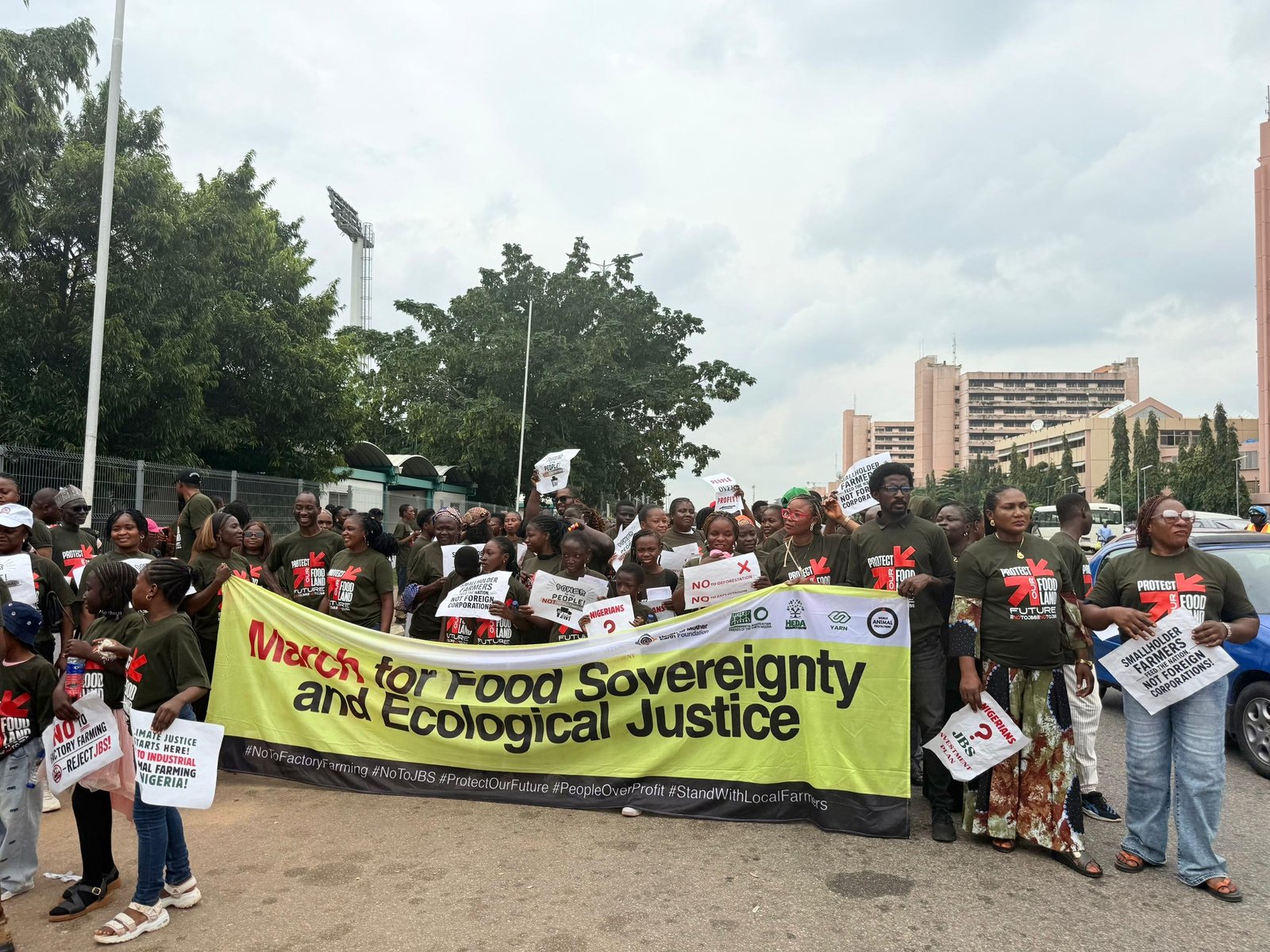

Civil society organisations have raised concerns over the potential implications of a proposed $2.5 billion livestock investment by Brazilian meat company JBS for Nigeria’s agricultural land, food security and smallholder farmers, calling for a suspension of the project pending public disclosure of its terms.
The coalition made the call at a sensitisation rally in Ibadan, Oyo State, following reports that the Federal Government had signed a Memorandum of Understanding with JBS for six industrial livestock facilities across the country, with some state governments also expressing interest in hosting parts of the project.
Project Manager of the Youth in Agroecology and Restoration Network, Olawuyi Seyi, questioned the scale of land that could be committed to the investment, citing reports that Niger State had pledged about 1.2 million hectares for livestock development.
He said the government should disclose the agreements and commitments underpinning the project before implementation proceeds.
Olawuyi called for the release of the MoU, land allocation agreements, investment incentives and related documents, arguing that the public needed to understand the implications of the investment for local communities and agricultural production.
Executive Director of Whole Planet Initiative, Margret Adekola, said communities likely to be affected, alongside farmers and other stakeholders, should have a say in decisions that could reshape land use and local livelihoods.
She added that the coalition had submitted Freedom of Information requests to relevant government institutions but had yet to receive substantive responses.
The coalition also questioned whether the investment would adequately support Nigeria’s domestic food and nutritional needs, expressing concern that a significant share of its output could be exported.
It urged the Federal Government and participating states to make the project’s details available and subject its environmental implications to independent assessment, while stressing that its position was not opposition to agricultural investment but a call for transparency and accountability.