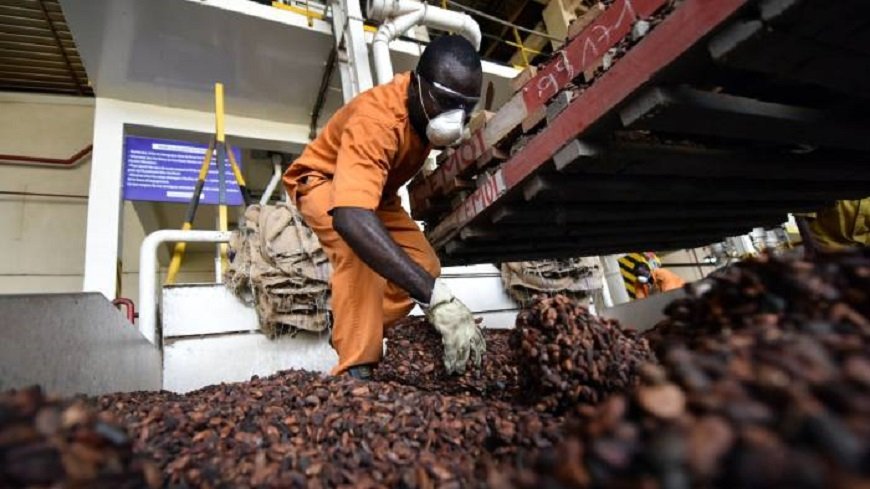

Nigeria’s ambition to earn more from cocoa exports through local processing is facing a major setback, as domestic manufacturers contend with higher European Union (EU) tariffs than competitors in Ghana and Côte d’Ivoire.
The trade disadvantage comes at a time when the Federal Government is seeking to expand domestic manufacturing, retain more value from agricultural commodities and create jobs through agro-industrial development.
Under the current arrangement, Nigerian exporters pay duties of 6.1 per cent on cocoa paste and 4.2 per cent on cocoa butter entering the EU, while raw cocoa beans attract no import duty. Ghanaian and Ivorian exporters, by contrast, enjoy duty-free access for these processed products under separate interim trade agreements with the EU.
Industry estimates indicate that the tariff difference could cost Nigerian processors as much as $200 per tonne, making their products less competitive in one of the world’s major cocoa markets.
The implications extend beyond export earnings. Nigeria still exports more than 80 per cent of its cocoa in raw form, meaning much of the processing revenue and associated employment opportunities are generated outside the country.
Felix Oladunjoye, Chairman of the Cocoa Processors Association of Nigeria (COPAN), said the combination of import duties, expensive electricity and logistics costs was making domestic processing increasingly difficult.
Akin Laoye, Executive Director of FTN Cocoa Processors Plc, also raised concerns about the industry’s declining competitiveness, questioning the level of consultation between government and operators on trade policy decisions.
The pressure is particularly significant given the gap between Nigeria’s installed processing capacity and actual production. Although local factories can collectively process about 250,000 tonnes of cocoa annually, only five remain operational, handling approximately 20,000 tonnes, according to industry data.
Manufacturers are also struggling with multiple taxation, indebtedness and inconsistent access to cocoa beans, as farmers often sell to merchants offering better prices than local processors.
The trade issue has become more pressing as Nigeria considers legislation to compel greater domestic value addition. An amendment to the Raw Materials Research and Development Council Act proposes a minimum of 30 per cent local processing of raw materials before export.
However, the bill is yet to become law after the House of Representatives recalled five clauses for further consideration on November 3, following a presidential review.
Stakeholders have warned that increasing pressure on producers to process commodities locally without improving the competitiveness of domestic manufacturers could weaken the government’s industrialisation objectives.
Nigeria’s trade position is partly linked to its decision not to sign the regional Economic Partnership Agreement between the EU and West Africa. Ghana and Côte d’Ivoire have implemented separate interim agreements that provide preferential access to European markets.
Despite the challenges, the European market remains important to Nigeria’s cocoa trade. National Bureau of Statistics data show that the country exported cocoa butter worth N69.2 billion to Germany, the Netherlands, Estonia, France and Belgium in the first half of the year.
Nigeria produced 315,000 tonnes of cocoa in the 2022/2023 season, ranking fourth globally behind Côte d’Ivoire, Ghana and Ecuador, according to the International Cocoa Organisation.
In July, the Minister of Agriculture and Food Security, Abubakar Kyari, said the Federal Government was not seeking to prohibit raw cocoa exports but wanted to expand domestic processing capacity.
For the industry, achieving that ambition will require more than encouraging factories to process locally. Access to competitive export markets, reliable raw material supplies and lower production costs will also determine whether Nigerian processors can compete with their regional counterparts.