
The Sasakawa Africa Association (SAA) has developed innovation packages for cassava, potato and rice to strengthen agricultural education, improve extension services and accelerate the transfer of technologies to farmers in Nigeria.
SAA Nigeria Country Director, Dr Godwin Atser, disclosed this on Wednesday in Abuja at the close-out workshop of the two-year Strengthening Institutional Framework for Transformative Agricultural Systems in Nigeria (SIFTAS) project.
Atser said the innovation bundles were developed to support the integration of improved agricultural practices and technologies into existing institutional systems.
“Through the SIFTAS project, we have been able to develop innovation bundles for cassava, potato and rice.
“These innovation bundles are the bedrocks for agriculture transformation for Nigeria,” he said.
Implemented by SAA with funding from German Cooperation (GIZ), the project was designed to strengthen institutional capacity, improve coordination among agricultural stakeholders and promote the adoption of innovations through education, training and extension services.
Atser stressed that introducing new technologies alone would not deliver agricultural transformation without institutions capable of supporting their adoption and wider dissemination.
“Agricultural transformation cannot be achieved through technologies and innovations alone. It requires strong institutions.
“These institutional foundations are what enable innovations to move from research laboratories and demonstration plots into the hands of millions of farmers,” he said.
He noted that building a resilient, competitive, market-oriented and nutrition-sensitive agricultural sector required sustained collaboration among government agencies, research institutions, universities, development partners and private sector organisations.
“Transformative agricultural systems require transformative institutions.
“If Nigeria is to achieve a resilient, competitive, market-oriented and nutrition-sensitive agricultural sector, we must continue to invest in institutional capacity, innovation, effective coordination and strategic partnerships,” he said.
According to him, SIFTAS also provided opportunities for stakeholders to identify institutional gaps, exchange experiences and develop practical responses to challenges affecting agricultural development.
He said SAA’s approach centred on strengthening existing structures, empowering local actors and building partnerships that could sustain results beyond the lifespan of individual projects.
The country director urged participating institutions to measure the project’s success not only by activities completed and immediate outputs but also by the institutional changes, capacities, partnerships and long-term opportunities created.
He said the real test of institutional strengthening was whether organisations could continue delivering results after externally funded projects had ended.
Atser consequently called on participating institutions to incorporate relevant project approaches into their programmes and budgets, take ownership of the outcomes and maintain the partnerships established under SIFTAS.
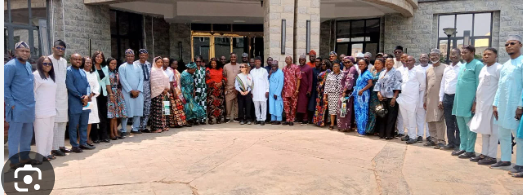
He said the close-out workshop was organised to review the project’s achievements, exchange lessons and identify ways to sustain its outcomes.
The meeting also provided an opportunity to assess the innovations, institutional partnerships and frameworks developed to integrate transformative agricultural practices into institutional curricula, teaching and extension services.
Atser commended universities and green colleges for their commitment to incorporating the innovation bundles into their curricula.
He also acknowledged GIZ for its financial and technical support, government ministries and agencies for their collaboration, participating institutions for their commitment and the project team for its dedication.
He said the completion of SIFTAS should serve as a foundation for stronger partnerships to consolidate its gains and translate lessons from the project into broader agricultural development outcomes.