
…NDDC Launches $500m Niger Delta Agriculture Investment Fund
by Hassan Samuel
Vice President Kashim Shettima on Wednesday said Nigeria’s long-term prosperity depends on agriculture rather than oil alone, as the Niger Delta Development Commission (NDDC) unveiled a Niger Delta Agricultural Development and Investment Fund and called on investors to back the transformation of the oil-rich region into an agricultural powerhouse.
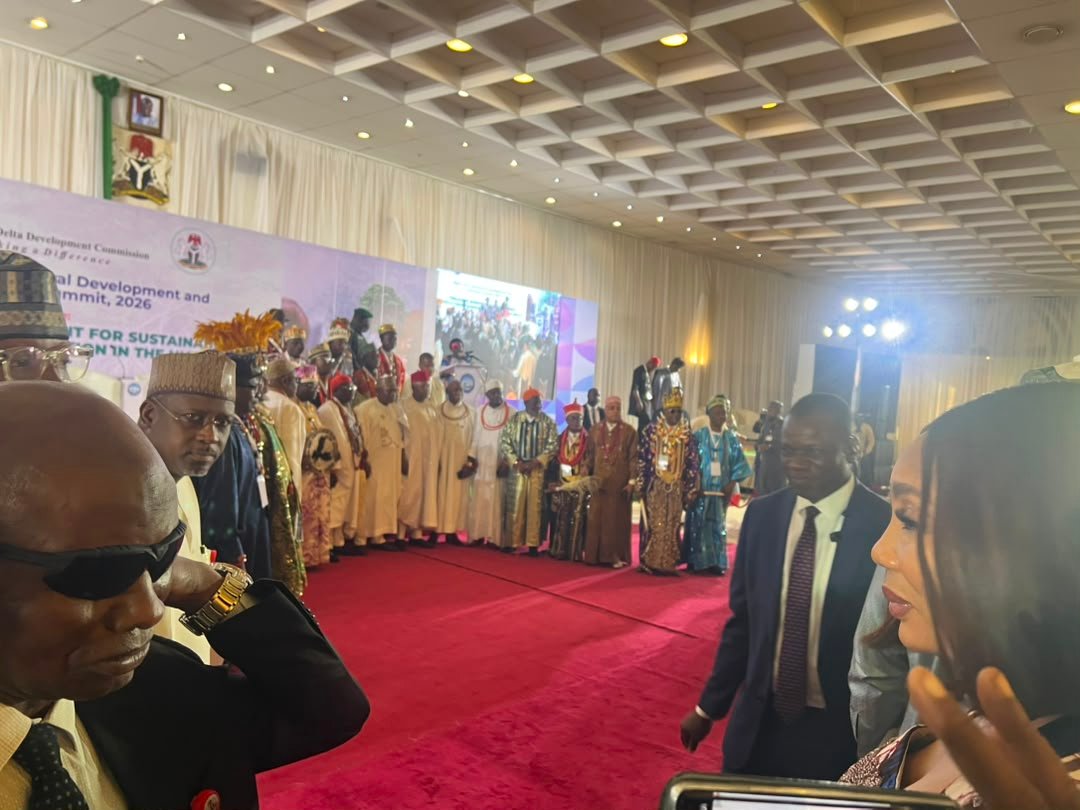
Shettima spoke at the Niger Delta Agricultural Development and Investment Summit 2026, held under the theme “Unlocking Investment for Sustainable Agricultural Transformation in the Niger Delta,” at the Banquet Hall, State House, Presidential Villa, Abuja. The summit was jointly organised by the Office of the Vice President and the NDDC.
The Vice President said agriculture remains the foundation of civilisation and the surest guarantee of political stability, stressing that no nation can achieve lasting prosperity without food security. He recalled that agriculture sustained Nigeria’s economy long before oil, noting that the groundnut pyramids of the North, the cocoa estates of the West, and the palm produce of the East and Niger Delta once financed the country’s schools, hospitals and public institutions. He said the discovery of oil shifted national attention away from farming and deepened Nigeria’s dependence on food imports despite its vast agricultural potential.
He commended the Niger Delta for choosing to revive an economic identity older than crude oil, recalling that palm oil from the region drove international commerce long before petroleum was discovered. Shettima said the newly launched fund is a commercial, returns-driven investment vehicle covering the entire agricultural value chain, including aquaculture, palm oil, cassava, cocoa, rice, horticulture, marine resources and livestock, and that it aligns financing commitments already pledged by the World Bank, the African Development Bank, the Islamic Development Bank, the European Bank for Reconstruction and Development, and private and commercial financiers.
He disclosed that a newly inaugurated Niger Delta Agricultural Development and Investment Council, which he will chair, will oversee implementation, with the NDDC serving as its secretariat and coordinating bankable agricultural projects across the nine mandate states. He linked the initiative to President Bola Tinubu’s food security agenda, noting that reforms so far had helped push prices of some staple foods down by as much as 50 percent. He cited ongoing efforts including the Renewed Hope Agricultural Mechanisation Programme, which aims to deploy 10,000 tractors over five years, alongside the John Deere Tractorisation Programme, the Greener Hope Project and the Green Imperative Programme.
“While oil built the Niger Delta’s economy,” Shettima said, “agriculture will secure its long-term prosperity.”
Akwa Ibom State, represented by Deputy Governor Senator (Dr.) Akon Eyakenyi on behalf of Governor Umo Eno, said the state plans to replicate its model farm across all three senatorial districts and had launched a Tree Crop Revolution centred on oil palm, once described as the region’s “black gold,” in partnership with the Nigerian Institute for Oil Palm Research (NIFOR).
Minister of Agriculture and Food Security, Senator Abubakar Kyari, represented by the Permanent Secretary, Dr. Marcus Ogunbiyi, said food security remains a top priority of the Tinubu administration, pointing to programmes such as the National Agricultural Growth Scheme and Agro Pocket Programme (NAGS-AP), expanded irrigation, mechanisation support and climate-smart agriculture initiatives as part of a broader push to boost productivity and reduce Nigeria’s reliance on food imports.
Minister of Regional Development, Engr Abubakar Momoh, called the summit a defining moment in Nigeria’s economic trajectory, urging investors to see the Niger Delta “not merely as an oil-producing region, but as one of Africa’s most promising destinations for agricultural investment.” He stressed the need to equip youth and women with financing and tools for mechanisation, digital agriculture and value addition.
Earlier in his welcome address, NDDC Managing Director and Chief Executive Officer, Chief Samuel Ogbuku, called for increased investment in agriculture to diversify the Niger Delta’s oil-dependent economy, describing the launch of the Niger Delta Agricultural Development Fund as a professionally managed, commercially viable vehicle to finance agricultural transformation across the region.
Ogbuku noted that before oil was discovered, the Niger Delta economy ran on agriculture and fishing, with the old Midwest region known for cocoa and the old Eastern Region for palm oil. He said the ongoing divestment of international oil companies from onshore operations presents an opening for agribusiness to rival the oil and gas sector as a driver of economic growth, citing Olam as an example of a successful agribusiness in Nigeria that could be replicated at scale in the Niger Delta. He said Abuja was deliberately chosen as the summit venue to draw investors, financial institutions and development partners with the capital needed to power agricultural transformation, and urged stakeholders to see the Niger Delta as a viable, secure investment destination.
The Senior Special Assistant to the President on Agribusiness and Productivity, Dr Kingsley Uzoma, said the summit was designed to close the gap between the Niger Delta’s agricultural potential and the capital, partnerships and institutions needed to unlock it. He described the region’s challenge as one of coordination rather than opportunity, noting that despite its abundant arable land, waterways and entrepreneurial talent, the Niger Delta has historically struggled to connect opportunities with capital and implementation.
“This Summit is a practical response to the President’s vision of positioning the Niger Delta as a major contributor to Nigeria’s food security and economic growth. Our goal is to move beyond discussions and leave with stronger partnerships, clearer commitments and a shared roadmap for implementation,” Uzoma said.
Stakeholders at the summit agreed that translating the Niger Delta’s agricultural potential into results will require sustained collaboration among federal and state governments, development institutions, private investors, farmer cooperatives and local communities.