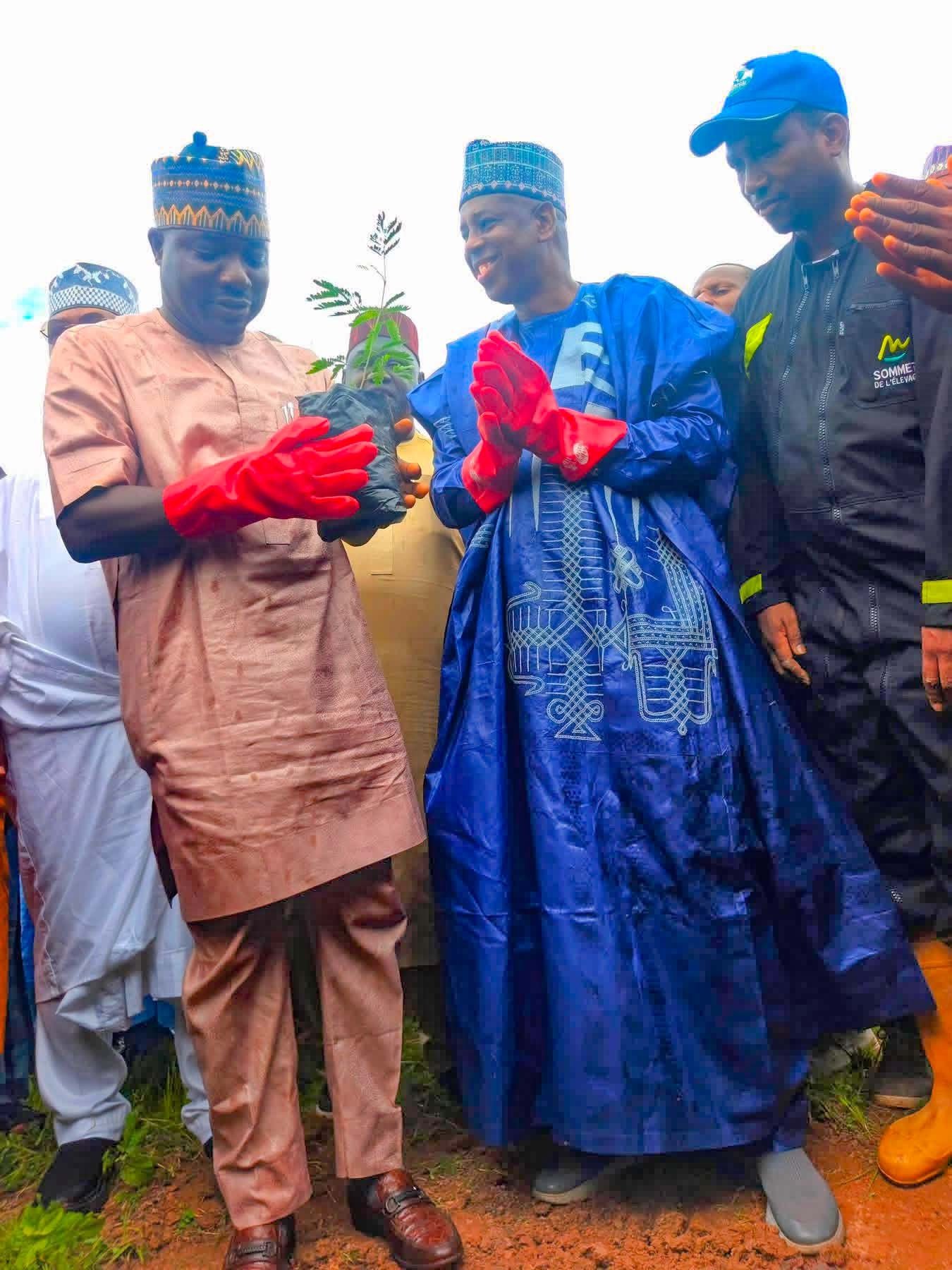

Adamawa State is set to strengthen its livestock production system as Dabareji Agro Investment Limited launched a five-year Feed and Fodder Project targeting the cultivation of two million Lucerne plants across the state.
The initiative, officially flagged off on Saturday at Daware Community in Fufore Local Government Area, is designed to address one of the major constraints to livestock development in Nigeria, the availability and quality of animal feed.
Implemented in partnership with L-PRES Adamawa State, the project will focus on expanding fodder production while supporting livestock farmers with a more reliable source of nutritious feed for cattle and other livestock.
The initiative is particularly significant as livestock farmers continue to grapple with declining pasture resources, land degradation, changing weather patterns and competition over grazing areas. By promoting commercial fodder production, the project seeks to support a transition towards more sustainable and productive livestock feeding systems.
Speaking at the flag-off ceremony, Chairman and CEO of Dabareji Agro Investment Limited, Alhaji Sadiq Umar Daware, popularly known as Dan Lawan Adamawa, said the project was conceived as a long-term investment in livestock production, environmental restoration and rural livelihoods.
“Today is not only the beginning of a tree planting campaign; it is the launch of a long-term investment in environmental restoration, sustainable livestock production, climate action and community development,” Daware said.
He explained that the five-year programme would go beyond planting Lucerne to establish a sustainable feed and fodder ecosystem capable of improving livestock productivity and supporting farmers across Adamawa.
Lucerne, also known as alfalfa, is valued as a high-quality forage because of its nutritional content, particularly its protein levels, making it an important feed resource for livestock production.
The expansion of locally produced fodder could help farmers reduce dependence on scarce natural pasture and improve the consistency and quality of livestock diets, especially during periods when grazing resources become limited.
The project also has implications for livestock resilience. With climate change increasingly affecting pasture availability and agricultural productivity, developing dedicated fodder resources could provide farmers with an additional buffer against seasonal feed shortages.
Government officials, traditional rulers, development partners, livestock farmers and members of the media attended the flag-off ceremony, highlighting the importance attached to the intervention.
For Adamawa’s livestock sector, the two-million-Lucerne target represents more than an environmental initiative. It offers an opportunity to build a commercial fodder value chain involving cultivation, harvesting, processing, storage and distribution while creating additional income opportunities for rural communities.
If successfully implemented, the Dabareji Farms initiative could strengthen the state’s livestock production base and provide a practical model for addressing Nigeria’s persistent feed and fodder challenge through private-sector investment.
Ultimately, the project seeks to place adequate, quality and sustainable livestock feed at the heart of efforts to improve animal productivity, farmer incomes and the resilience of Adamawa’s livestock economy.