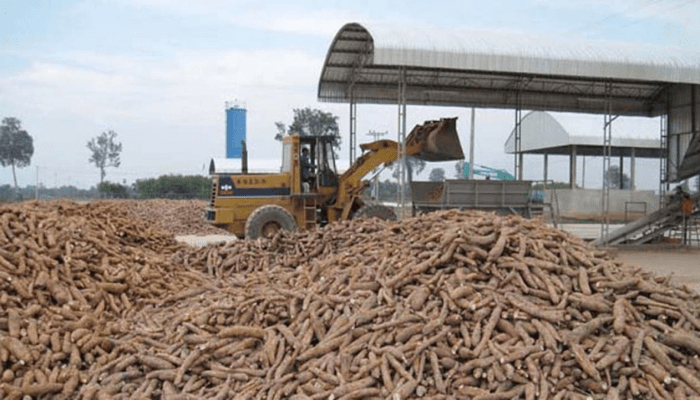

Agriculture experts have expressed concern over the low industrial utilisation of cassava in Nigeria despite the country retaining its position as the world’s largest producer of the crop.
The concerns were raised during the 10th anniversary and Annual General Meeting of the Industrial Cassava Stakeholders Association of Nigeria (ICSAN) held in Lagos.
Speaking at the event, the Country Director of IDH Nigeria, Prof. Eniola Fabusoro, said Nigeria’s challenge was no longer cassava production but the inability to convert the crop into industrial and economic value.
According to him, although Nigeria produces over 63 million metric tonnes of cassava annually, the country still lags behind nations in Southeast Asia in value addition, exports and industrial processing.
“We are leading in production volume but not in value. The future of cassava must move beyond farming to industrialisation and market development,” he said.
ICSAN President, Segun Ladele, also noted that about 80 per cent of cassava produced in Nigeria is consumed as food, while only a small percentage is used for industrial purposes.
He blamed weak policy coordination and rising importation of starch products for the challenges facing local processors.
Also speaking, Vice-President of ICSAN and Founder of Psaltry International Company Limited, Mrs Oluyemisi Iranloye, warned that cheap imported corn starch was threatening Nigeria’s cassava processing industry and the livelihoods of millions of farmers dependent on the value chain.
Executive Director of the National Root Crops Research Institute, Prof. Chiedozie Egesi, said Nigeria already had enough policies to drive cassava industrialisation but lacked effective implementation and political will.
He urged the country to reposition cassava beyond food security and explore its industrial potential in manufacturing, livestock feed, starch production and exports.