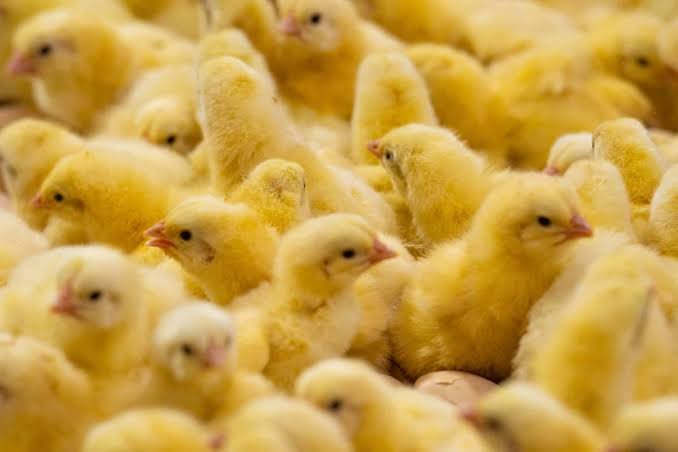

The federal and state governments, alongside private investors, have been urged to expand day-old chick production across Nigeria to address supply shortages, lower prices and support poultry farmers.
The Group Managing Director of the Arzikin Noma Africa, Adeoluwa Adeshola, made the appeal during an interview in Abuja on Thursday, citing limited production capacity for parent stock as a major factor driving up the cost of chicks.
Arzikin Noma Africa is an agricultural and value-chain development company that works to improve food systems, raise farm productivity and support smallholder farmers across Africa.
Adeshola said the dominance of a few companies in parent stock production had restricted supply, leaving poultry farmers to contend with rising input costs.
“There is a lot of monopoly when it comes to the mother stock. Only a few companies have the capacity to produce it, so demand is more than supply.
“I call on the government and the private sector to invest actively in the production of day-old chicks to break the monopoly,” he said.
Day-old chicks are currently selling for between N1,800 and N2,100 per bird, compared with N1,300 to N1,500 recorded two to three months ago.
The price increase has raised concerns among poultry farmers, with some accusing hatcheries of setting prices that make it difficult for small-scale operators to remain competitive. Others, however, linked the rise to seasonal demand and supply constraints.
A poultry farmer, Rose Ibe, said sharp increases in chick prices were common as the festive period approached, when demand for chicken typically rises.
“There is always an exorbitant hike when we approach December, the peak of chicken sales,” she said.
Another farmer, Andrew Tersor, said the escalating cost had forced him to cut his normal stock of between 150 and 200 birds by half.
Tersor called for federal and state governments to work together to establish hatcheries across the country’s six geopolitical zones, arguing that a more decentralised production system would improve availability and ease transportation and supply pressures.
“We believe if day-old chicks are produced very close to our zone, we can easily access them and the price will reduce drastically,” he said.